

















Story Highlight
– Frankie Bridge advocates ketamine therapy for depression relief.
– Ketamine misuse has dramatically increased over the years.
– Private clinics offer costly ketamine treatments despite risks.
– Experts debate long-term efficacy and safety of ketamine.
– Calls for official approval of ketamine as a treatment.
Full Story
Pop star Frankie Bridge has opened up about her long battle with severe depression and anxiety, sharing her experiences in a recent podcast. The 37-year-old, known for her time as a member of the girl group The Saturdays, has chronicled her mental health struggles, which have persisted for over two decades. At one point, her condition became so severe that it necessitated hospitalisation in her twenties.
Bridge, who is married to former England footballer Wayne Bridge, has explored various treatments throughout her life, including numerous combinations of antidepressants, but she still found herself grappling with her mental health. During a conversation on Bryony Gordon’s podcast, The Life Of Bryony, she revealed the dark thoughts she encountered, saying, “I was starting to go into those patterns of ‘everyone would be better if I wasn’t here anymore.’”
This precarious mental state led her to discover therapeutic applications of ketamine after consulting with a mental health professional. Despite her fear of taking drugs—having never tried illicit substances—she took the leap to explore this alternative treatment avenue.
Ketamine, while legally sanctioned in the UK predominantly as an anaesthetic and pain relief medication, has sparked increasing interest as a potential treatment for depression. Its misuse, classified as a Class B illegal drug, raises significant health risks, including potential bladder damage and cognitive impairment.
According to recent findings from the National Programme on Substance Use Mortality, the misuse of ketamine has seen a dramatic surge in fatalities; the number of deaths attributed to its misuse increased tenfold from 2014 to 2024, with over 690 deaths reported in England, Wales, and Northern Ireland between 1999 and 2024.
In the context of its therapeutic use, ketamine is administered in much smaller doses under professional supervision, allowing individuals to experience what some have described as dissociation—a sensation of detachment from oneself. Bridge referred to her sessions as a sort of “out of body experience,” explaining that the therapy provided her mind a chance to process suppressed feelings. She articulated the transformative nature of her experience, stating, “I can feel like I’m a piece of mud on a shoe and then it’ll go really bright and I feel free. It’s amazing.”
Although ketamine is not officially approved for treating depression within the UK, it can be prescribed off-label. An investigation has revealed that private clinics in the UK are increasingly offering this treatment at significant cost, sometimes integrated within NHS self-pay schemes where patients can contribute funds back into the service.
Dr. Rajalingam Yadhunanthanan, an NHS consultant who has treated around 700 patients with ketamine, has been vocal about its benefits. He commented on the treatment’s potential, indicating that “it completely changes people’s lives,” boasting a 74 per cent success rate for patients with treatment-resistant depression.
Patients seeking this therapy must first undergo a thorough clinical assessment. Dr. Yadhunanthanan detailed the process: “Getting referred for the treatment is a strict process. About 40 per cent of patients have been depressed for 30 years or more, proving resistant to psychotherapy and drug treatments.”
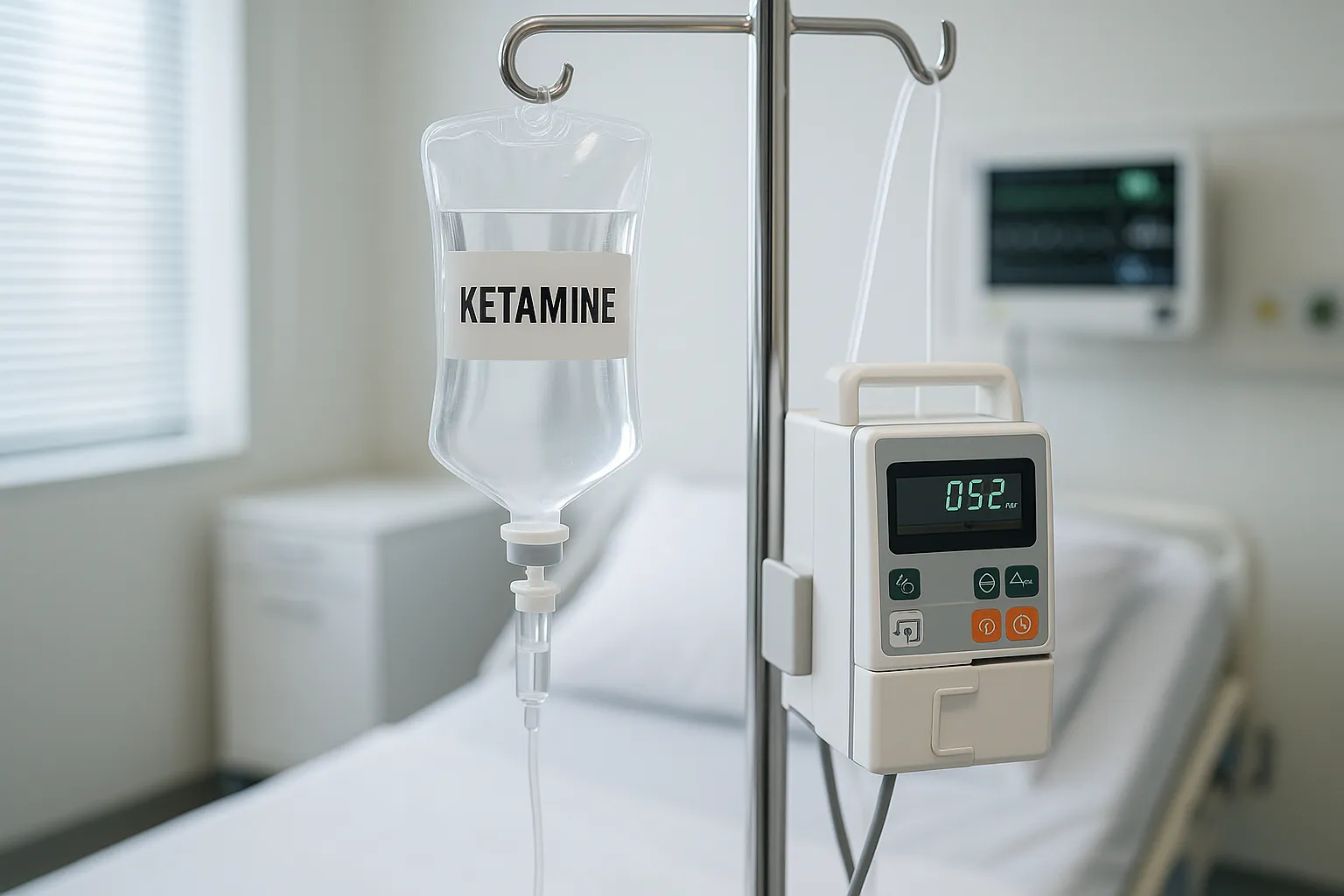
The intricate dosing process distinguishes psychiatric administration from its use as an anaesthetic, with a slower infusion method employed. Patients are kept under observation for at least two hours post-treatment to ensure their recovery from the dissociative state induced by the drug.
While the treatment can be costly, with sessions reaching £600, the potential benefits appear to attract those who have struggled with conventional therapies. Dr. Yadhunanthanan noted that patients typically need multiple sessions, ranging from 15 to 25 over several months.
In addition to depression, ketamine is being studied for its effects on other psychiatric conditions such as anxiety, obsessive-compulsive disorder (OCD), and post-traumatic stress disorder (PTSD). However, there are calls for a more robust framework supporting its use, with organisations such as the Royal College of Psychiatrists advocating for formal approval to ensure wider access to this treatment.
A notable example comes from the Oxford Health NHS Foundation Trust, which has commenced ketamine therapy for particularly resistant cases. They reported treating 142 patients in a recent year and indicated that half of these patients found sufficient improvement to seek continued treatment. Despite these encouraging statistics, concerns linger among experts over the long-term effects of ketamine, with indications that extensive usage might lead to bladder damage.
Dr. Jelen from King’s College London recently published research demonstrating that ketamine affects the brain’s opioid system, shedding light on its potential mechanisms in alleviating depression. Skepticism remains, however, with critics questionably observing that the evidence surrounding ketamine as a psychiatric treatment is still developing.
While some patients, including Frankie Bridge, resonate with the product’s potency in mitigating their symptoms, other experts urge caution about lifelong dependency on a substance that alters mental state. Joanna Moncrieff, a professor at University College London, has voiced concern regarding the possible ramifications of widespread ketamine use, suggesting that recovery requires a holistic approach beyond pharmaceutical intervention.
She argues firmly against such a treatment becoming a panacea, asserting its risks could overshadow its benefits.
In the interim, as the debate continues around ketamine therapy, it remains clear that while some patients find hope in this alternative treatment, an open discussion concerning its safety and efficacy is vital to ensure a balanced view surrounding its use in psychiatric settings.
Our Thoughts
The use of ketamine for depression treatment suggests potential oversights in adhering to UK health and safety regulations. Notably, the practice of prescribing ketamine off-label raises questions regarding compliance with the Medicines Act 1968, which governs medicines use in the UK. The absence of clear guidelines and licensing for ketamine therapy in psychiatric settings indicates a breach of key safety protocols that ensure patient protection.
To prevent adverse effects, such as deterioration in mental health and the onset of ketamine cystitis observed in some patients, authorities must implement stricter regulations and monitoring of clinics offering this treatment. Enhancements in clinical governance are essential, ensuring that practitioners are adequately trained and that patient assessments are thorough prior to initiating such therapies.
Key safety lessons include the necessity for comprehensive monitoring and long-term studies of treatment outcomes, as well as better patient education regarding risks. Additionally, a focus on developing evidence-based alternative therapies could reduce reliance on potentially harmful substances. Overall, the focus should shift towards safety, efficacy, and regulatory compliance to protect patient well-being and uphold health standards in psychiatric treatment.