












Story Highlight
– Resident doctors in England strike for five days over pay.
– BMA demands 26% pay rise to address inflation impact.
– Government claims 28.9% pay increase already granted.
– Public support for strikes is significantly low, polls show.
– NHS leaders warn of disruption amidst high flu cases.
Full Story
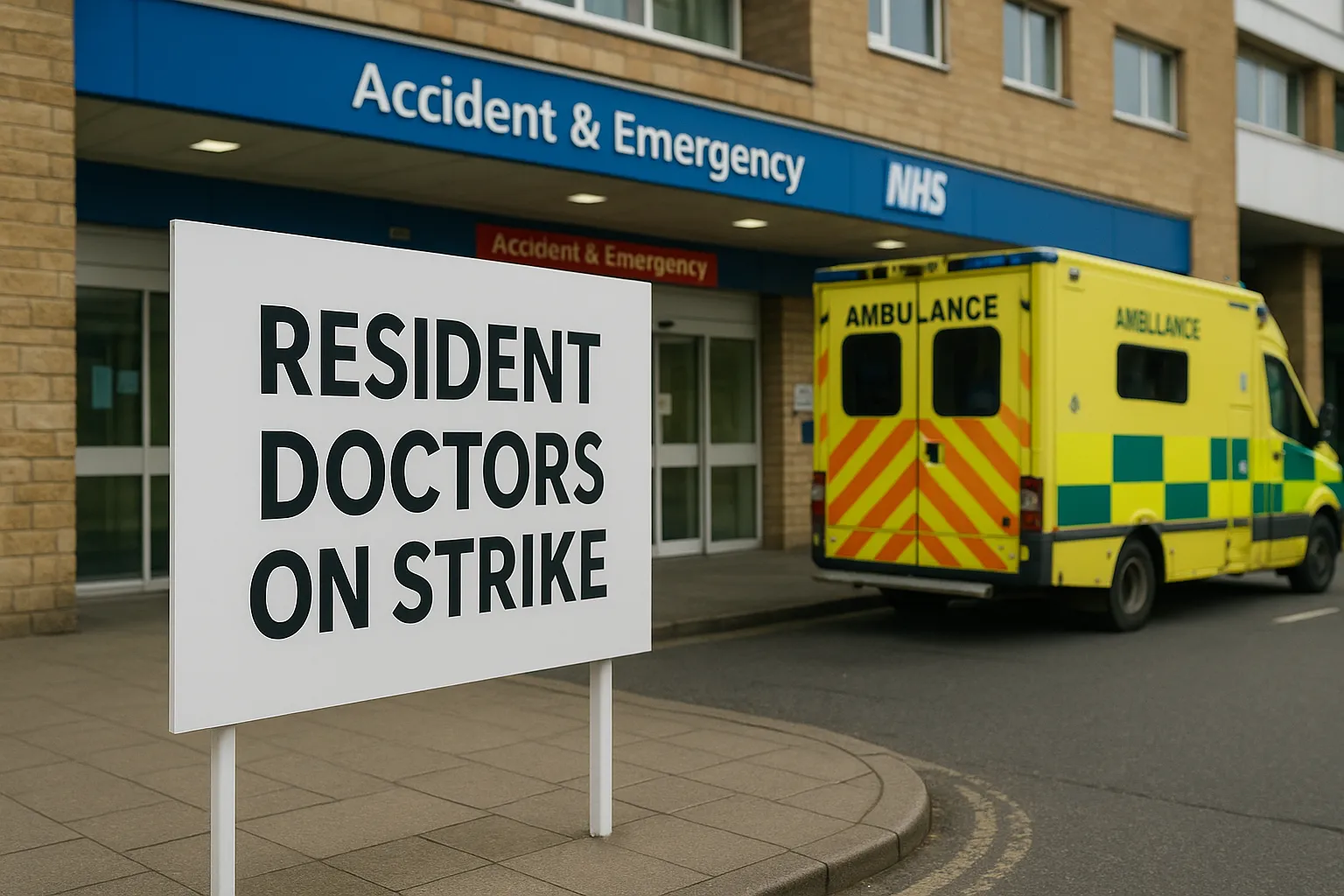
Doctor strikes in England have expanded into a five-day walkout commencing at 7am today, coinciding with an alarming surge in flu cases and increasing pressures on the National Health Service (NHS). This marks the 14th day of strikes for resident doctors since March 2023, raising concerns over potential disruptions to healthcare services during this challenging winter period.
The British Medical Association (BMA), representing the resident doctors, contends that the strike is entirely avoidable and has called for a “credible offer” that addresses what it describes as significant real-terms pay cuts. The latest strike action has ignited criticism from various quarters, including Sir Keir Starmer, who labelled the doctors’ decision as “irresponsible.” Health Secretary Wes Streeting has explicitly rejected the union’s pay demands, accusing them of prioritising their requests over patient safety.
The backdrop to this industrial action is a contentious negotiation over pay. The government asserts that resident doctors have received an average pay rise of 28.9% over the past three years. However, the BMA argues that the current figures do not reflect the impact of inflation on their salaries and insists on an additional 26% uplift to restore lost earnings. This has led to significant discussions about how the BMA calculates pay erosion, particularly with its reliance on the Retail Price Index (RPI) for inflation.
Efforts to avert the strike were dashed when a recent proposal from the government was rejected by 83% of resident doctors. The offer, while not including an additional pay rise, aimed to enhance training opportunities and reimburse out-of-pocket expenses. It also sought to extend the current strike mandate to enable future actions if necessary, with some doctors feeling it fell short of adequately addressing their concerns.
In light of the strikes, the Department of Health and Social Care has urged the public not to avoid seeking medical care if needed. Patients are advised to use services such as NHS 111 for non-emergency situations and to turn up for planned appointments unless informed otherwise. Provisions known as derogations are in place where essential services continue to function, ensuring that critical healthcare is still accessible during the industrial action.
The pay range for resident doctors varies significantly, with current salaries reported to be between £38,831 and £73,992 annually, not including extra payments for out-of-hours work. Analysis suggests that their earnings could rise significantly with additional pay for these unsociable hours, bringing average salaries between £45,846 and £81,061. Comparative studies indicate that while resident doctors in England earn similar amounts to those in Ireland, they earn less than their counterparts in Australia, where salaries range from 23% to 48% more.
Throughout the negotiations, Streeting has adopted a confrontational stance, warning that the NHS risks collapse if strikes continue amid a soaring flu season. His rhetoric has been perceived by the BMA as an attempt to shift blame onto the resident doctors for systemic issues within the NHS. This has spurred counterarguments from within the NHS community, suggesting that staff are accustomed to dealing with seasonal pressures, and current contingency plans should suffice to maintain operational capacity.
The government has faced backlash for several of its comments regarding the strikes. Prime Minister Rishi Sunak noted that the strikes are occurring after a significant pay increase, which he claims renders the BMA’s actions irresponsible. In tandem, Streeting has denounced the BMA’s demand for a further rise as a “fantasy,” reiterating his belief that the union is neglecting patient safety in its pursuit of higher wages.
Dr. Jack Fletcher, who chairs the BMA’s resident doctors’ committee, countered that the strikes could have been avoided through genuine negotiation rather than what he termed “game-playing” by the government.
NHS leaders also expressed deep concern regarding the timing of the strikes, particularly Daniel Elkeles, chief executive of NHS Providers, who remarked that trust leaders would be working diligently to mitigate the impact but acknowledged that disruptions and delays are inevitable. Rory Deighton, Director at the NHS Confederation, echoed these sentiments, stating that the current flu season is creating unprecedented strain on hospital services.
Public opinion appears to be largely against the strikes, with a recent YouGov poll revealing that 58% of respondents either somewhat or strongly opposed the actions. Only 33% expressed support for the resident doctors’ industrial action, highlighting a potential challenge for the BMA as they navigate public sentiment amidst ongoing negotiations.
In summary, the strike by resident doctors is a pivotal moment in the ongoing tussle over healthcare pay and conditions in England, accentuated by the pressures of an overloaded health system this winter. As the situation unfolds, both the government and the BMA will need to consider public sentiment, the welfare of patients, and the broader implications of their actions on the NHS during this critical period.
Our Thoughts
The recent strike by resident doctors in England highlights significant issues regarding communication and negotiation in the NHS. To prevent such incidents, better engagement between the government and the British Medical Association (BMA) could have led to more satisfactory resolutions. Key safety lessons include the necessity of maintaining adequate staffing levels to ensure patient safety, particularly during peak periods like the flu season.
Relevant UK health and safety legislation includes the Health and Safety at Work Act 1974, which mandates employers to ensure the health and safety of employees and, by extension, patients. The failure to reach an agreement potentially breaches obligations to maintain safe working conditions, as prolonged strikes can create unsafe environments through understaffing.
To prevent similar incidents, clear and ongoing consultation processes, alongside transparent negotiation practices, should be established. Additionally, contingency plans for maintaining critical services during strike periods should be strengthened to mitigate disruption and safeguard patient care. Recognizing the vital role of staff well-being in delivering safe care is also paramount; addressing pay concerns pragmatically could lead to improved workforce stability.