














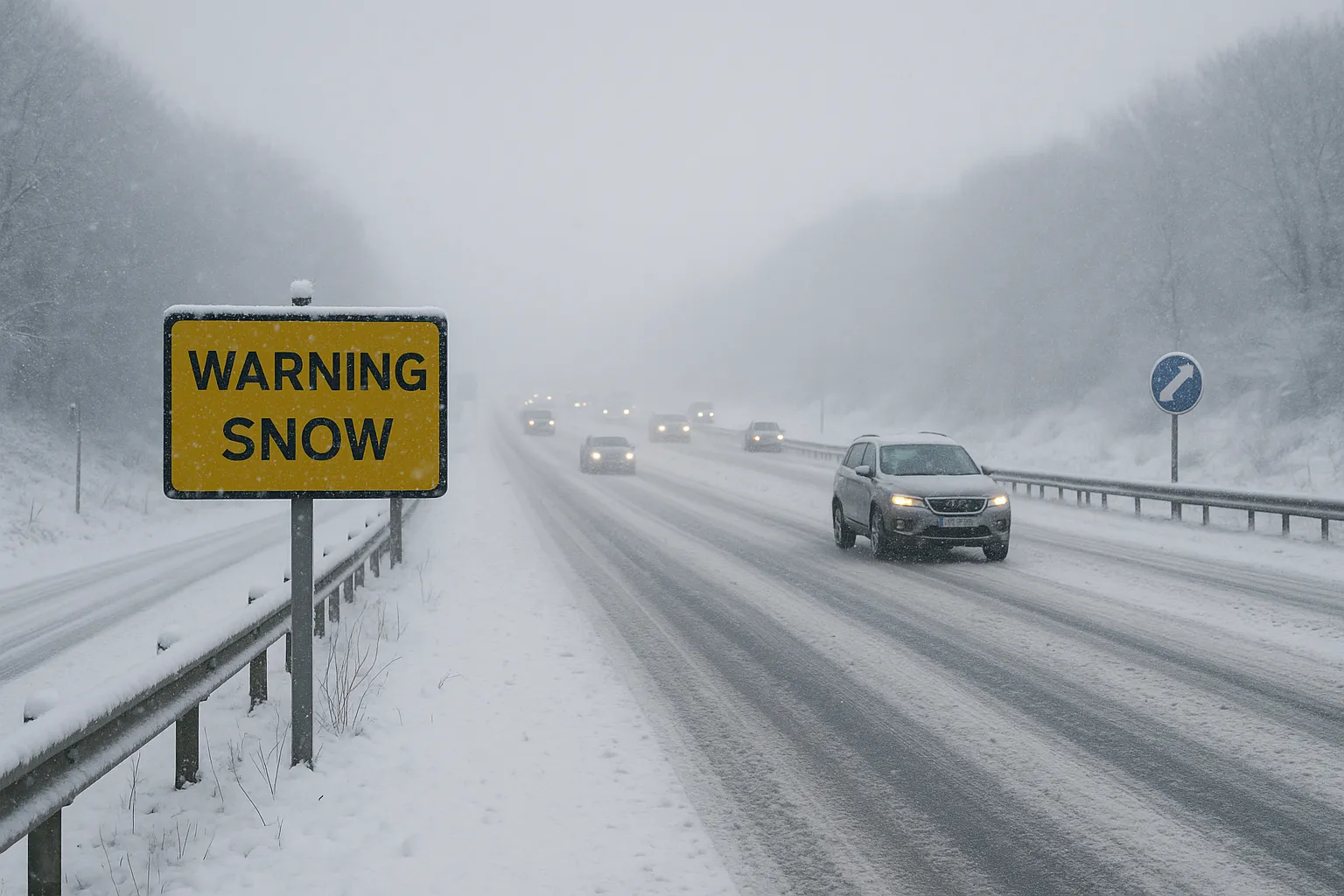
Story Highlight
– Snow and ice warnings issued across the UK.
– Amber warnings for northern Scotland starting Friday midday.
– Up to 40cm of snow expected in higher areas.
– Travel disruptions anticipated across England and Wales.
– UKHSA warns cold weather may impact health services.
Full Story
Snow and ice are set to sweep across parts of the UK on Friday, prompting warnings of potential travel disruptions. The Met Office has already issued yellow weather alerts for snow and ice in various regions, with amber warnings specifically for northern Scotland scheduled to take effect at midday. The wintry conditions are expected to advance south-eastward, impacting numerous areas in England and Wales as the day unfolds.
During the morning, a yellow weather alert covering significant areas, including London, Greater Manchester, and Cardiff, will be effective. Concurrently, a yellow ice warning has been activated in the south-west of England. Forecasters predict that some locations may experience around 2cm of snowfall, while higher elevations could see accumulations of up to 5cm.
The adverse weather has already led to complications for motorists in the Highlands and the north-east of Scotland, particularly on New Year’s Day. As Friday progresses and into the weekend, residents can expect even heavier snowfall, with the Met Office indicating that low-lying areas may see 20cm of accumulation and higher ground potentially receiving up to 40cm.
The amber warnings for snow will remain in effect until noon on Saturday and cover regions encompassed by the broader yellow weather alerts. The Met Office cautioned that areas within the amber designation could experience power outages and stranded vehicles due to severe weather conditions. They described the amber warning as indicative of “heavy snow showers [that] will become more frequent and may merge to give longer spells of snow at times,” underlining that this warning pertains to the anticipated heaviest and most disruptive snowfall during the current cold period.
In addition to the heavy snowfall expected, windy conditions are forecasted, raising the possibility of drifting snow and temporary blizzard-like situations. Chief Superintendent Scott McCarren, who oversees road policing for Police Scotland, has urged the public to rethink travel plans during these hazardous weather conditions. He stated, “Our advice is to plan ahead and consider if your journey is really necessary during the bad weather or if it can be delayed until conditions improve,” urging individuals to be prepared for possible delays and to allow additional time if travel is essential. He reiterated the importance of complying with road closures, noting that such decisions are made with public safety in mind.
Throughout Friday, the yellow warnings are set to cover extensive areas of England and Wales from midnight until noon, affecting regions from Chester and Greater Manchester all the way down to London and Kent. Additionally, separate yellow warnings are in place for Northern Ireland, effective until 10am on Friday.
As the weather develops, people are being advised to anticipate longer journey times, particularly when using road, bus, or train services. The Automobile Association (AA) has projected that Friday could see up to 20.7 million road trips across the UK, following a quieter New Year’s Day where only 18 million journeys were anticipated.
A spokesperson for the Met Office noted, “We expect this cold spell to persist into the weekend and on into next week, with further warnings possible as temperatures remain well below average and snow showers continue in places.” The ongoing cold snap signifies a sustained period of challenging weather conditions.
Furthermore, the UK Health Security Agency (UKHSA) has issued health-related warnings for the onset of the year, extending until 10am on January 6. These advisories indicate that the harsh conditions could have considerable effects on health and social care services, including a likely rise in mortality among those aged 65 and older or with underlying health issues.
Dr Paul Coleman, a consultant in health protection at the UKHSA, emphasised the severe implications of the cold weather, referring to the forecast of very low temperatures across England in the coming days. He explained that exposure to such cold can significantly increase the risk of heart attacks, strokes, and chest infections. In light of these risks, he stressed the importance of checking in on vulnerable relatives, friends, and neighbours during this cold spell.
The combination of heavy snowfall and biting cold poses a challenge for communities across the UK as they prepare for what could be one of the busiest travel days following the New Year festivities. Local authorities and services stand ready to respond to the conditions, with continued monitoring of the weather situation throughout the weekend to ensure public safety and facilitate necessary assistance to those in need.
Our Thoughts
The adverse winter weather, characterized by snow and ice across the UK, raises several safety concerns. To mitigate risks during such conditions, key lessons can be learned. Firstly, proper advance communication and dissemination of weather warnings from authorities can help at-risk individuals and organizations prepare adequately. Employers must adhere to the Health and Safety at Work Act 1974, ensuring risks related to adverse weather conditions are assessed and managed, including the safety of employees commuting to work.
Secondly, effective planning for travel can minimize accidents. Chief Superintendent Scott McCarren’s advice underlines the importance of evaluating the necessity of travel; organizations should enforce policies that allow for flexible working arrangements during severe weather to prevent employee risk.
Furthermore, local councils and road authorities must ensure timely road clearance and maintain clear communication on road closures in line with the Road Traffic Regulation Act 1984. The failure to heed weather warnings can result in breaches of health and safety regulations, particularly concerning the well-being of vulnerable populations, as highlighted by the UKHSA.
In summary, proactive planning, effective communication of warnings, and adherence to safety regulations can significantly reduce the impact of severe weather on health and safety.