
















Story Highlights
– Shell UK fined £560,000 for maintenance failures.
– Corroded pipework led to significant hydrocarbon release.
– 2017 incident endangered over 170 platform personnel.
– Investigation revealed deficiencies in safety management systems.
– Importance of strengthening inspection regimes highlighted.
Full Story
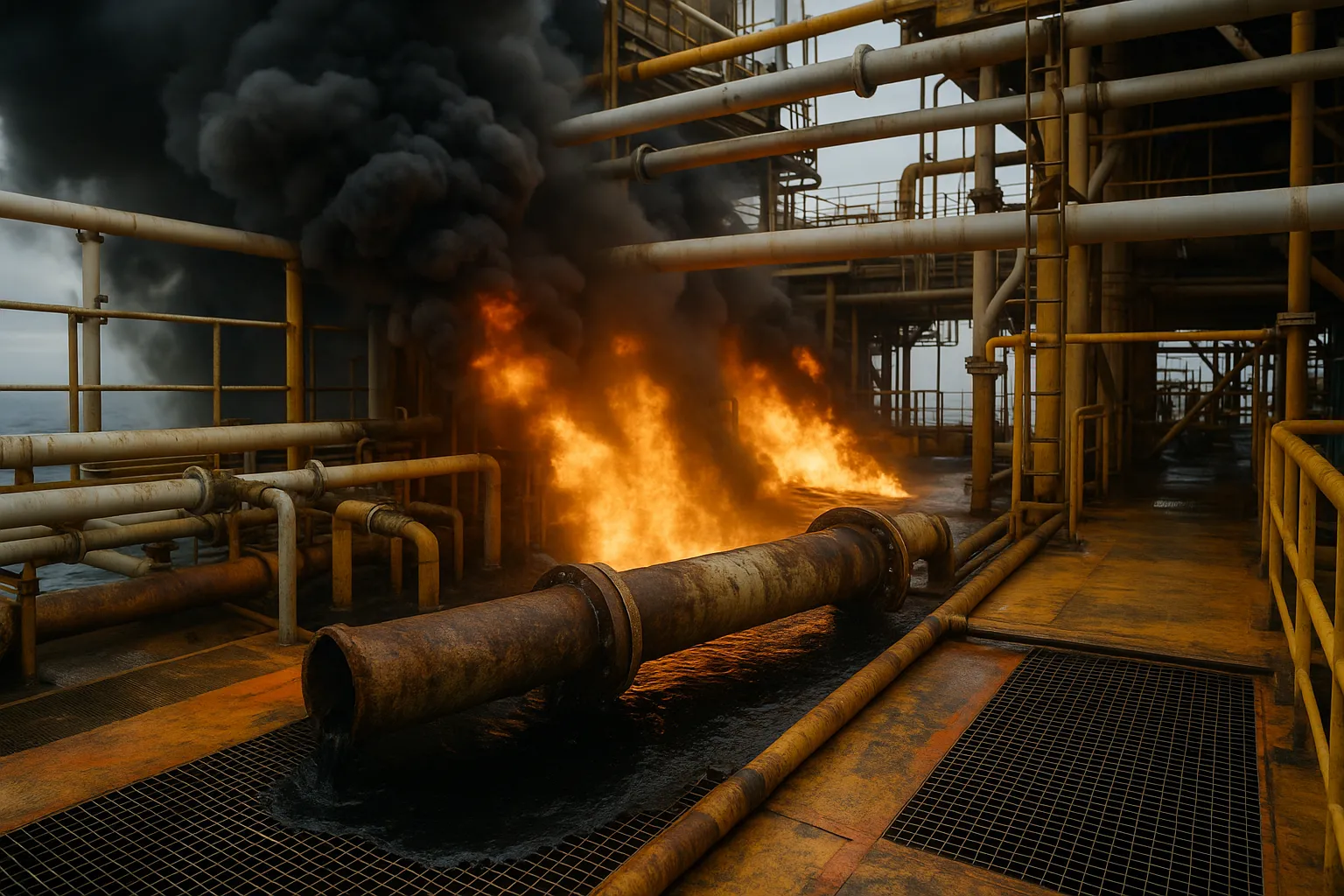
Shell UK Limited has been handed a substantial fine of £560,000 following a severe incident at its Brent Charlie offshore platform in the North Sea, where deficiencies in maintenance led to a significant release of hydrocarbons. The incident, which took place on 19 May 2017, highlights critical lapses in safety regulations and operational oversight in the oil and gas sector.
During a court hearing at Aberdeen Sheriff Court, it was revealed that for a prolonged period of seven years, the pipework on the Brent Charlie platform had not been adequately maintained. Specifically, the deterioration of the Return Oil Line (ROL) pipe within the facility’s concrete leg Column 4 resulted in the escape of hydrocarbon fluids—specifically 200 kilograms of gas and 1,550 kilograms of crude oil. This incident marked the largest uncontrolled hydrocarbon release recorded on the UK Continental Shelf in that year, as reported to the Health and Safety Executive (HSE).
The implications of this leak were grave, with over 170 personnel present on the platform facing potential exposure to catastrophic risks, including fire and explosion, had the leaked hydrocarbons ignited. The HSE initiated an investigation into the circumstances surrounding the incident, leading to findings that pointed to significant shortcomings in Shell’s safety management systems.
The investigation unveiled that the section of pipework in question, initially intended for short-term use, had been neglected for maintenance since its installation, which was originally scheduled for removal in 2010. Its corrosion over the years ultimately culminated in the catastrophic failure on that fateful May day.
Moreover, the failure was exacerbated by malfunctioning ventilation systems that were supposed to counteract the hazards associated with hydrocarbon gas emissions. Both the extract and supply fans designed to mitigate these risks were also inadequately maintained, resulting in a heightened risk for the 176 individuals working on the platform.
Sheriff Ian Duguid, who presided over the case, acknowledged the seriousness of the situation, noting that Shell UK should have recognized the inadequacy of the temporary carbon steel spool inappropriately left in place for extended use. He remarked that the firm’s failure to replace the substandard component contributed significantly to the risk of the incident.
In light of these findings, Shell pleaded guilty to two charges under the Offshore Installations (Prevention of Fire and Explosion, and Emergency Response) Regulations 1995 (PFEER). After careful consideration of the mitigating factors presented, the court imposed a fine of £560,000 on the company.
Following the proceedings, Dozie Azubike, an Offshore Health and Safety Inspector for the HSE, commented on the incident’s severity, stating, “At more than 1,750kg, Shell Brent Charlie’s hydrocarbon release was the largest reported to HSE in 2017. This release occurred in a confined space with limited access – it is simply fortunate that no one was in the leg at the time, or they could have been asphyxiated from the hydrocarbon-rich atmosphere, quite apart from any fire and explosion risk.”
Azubike further emphasized that while the offshore sector has made strides in reducing the frequency of hydrocarbon leaks overall, several significant incidents continue to pose drastic risks to personnel and the environment. He urged operators to reassess their management procedures regarding temporary spools and inspection regimes to enhance safety protocols. Increased scrutiny in inspection frequency of safety-critical equipment, combined with thorough evaluations of maintenance histories, is essential for preventing such incidents.
The HSE has played a pivotal role in developing comprehensive guidance on managing corrosion in oil and gas production, alongside offering resources aimed at reinforcing industry standards. The organisation continues to advocate for a more vigilant approach towards safety regulations to protect workers and prevent operational hazards.
This case serves as a sobering reminder for the oil and gas industry. It calls attention to the critical need for stringent oversight and maintenance of infrastructure to safeguard not only the environments in which they operate but also the health and safety of the workers involved. The industry is urged to adopt more rigorous practices to mitigate risks associated with aging infrastructures, particularly as the pressures of sustaining production continue to grow.
As Shell UK faces the consequences of its oversights, the incident reaffirms the importance of adhering to safety regulations and maintaining operational integrity in the pursuit of energy resources. The road ahead will require the entire industry to reflect on these lessons to prevent future occurrences of similar nature and ensure the safety of all personnel operating offshore.
Our Thoughts
Shell UK failed to maintain pipework for seven years on the Brent Charlie platform, resulting in a significant hydrocarbon release that could have led to catastrophic consequences. To prevent this incident, the company should have adhered to the Offshore Installations (Prevention of Fire and Explosion, and Emergency Response) Regulations 1995 (PFEER), specifically by implementing an effective safety management system that included regular inspections, timely maintenance, and replacement of unsuitable materials.
Key lessons include the necessity of robust management of change processes for temporary installations and the importance of strengthening inspection regimes to identify internal corrosion. The inadequacy of ventilation systems further exacerbated risk, highlighting the need for rigorous maintenance of safety-critical equipment.
To prevent similar incidents, companies in the oil and gas sector should prioritize comprehensive training and adherence to guidance provided by the Health and Safety Executive (HSE), particularly regarding corrosion management and equipment maintenance. Regular audits and a proactive approach to risk assessment are essential to ensure safety and compliance with UK health and safety legislation.