















Story Highlight
– Heavy snow causes extensive travel disruptions across the UK.
– Amber cold health alert issued for vulnerable populations.
– Eurostar services postponed, affecting London-Netherlands travels.
– Low temperatures expected, dropping to -12C tonight.
– TUC advises remote work to ensure employee safety.
Full Story
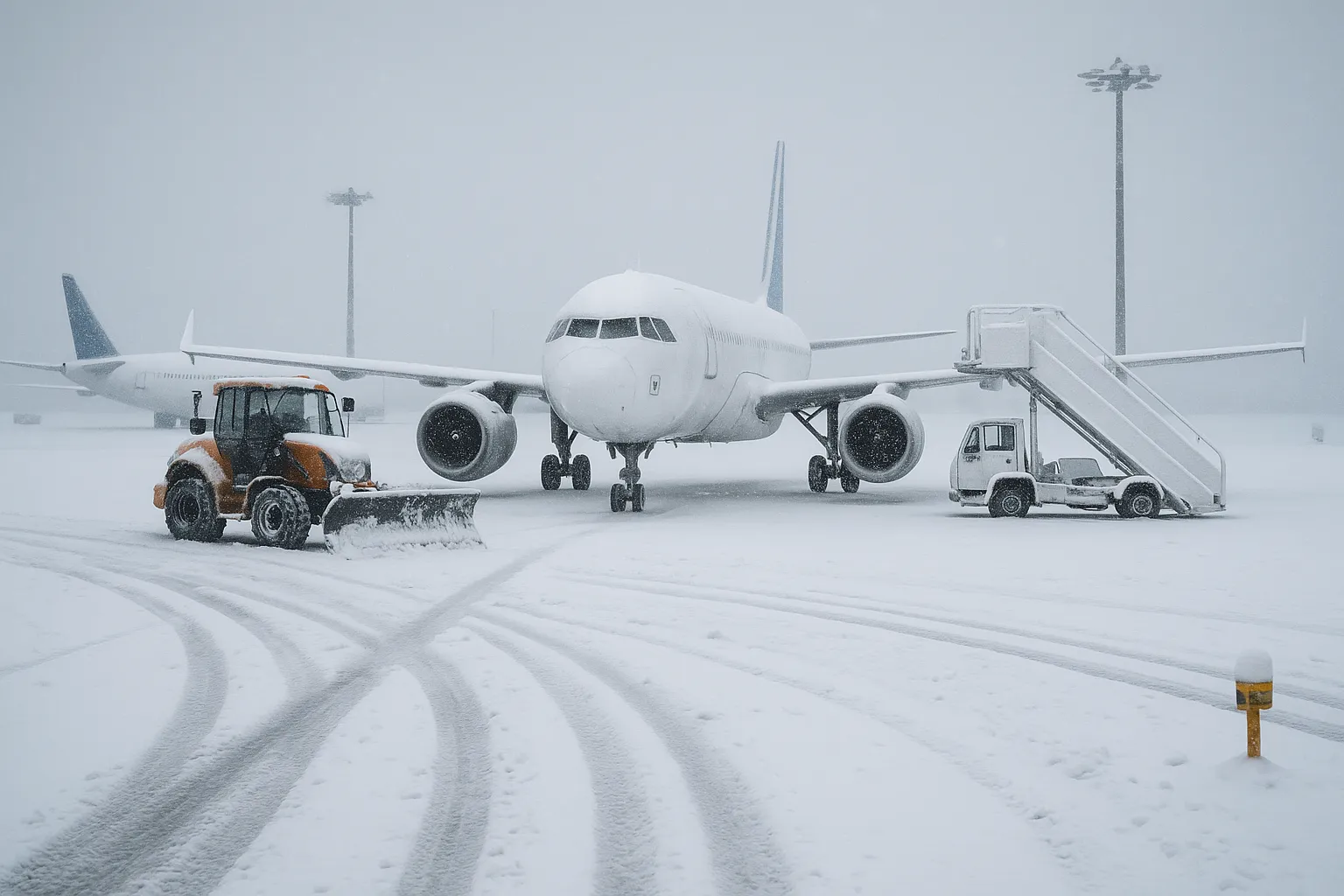
Heavy snow across the UK has resulted in widespread travel chaos, with numerous flights and train services cancelled and hundreds of schools closed. This disruption comes amid an ongoing cold snap expected to last throughout the week. Airports in Liverpool, Aberdeen, Inverness, and Belfast International have been particularly affected, with blocked runways leading to significant flight cancellations.
Rail services are not spared, especially on the East Coast Mainline where LNER has advised passengers not to travel for the remainder of the day due to severe weather conditions. The situation has also led to disruptions for services in Wales and northern Scotland. Furthermore, Eurostar has recommended that travellers with plans to journey between London and the Netherlands should postpone their trips, as they are unable to operate services beyond Brussels.
Many regions in Wales have also reported travel disruptions due to wintry conditions, affecting routes including those between Llandudno and Blaenau Ffestiniog, as well as Machynlleth and Pwllheli, impacting connections to Manchester Piccadilly.
As Britain braces for potentially its coldest night of the winter so far, temperatures are anticipated to plunge as low as -12C (10F) in some areas, including London, where lows could drop to -6C (21F). Recent measurements have recorded chilling figures, such as -10.9C (12.4F) at Shap in Cumbria, marking it as England’s coldest night of the season to date. In some of Scotland’s most affected areas, over 52cm of snow has fallen, prompting the Met Office to issue amber weather warnings across large parts of the country.
Meteorologists have cautioned the public about an impending “multi-hazard event” expected on Thursday, with a low-pressure system likely to bring additional snowfall, heavy rain, and strong winds. There is also a possibility that snow may reach the southern regions of the UK as this system advances, ultimately leading to milder weather later in the week, with temperatures possibly rising to levels comparable to those in Spain by the weekend.
The UK Health Security Agency (UKHSA) has extended an amber cold health alert throughout England, expecting increased pressure on health services and a rise in health-related incidents, especially among older adults and those with underlying health conditions. Dr Agostinho Sousa, who heads extreme events and health protection at UKHSA, urged individuals to check on vulnerable relatives and neighbours during this severe weather. He highlighted, “The forecast temperatures can have a serious impact on the health of some people,” warning of heightened risks for those over the age of 65.
As many people return to schools and workplaces following the festive season, numerous snow and ice alerts have been issued. The NHS has advised that older adults should keep living environments heated to at least 18C, remain active indoors, and wear appropriate warm clothing. Government guidelines have recommended that individuals avoid prolonged periods of inactivity to mitigate the risk of health issues arising from cold exposure.
The Trades Union Congress (TUC) has called on employers to permit remote work during severe weather, asserting that no employee should feel compelled to undertake hazardous journeys. A TUC representative remarked, “Good bosses will already have bad weather policies in place so staff know where they stand.”
Reports have surfaced from residents who experienced issues with heating systems, particularly with frozen condensate pipes resulting in boiler failures. Concurrently, households are facing the impact of increased energy bills starting from 1 January, following a 0.2% rise in Ofgem’s energy price cap, which translates to a monthly increase of 28p for the average home on a standard variable tariff.
The AA has identified today as a potentially hazardous “Manic Monday,” anticipating that around 22 million cars will be on the roads. Motorists are cautioned to anticipate breakdowns from cold-related issues, such as flat batteries, especially for cars that have not been in use during the festive period.
Warnings for snow and ice remain in effect throughout Scotland, Northern Ireland, and northern England, while additional alerts extend to the east of England and the west of Wales, including regions like Devon and Cornwall. Numerous schools across Scotland, including those in Shetland, Orkney, and Aberdeenshire, are closed, alongside various establishments across England and Wales.
Train services in northern Scotland are not expected to resume until late Tuesday, with significant disruptions affecting several routes. Passengers are advised to stay informed on service updates and to be prepared for continued travel interruptions in the coming days.
The Met Office continues to observe adverse weather conditions, with accumulations of snow recorded at various stations. Initially, inland areas may experience milder weather, while northern and eastern parts will continue to see snowfall, transitioning to lighter conditions as the day progresses.
Matthew Lehnert, the Met Office chief meteorologist, noted, “The UK will continue to experience a range of winter weather hazards through this week,” and urged the public to remain vigilant regarding ongoing weather updates. With forecasts indicating a significant low-pressure system arriving later in the week, further clarity on potential impacts is expected as the situation develops.
Amid the severe weather, some members of the community have embraced the winter conditions with creativity, such as Fiona Clarke, who sculpted a large snow shark as part of a playful cold water swimming experience in a Scottish loch. Describing her creation, she expressed her joy in winter play, demonstrating a spirit of resilience amidst the ongoing challenges posed by the severe weather.
Our Thoughts
The news article highlights significant travel disruptions across the UK due to severe winter weather, resulting in cancelled flights, train services, and school closures. To mitigate such incidents in the future, several key lessons can be identified.
1. **Proactive Risk Assessment**: Employers and transportation authorities should implement comprehensive winter weather plans aligning with the Management of Health and Safety at Work Regulations 1999. This includes risk assessments for adverse weather conditions and guidelines for staff travel during severe weather.
2. **Clear Communication**: Airlines and rail services need to enhance communication strategies regarding travel status and safety advisories, as per the Consumer Rights Act 2015, ensuring customers are well-informed of their rights during disruptions.
3. **Employee Support Policies**: Businesses should adopt clear policies that allow employees to work from home during severe weather, as recommended by the Health and Safety Executive, to avoid unnecessary risks when travelling.
4. **Public Awareness Campaigns**: Initiatives to educate the public about preparing for extreme weather, including home heating and personal safety, can reduce health risks associated with cold weather, particularly among vulnerable populations.
Overall, adherence to relevant health and safety regulations and proactive measures can significantly reduce the impact of similar incidents in the future.