

















Story Highlight
– Syngenta fined £400,000 after high-pressure steam incident.
– Contractor narrowly escaped serious injury during maintenance work.
– Investigation revealed failures in isolation valve and bolts.
– Unsafe single isolation method used for maintenance work.
– Company pleaded guilty to inadequate risk assessment practices.
Full Story
A leading global chemicals manufacturer has received a substantial fine of £400,000 following a significant incident involving high-pressure steam that nearly resulted in the serious injury of a contractor at its Huddersfield facility.
The case involved Syngenta Ltd, where a 59-year-old mechanical fitter was engaged in maintenance work on 6 November 2023. During a routine procedure, the contractor found himself in a precarious situation due to a malfunction that led to a hazardous release of steam. The circumstances of the incident were such that Syngenta was obligated to report it to the Health and Safety Executive (HSE) as a dangerous occurrence.
Syngenta Ltd operates an expansive site dedicated to the production of agrichemicals, where high-pressure steam is integral to its manufacturing processes. An HSE investigation uncovered that the incident unfolded while the worker was replacing a faulty steam trap that was part of a network of small-bore pipework.
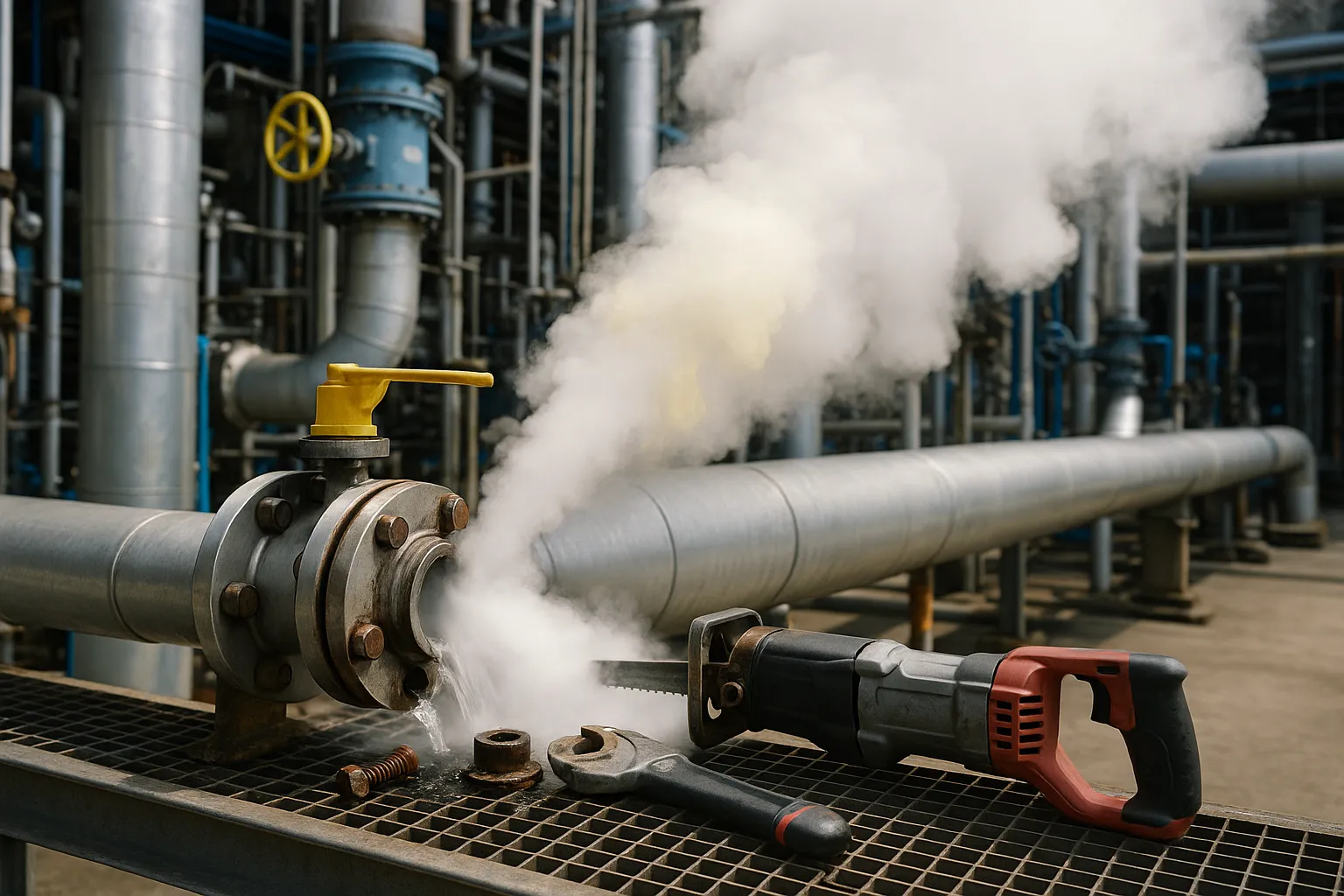
Steam traps serve a critical function in high-pressure systems, as they automatically expel condensate and air. However, in this scenario, a valve that was meant to isolate the work site from the steam system unexpectedly failed, resulting in a sudden and uncontrolled release of steam.
The inquiry into this event by HSE highlighted multiple failures in the operating procedures followed by Syngenta. Key findings of the investigation included:
1. The isolation valve failed to perform its function when the contractor attempted to separate a bolted flange using a battery-operated reciprocating saw.
2. Both the isolation valve and flange bolts were found to be severely corroded, indicating a lack of maintenance.
3. Given the widespread corrosion present in the flange bolts, it became standard practice to cut bolts instead of unscrewing them, thereby undermining the ability to manage any unexpected pressure or trapped materials in the system.
Syngenta Ltd pleaded guilty to charges regarding its failure to ensure that the isolation valve and flange bolts were preserved in an efficient and safe condition, contravening Regulation 5(1) of the Provision and Use of Work Equipment Regulations 1998 (PUWER). Furthermore, the company was also found wanting in its documented risk assessment procedures prior to the undertaking of such maintenance tasks. The firm’s routine practice for handling maintenance on the high-pressure steam distribution system relied heavily on a single method of isolation, which heightened the risk of potential accidents.
HSE guidelines advocate for a double isolation method as a more secure approach in maintenance scenarios. However, Syngenta’s risk assessment documents failed to acknowledge the elevated hazards associated with using a singular isolation method, especially given the known corrosion affecting the equipment.
On 28 January 2026, at Leeds Magistrates’ Court, Syngenta Ltd, headquartered in Bracknell, Berkshire, entered a guilty plea to the two cited offenses, which resulted in the aforementioned fine, along with an additional cost order of £8,288.
HSE Inspector David Welsh commented on the incident, stating, “If a safe system of work had been in place at the site when the maintenance was being carried out, this dangerous incident would not have happened. The company did not appreciate the extent of the risk posed because of the way the maintenance work was being done, and the relatively simple control measures that could have been applied to make it safer were overlooked. Syngenta not only failed to produce an appropriate risk assessment but also did not maintain work equipment in a safe condition—altogether, this situation led to a dangerous incident waiting to happen.”
This prosecution was undertaken by HSE enforcement lawyer Iain Jordan and paralegal officer Zara Salman, illustrating the regulatory body’s commitment to workplace safety.
The Health and Safety Executive (HSE) serves as the UK’s principal authority overseeing health and safety in professional environments. Its mandate includes safeguarding individuals and communities and ensuring that everyone enjoys a safer, healthier life.
For those interested in more details surrounding the legislative aspects involved in this case, further information is available. Additionally, updates and guidance on effective safety measures, such as ensuring the safe isolation of plant and equipment, can be accessed through relevant resources provided by the HSE.
It is important to note that while the HSE enforces regulations and oversees compliance, it does not have the authority to impose sentences, set fines, or determine penalties, as these actions fall under judicial discretion based on established sentencing guidelines for health and safety infractions. Relevant sentencing protocols can be reviewed for context on penalties associated with workplace safety violations.
Our Thoughts
The incident at Syngenta Ltd highlights critical failures in safety management which could have been avoided. Key lessons include the need for robust maintenance protocols to ensure isolation valves and associated equipment are maintained in good repair, as mandated by Regulation 5(1) of the Provision and Use of Work Equipment Regulations 1998 (PUWER).
Additionally, the reliance on a single method of isolation for maintenance work reflects a failure to comply with Regulation 3(1) of the Management of Health and Safety at Work Regulations 1999, which requires a suitable risk assessment. The risks associated with known corrosion in the system were not adequately addressed, illustrating a lack of consideration for effective control measures, which are emphasized in the HSE’s guidance on safe isolation.
To prevent similar incidents, companies should implement comprehensive and frequent inspections of equipment, employ double isolation methods in riskier conditions, and ensure maintenance personnel are trained to recognize and address potential hazards effectively. Stronger adherence to existing regulations and proactive risk management could enhance workplace safety in such environments.