










Story Highlight
– UK relies on hazardous chemicals in daily products.
– Post-Brexit, HSE struggles with hazard classifications.
– New regulations proposed, complicating EU alignment efforts.
– UK may adopt unsafe chemical policies from other countries.
– Changes risk public health and environmental protections.
Full Story
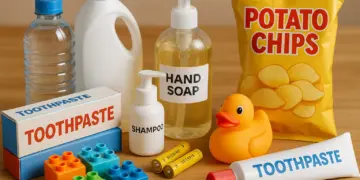
Industrial chemicals are an integral part of modern life, embedded in everyday items such as toothpaste and toys. Their presence underscores the necessity of understanding which substances pose hazards, enabling safe usage and minimising exposure risks. Without adequate hazard information, workers are left unprotected, public health officials struggle to set safe limits for these chemicals in food packaging, and environmental scientists face challenges in advocating for necessary bans on substances harmful to wildlife.
Before Brexit, the UK was part of the European Chemicals Agency (ECHA), benefiting from a collaborative framework that drew on scientific insights from 27 member nations. Within this system, a recognised hazard could trigger a series of regulatory protections concerning workers, children, and broader environmental health. However, following Brexit, the Health and Safety Executive (HSE) has taken on the dual role of policy-maker and regulator in Great Britain regarding hazard classification. It is essential to note that Northern Ireland continues to align with EU regulations to facilitate seamless trade across the island.
The transition to the new system has not been without difficulties. The HSE has openly acknowledged the challenges it faces in managing the complexities of chemical safety. In June 2025, they proposed severing the connection between the UK’s classification system and that of the EU, opting instead to emulate decisions made in various jurisdictions around the world. This proposal has raised concerns among health advocacy groups, environmental organisations such as Fidra, workers’ unions, and certain businesses, who argue that such a shift might complicate existing processes rather than simplify them.
Heather McFarlane, a representative of Fidra, an environmental charity based in Scotland, highlights these concerns. As a professional with a Master’s degree in Chemistry from the University of Edinburgh and a member of the Royal Society of Chemistry, her insights are critical in understanding the implications of such regulatory changes. Recently, the HSE announced that the EU would remain the only viable benchmark for similar regulations, leading to a decision to amend existing laws in a manner intended to facilitate alignment with EU standards. However, the specifics of these amendments were not fully disclosed, leaving the Scottish Energy Secretary Gillian Martin and the Scottish Parliament’s Net Zero, Energy and Transport Committee with limited information to work from.
Despite some concerns, the committee agreed to provide Scottish consent, reassured by the promise of maintaining alignment with EU standards. However, subsequent developments have raised flags. The HSE introduced draft legislation in Westminster that suggests a departure from previously discussed regulations. This draft permits the UK to draw hazard decisions from non-EU countries, abolishes statutory time constraints, and eliminates the obligation to engage with EU hazard assessments comprehensively.
The implications of these changes could be significant, creating a disordered selection process where the UK might adopt standards from nations with far less stringent chemical safety regulations. For instance, there is potential for the UK to accept classifications from countries that do not acknowledge the dangers of well-documented hazards such as asbestos. In stark contrast, the EU continues to advance its regulations, exemplified by recent measures aimed at protecting children’s health from harmful chemical substances that disrupt hormonal functions.
The recognized need for vigilance in product safety is highlighted by recent EU regulations prohibiting the use of endocrine-disrupting chemicals in toys targeted at children. These new protections depend fundamentally on the accurate identification and classification of such hazardous chemicals. Currently, the UK’s lack of alignment with these classification standards means that harmful chemicals could still find their way into children’s toys in Scotland, despite such risks being mitigated in Northern Ireland due to its adherence to EU regulations.
In light of the HSE’s recent legislation, there is an apparent erosion of vital safeguards. Key protections have been stripped away, including statutory deadlines for decision-making and the requirement to consider all EU scientific opinions and assessments, as well as oversight mechanisms for devolved administrations. Given that hazard classification plays a critical role in public health and environmental safety, these amendments undermine existing protections, posing heightened risks to product safety and exposing the population and ecosystem to potentially hazardous chemicals.
The trajectory of these developments has sparked considerable unease, signalling a concerning precedent that could leave both public health and environmental integrity at greater risk. As the landscape of chemical regulation continues to evolve in the post-Brexit context, the ongoing vigilance of health experts, environmental activists, and concerned citizens is essential to ensure that the health of the public and the safety of the environment are not compromised in the face of regulatory changes undoubtedly influenced by broader political currents. Heather McFarlane’s contributions through her work with Fidra highlight the urgent need for cohesive and robust policies that prioritise health and safety amid these transformations.
Our Thoughts
The article highlights significant concerns regarding the UK’s approach to chemical hazard classification post-Brexit, which may compromise safety. To avoid future risks, a more robust framework for chemical classification aligning closely with the EU regulations should be maintained, ensuring comprehensive safety assessments are in place.
Key safety lessons include the necessity of transparent communication about regulatory changes and the importance of statutory deadlines for hazard evaluations. The Health and Safety Executive (HSE) must prioritize resources to maintain effective oversight rather than simplifying processes that may result in hazardous materials entering the market.
Relevant UK health and safety legislation potentially breached includes the Health and Safety at Work Act 1974, which mandates the provision of a safe working environment. Additionally, the Control of Substances Hazardous to Health (COSHH) Regulations requires the assessment and management of risks associated with hazardous substances.
To prevent similar incidents, it is crucial to involve stakeholders—such as environmental groups and health experts—in the regulatory process, ensuring all chemicals are thoroughly classified and scrutinized before market authorization. Regular reviews and alignment with established safety standards should be enforced to protect public health and the environment.