















Asbestos in the Workplace: Control of Asbestos Regulations 2012 (CAR) Essentials
Last updated: 7 September 2026
Author: Jade Anderson, Senior Reporter, UK-Safety.News
Reading time: about 13 minutes
What this guide covers
- Why asbestos still matters
- Where asbestos is found
- The law: CAR 2012 and who holds duties
- The duty to manage, step by step
- Licensed, notifiable non licensed and non licensed work
- The control limit
- Training categories
- If you disturb asbestos
- Waste disposal
- HSE guidance by code
- Case study
- Common mistakes
- Frequently asked questions
- Further resources
Why asbestos still matters
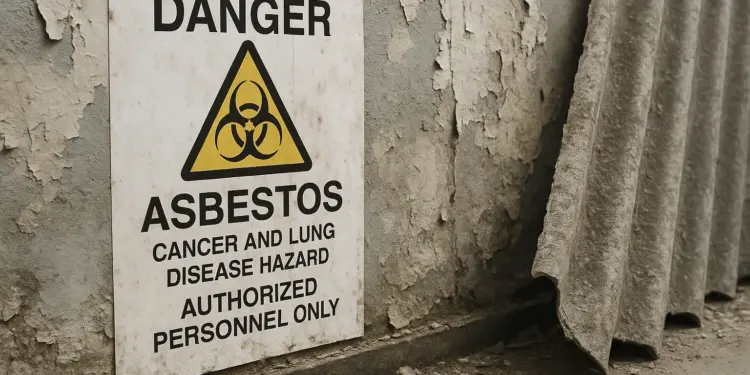
Asbestos was banned in Great Britain in 1999, yet it remains the biggest cause of work related death. HSE’s asbestos related disease statistics published in 2026 put the toll at around 5,000 deaths a year from mesothelioma, asbestos related lung cancer and asbestosis combined, with 2,146 mesothelioma deaths recorded in 2024 alone.
Those deaths result from exposures decades ago, because asbestos diseases take 15 to 60 years to develop. That delay is why the risk is easy to underestimate now: an electrician who drills through an asbestos insulating board ceiling today feels nothing and goes home. Whether the numbers keep falling depends on how well today’s building owners and trades handle the asbestos still in place. That is what the Control of Asbestos Regulations 2012 are for.
Where asbestos is found
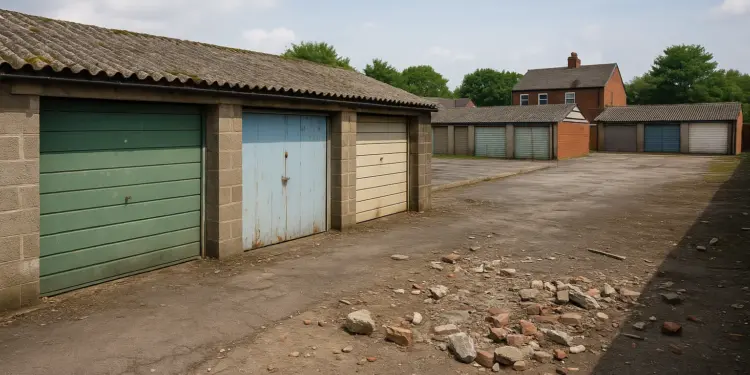
Any building constructed or refurbished before 2000 may contain asbestos. Asbestos containing materials (ACMs) vary enormously in risk: sprayed coatings and lagging release fibres at a touch, while asbestos cement is tightly bound and releases few fibres unless cut, drilled or broken. The table runs roughly from highest to lowest risk.
| Material | Typical locations | Notes |
|---|---|---|
| Sprayed coatings | Structural steel, underside of roofs in warehouses, plant rooms, car parks | Highest fibre release. Licensed work only. Often hidden above suspended ceilings. |
| Loose fill insulation | Lofts, wall cavities, between floors | Pure asbestos. Licensed work only. |
| Thermal insulation (lagging) | Pipework, boilers, calorifiers, ducts in boiler houses and risers | Licensed work. Debris on a plant room floor is a warning sign. |
| Asbestos insulating board (AIB) | Ceiling tiles, partitions, fire doors, soffits, riser linings, boiler panels | Licensed unless the work is short duration. Looks like ordinary board. Very common in 1950s to 1980s schools, hospitals and offices. |
| Millboard and paper | Electrical equipment linings, fuse boxes, heater backing | Licensed work. Often found by electricians. |
| Textured decorative coatings | Ceilings and walls | Usually non licensed. Dry sanding or scraping releases fibres. |
| Asbestos cement | Corrugated roof and wall sheets, gutters, downpipes, flues, water tanks | Usually non licensed. Fragile: never walk on it. Never power cut it. |
| Floor tiles, bitumen, mastics | Vinyl tiles and adhesive, roofing felt, window mastic | Non licensed. Low release unless abraded or heated. |
| Gaskets, rope seals, brake linings | Boilers, flanges, ovens, old plant and vehicles | Non licensed. Easily overlooked in maintenance. |
If you cannot tell what a material is, treat it as asbestos. That presumption is what regulation 4 requires.
The law: CAR 2012 and who holds duties
The Control of Asbestos Regulations 2012 (CAR 2012) apply to Great Britain and are enforced by HSE, local authorities and the Office of Rail and Road depending on the premises. The Approved Code of Practice is L143, Managing and working with asbestos (second edition, 2013). Two groups hold duties, and many organisations are in both.
| Role | Who it is | Main duties |
|---|---|---|
| Dutyholder (regulation 4) | The owner, landlord, or the person or organisation with clear responsibility for maintenance and repair of non domestic premises, or of the common parts of residential blocks | Find or presume ACMs, keep a register, assess risk, write and act on a management plan, review it, and give the information to anyone who may disturb the material |
| Employer of anyone who may disturb asbestos | Contractors, maintenance teams, facilities providers and the self employed | Identify asbestos before work starts (regulation 5), assess and plan the work, keep exposure as low as reasonably practicable below the control limit, train workers (regulation 10), control waste, and for licensed or notifiable work, notify, keep records and arrange medical surveillance |
Breaches are prosecuted under CAR 2012 and sections 2 and 3 of the Health and Safety at Work etc. Act 1974, and directors personally under section 37. The asbestos register is part of the pre construction information owed to contractors under CDM 2015; see our guide to managing contractors under CDM 2015.
The duty to manage, step by step
Regulation 4 is where most building owners and facilities managers meet asbestos law. It is a cycle, not a one off task.
Step 1: Confirm who the dutyholder is
In a single occupancy building the owner occupier usually holds the duty. In leased premises it follows the repair obligation in the lease, and where responsibility is shared each party holds it to the extent of their control. If the lease is silent, agree it in writing.
Step 2: Find out whether ACMs are present
Commission a survey from a competent surveyor. HSG264, Asbestos: The survey guide, describes two types and it matters which one you buy.
| Management survey | Refurbishment and demolition survey | |
|---|---|---|
| Purpose | Locate, as far as reasonably practicable, ACMs that could be damaged or disturbed during normal occupancy and maintenance, and assess their condition | Locate and describe all ACMs in the area to be refurbished, or the whole building if it is to be demolished |
| How intrusive | Minor: ceiling voids, risers, ducts, simple hand tools | Fully intrusive and destructive: walls, floors and partitions opened up |
| When | While the building is occupied, as the basis of the register | Before any refurbishment, demolition or structural disturbance |
| Output | Register with material and priority assessments | A list of ACMs for removal before work starts |
A management survey does not clear you to knock a wall down; a refurbishment and demolition survey of the affected area is needed first, every time.
Step 3: Presume where you cannot prove
Where a material has not been sampled, presume it contains asbestos unless there is strong evidence that it does not. “Presumed” in a register is acceptable; a blank is not.
Step 4: Build the asbestos register
Record the location, type, extent and condition of every known or presumed ACM, with photographs and plans. List areas the surveyor could not access, so nobody assumes they are clear.
Step 5: Assess the risk
A material assessment (how readily the product releases fibres) and a priority assessment (how likely it is to be disturbed) together set the priority. A sound AIB panel in a locked riser scores lower than a damaged one in a busy corridor.
Step 6: Write and implement the management plan
The plan says what you will do with each ACM: leave in place and manage, encapsulate, label, restrict access or remove. It names who is responsible, how the register is kept current, how contractors are briefed, and what the emergency procedure is. Removal is not automatically safest.
Step 7: Tell people
Give the location and condition of ACMs to anyone liable to disturb them, including the emergency services. In practice that means a permit step that requires the register to be checked before any drilling, fixing, cabling or demolition.
Step 8: Review
Re inspect ACMs at the interval your assessment sets and review the plan at least once a year, or sooner after damage, a new tenant or a refurbishment.
Licensed, notifiable non licensed and non licensed work
CAR 2012 sorts work that disturbs asbestos into three tiers. Regulation 3 sets the boundary: work is licensable unless exposure is sporadic and of low intensity, the risk assessment shows the control limit will not be exceeded, and the work is one of the lower risk types (short duration work on AIB, encapsulation of materials in good condition, air monitoring and sampling, or work on asbestos cement and similar bonded products).
“Short duration” is precise. Work is not short duration if, in any seven day period, it takes more than two hours in total or any one person works on it for more than one hour.
| Licensed work | Notifiable non licensed work (NNLW) | Non licensed work | |
|---|---|---|---|
| Examples | Removing sprayed coatings; disturbing pipe lagging; any work with loose fill; work on millboard; cleaning up significant loose debris; work on AIB that is not short duration | Lower risk materials in poor condition, such as removing badly weathered asbestos cement sheets or degraded textured coating | A single fixing through AIB; removing whole asbestos cement sheets in good condition; removing floor tiles; gaskets and mastics in good condition; encapsulating sound materials |
| Who can do it | An HSE licensed contractor only | Trained, competent workers | Trained, competent workers |
| Notification | Form ASB5 to the enforcing authority at least 14 days before work starts | Online form ASBNNLW1 before work starts; no minimum notice period | None |
| Medical surveillance | Before exposure and at least every 2 years, by a relevant doctor | Before exposure and at least every 3 years | None |
| Records | Health records kept at least 40 years from the last entry; plan of work; air monitoring and clearance records | Register of work (nature, duration, estimated exposure) kept 40 years | Risk assessment and written plan of work |
| Controls | Enclosure, negative pressure, decontamination unit, four stage clearance by an independent analyst | Asbestos essentials method, wetting, Class H vacuum, RPE, decontamination | As NNLW, scaled to the task |
The line between NNLW and plain non licensed work turns on the type of work, how friable the material is, and its condition. HSE consulted between November 2025 and January 2026 on clarifying the NNLW definition, survey standards and the independence of clearance, so check current guidance before relying on a borderline classification.
The control limit
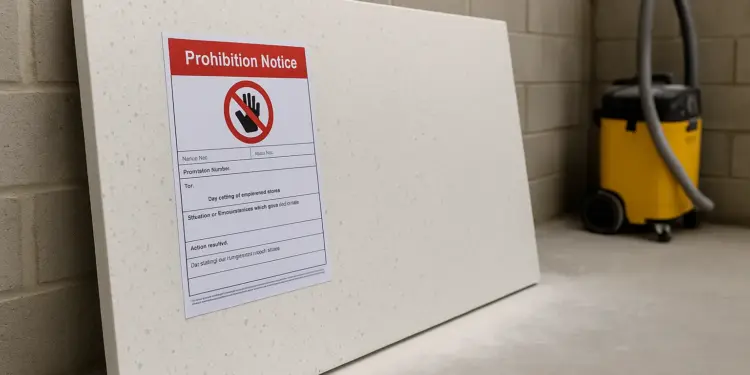
The control limit is 0.1 fibres per cubic centimetre of air (0.1 f/cm3), averaged over a continuous period of four hours and measured by the 1997 WHO recommended method. HSE also uses a short term figure of 0.6 f/cm3 over ten minutes when judging whether exposure is sporadic and of low intensity.
- It is not a safe level. HSE says so explicitly. The limit is a ceiling; the duty is to reduce exposure as low as reasonably practicable below it.
- Exceeding it, or being liable to, tips the work into the licensed tier. That is why a written risk assessment with a realistic exposure estimate is needed before work starts.
- Respiratory protective equipment is the last line. Controls that stop fibres becoming airborne (wetting, shadow vacuuming, hand tools, enclosures) come first. Where RPE is needed it must be adequate, face fit tested and worn clean shaven.
Training categories
Regulation 10 requires adequate information, instruction and training for anyone liable to be exposed to asbestos. HSE recognises three levels.
| Level | Who needs it | What it covers | Refresher |
|---|---|---|---|
| Asbestos awareness | Anyone whose normal work could disturb the fabric of a pre 2000 building but who is not meant to work on ACMs: electricians, plumbers, joiners, painters, roofers, shopfitters, caretakers | Health effects, where ACMs are found, how to avoid disturbing them, what to do if they are found or damaged | No fixed legal interval; HSE expects refreshers as necessary, which most employers deliver annually |
| Non licensable work (including NNLW) | Workers who will deliberately disturb lower risk ACMs: drilling AIB, removing floor tiles or asbestos cement | Awareness content plus risk assessment, task sheets, controls, decontamination, waste, and practical use of RPE | At least every year, sooner if methods change |
| Licensable work | Operatives, supervisors and managers of licensed contractors | Enclosures, negative pressure units, decontamination units, clearance, emergency procedures | At least every year, based on a training needs analysis |
Awareness training does not qualify anyone to work on asbestos; its purpose is to make them stop before they do. Keep certificates on file and check them when issuing permits.
If you disturb asbestos: the emergency procedure
Accidental disturbance happens: a core drill through a ceiling that turns out to be AIB, a lagged pipe knocked by a ladder. HSE’s Asbestos essentials sheet EM1 sets out what to do. Laminate it for every van and plant room.
Emergency procedure: suspected asbestos disturbance
- Stop work immediately. Do not try to tidy up or finish the cut.
- Keep people out. Clear the area, close doors, put up a sign, switch off fans or air handling.
- Do not disturb it further. No sweeping, no domestic vacuum cleaner.
- Report it to the supervisor and the dutyholder, and check the register.
- Deal with contaminated clothing. Wipe with a damp rag in the area, or bag overalls as asbestos waste. Never take them home.
- Decontaminate people following sheet EM8: wash exposed skin and hair.
- Get the material identified by a competent analyst before the area is reopened.
- Clean up correctly. Minor contamination from non licensed materials can be cleaned by trained staff following EM7. Debris from lagging, sprayed coating or loose fill is a licensed clean up.
- Record everything on the personnel file: who was potentially exposed, what was disturbed, for how long, what was done. Then update the register and fix the gap in the permit process.
Waste disposal
All asbestos waste, including contaminated overalls, rags, polythene and filters, is hazardous waste. Sheet EM9 covers the practicalities for non licensed work.
- Double bag or double wrap it while damp: a labelled red inner bag inside a clear outer bag, or heavy polythene for sheets, marked with the asbestos hazard label.
- Do not break material to fit a bag. Remove cement sheets whole.
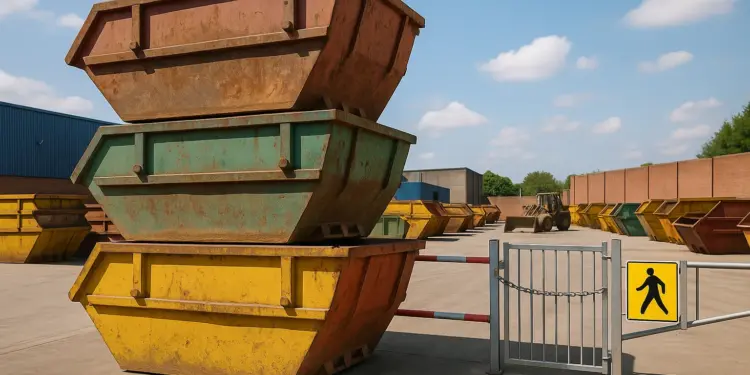
- Store it in a locked skip or container. Never in general waste or a mixed skip.
- Use a registered waste carrier and a licensed site, and keep the consignment note as proof of lawful disposal.
HSE guidance by code
| Code | Title | Who it is for |
|---|---|---|
| L143 | Managing and working with asbestos: Approved Code of Practice and guidance (second edition, 2013) | Everyone with duties under CAR 2012 |
| HSG264 | Asbestos: The survey guide (second edition, 2012) | Surveyors and dutyholders commissioning or using surveys |
| HSG227 | A comprehensive guide to managing asbestos in premises (2002) | Dutyholders in larger or more complex estates |
| HSG210 | Asbestos essentials: A task manual for building, maintenance and allied trades of non-licensed asbestos work (fourth edition, 2018) | Anyone planning non licensed or NNLW tasks; the task sheets are free online |
| HSG247 | Asbestos: The licensed contractors’ guide (2006) | Licensed contractors, supervisors and trainers |
Case study: a demolition that ignored its own survey
In April 2024 Manchester Crown Court sentenced Eye Track Limited of Stretford and its director, Selcuk Pinarbasi, after workers were exposed to asbestos during the demolition of residential units in 2019. HSE found that one unit had contained roughly 100 square metres of asbestos insulating board, about 70 per cent of which had been removed by hand and machine with no licensed contractor and no controls.
The director had commissioned an asbestos survey beforehand. He knew what the building contained and went ahead anyway. The company was fined £20,000 with costs of £18,783.61. The director received a 20 week custodial sentence suspended for 12 months, a personal fine of £75,000 and the same costs, prosecuted under section 37 of the Health and Safety at Work etc. Act 1974. The HSE inspector described lives being deliberately put at risk.
Three lessons:
- A survey is worthless if the programme does not stop for the removal it identifies.
- AIB removal on this scale is licensed work. There is no in house shortcut.
- Directors are personally exposed when the paperwork shows they knew.
Common mistakes
- Treating the survey as the finish line. Without a plan, a review cycle and a briefing process, the register is a document nobody reads.
- Using a management survey for refurbishment. It is deliberately non destructive and does not find what is behind the plasterboard.
- Letting contractors start without the register. Cabling, fire alarm upgrades and shopfits are the classic routes to accidental disturbance because they are treated as minor.
- Power tools on asbestos cement. Disc cutters turn a low risk material into a high dust job. Hand tools, wetting and whole sheet removal only.
- Missing the record keeping tail. NNLW and licensed work carry 40 year record duties. A firm that closes must arrange for the records to be kept.
- Forgetting the emergency services. Firefighters are exactly the people the dutyholder must inform. Keep a copy of the register where it can be handed over at the door.
Asbestos is excluded from COSHH and governed by CAR 2012, but the control hierarchy is the same as in our COSHH basics guide.
Frequently asked questions
Do the regulations apply to my small office or shop?
Yes, if the premises were built or refurbished before 2000. The duty to manage applies to all non domestic premises, whatever their size. Who holds it depends on the lease: a tenant with a full repairing lease usually does; a tenant of serviced offices usually does not, but must still cooperate.
Does the duty to manage apply to houses and flats?
Not to individual homes. It does apply to the common parts of residential blocks such as stairwells and plant rooms, so housing associations and managing agents are dutyholders there. Work inside a flat is still covered by the rest of CAR 2012, so a contractor must still identify and control asbestos.
Can my own maintenance team remove asbestos cement roof sheets?
Often yes, if the sheets are in good condition, the team has non licensable work training, a written plan of work exists, the sheets come off whole and the waste is handled as hazardous waste. If the sheets are badly weathered or must be broken, the job is likely to be NNLW. Remember the fragile roof hazard too; see our guide to working at height.
Does every employee need asbestos awareness training?
No. It is required for people whose work could foreseeably disturb the fabric of the building: trades, maintenance, caretakers, facilities staff and their supervisors. Office staff who never touch the building do not need it, though a short induction briefing is good practice.
A contractor says a job is non licensed and I am not sure. What do I do?
Ask for their written risk assessment and plan of work, their training certificates, and their reasoning against the regulation 3 criteria: sporadic and low intensity exposure, control limit not exceeded, a lower risk material, short duration where AIB is involved. If they cannot show you, stop the job.
Further resources
- HSE: Asbestos guidance hub
- HSE: The duty to manage asbestos
- HSE: Licensable work with asbestos
- HSE: Notifiable non-licensed work
- HSE: Asbestos training
- HSE: Asbestos essentials task sheets
- HSE: L143 Managing and working with asbestos
- HSE: Asbestos related disease statistics
- legislation.gov.uk: Control of Asbestos Regulations 2012
- UK-Safety.News: Managing contractors under CDM 2015
This guide is general information for Great Britain and is not legal advice. Northern Ireland has its own asbestos regulations administered by HSENI. Check the current HSE guidance before acting on a specific case.
About the author: Jade Anderson specialises in turning regulations into practical steps for supervisors and safety leads.