















Choose an AI chat
Gas hobs linked to health risks as households warned to ventilate kitchens
UK Health and Safety Latest

Gas hobs linked to health risks as households warned to ventilate kitchens

by Jade Anderson
May 4, 2026
0

Households are being urged to reconsider their reliance on gas hobs amid alarming health risks linked to indoor air pollution....

Read moreDetails
Landlords face fines and jail under new renters' rights law for failing to manage Legionnaires' disease risk

Landlords face fines and jail under new renters’ rights law for failing to manage Legionnaires’ disease risk

May 4, 2026
Security measures block access to The Telegraph website

Security measures block access to The Telegraph website

May 3, 2026
Food agency issues recalls over safety concerns for multiple supermarket products

Food agency issues recalls over safety concerns for multiple supermarket products

May 2, 2026
Key changes affecting families as phone bans, smoking laws, and benefit reforms announced

Key changes affecting families as phone bans, smoking laws, and benefit reforms announced

May 2, 2026
  • About
  • Advertise
  • Policies
    • Privacy Policy
    • Editorial Policy
    • Corrections & Complaints policy
  • Useful Documents
    • Understanding RIDDOR
    • 10 Workplace Safety Failures
    • A Complete Guide to Reporting Safety Incidents in the UK
    • Fire Risk Assessment: Meeting the Regulatory Reform (Fire Safety) Order
    • COSHH Basics: A Practical Guide to Control of Substances Hazardous to Health
    • Working at Height in the UK: The Essentials (WAH Regulations 2005)
    • Asbestos in the Workplace: Control of Asbestos Regulations 2012 (CAR) Essentials
    • Managing Contractors Under CDM 2015: Roles, Duties & Controls
    • DSE & Ergonomics: Healthy Workstations for Office & Hybrid Teams
    • Lock out Tag out LOTO
    • Workplace Transport Safety: Forklifts, Pedestrians & Traffic Management
    • Noise & Vibration at Work: Practical Controls (2005 Regulations)
    • Confined Spaces in the UK: Safe Entry under the Confined Spaces Regulations 1997
  • Contact
  • Agent
Tuesday, May 5, 2026
20 °c
London
16 ° Sat
15 ° Sun
12 ° Mon
  • Login
UK Safety News
  • Home
  • News
    • All
    • UK Health and Safety Latest
    Ireland considers changing fire safety rules amid health concerns over toxic chemicals

    Ireland considers changing fire safety rules amid health concerns over toxic chemicals

    Gas hobs linked to health risks as households warned to ventilate kitchens

    Gas hobs linked to health risks as households warned to ventilate kitchens

    Landlords face fines and jail under new renters' rights law for failing to manage Legionnaires' disease risk

    Landlords face fines and jail under new renters’ rights law for failing to manage Legionnaires’ disease risk

    Security measures block access to The Telegraph website

    Security measures block access to The Telegraph website

    Food agency issues recalls over safety concerns for multiple supermarket products

    Food agency issues recalls over safety concerns for multiple supermarket products

    Key changes affecting families as phone bans, smoking laws, and benefit reforms announced

    Key changes affecting families as phone bans, smoking laws, and benefit reforms announced

    Tree surgeon suffers life-threatening injuries after electric shock from powerline

    Tree surgeon suffers life-threatening injuries after electric shock from powerline

    Login issues disrupt access to online services

    Login issues disrupt access to online services

    Cardiff University fined after staff develop asthma from laboratory allergens

    Cardiff University fined after staff develop asthma from laboratory allergens

    Cardiff University fined £280,000 after staff develop asthma from lab allergens

    Cardiff University fined £280,000 after staff develop asthma from lab allergens

    Trending Tags

    • Donald Trump
    • Future of News
    • Climate Change
    • Market Stories
    • Election Results
    • Flat Earth
No Result
View All Result
UK Safety News
No Result
View All Result
Home News UK Health and Safety Latest

Report reveals dangers of corridor care in emergency departments

Jade Anderson by Jade Anderson
January 8, 2026
in UK Health and Safety Latest
Reading Time: 4 mins read
0
Report reveals dangers of corridor care in emergency departments

Story Highlight

– Report highlights normalization of ‘corridor care’ in departments.
– Patients treated in inappropriate spaces, risking safety and privacy.
– Staff view ‘corridor care’ as the ‘least worst’ option.
– Investment needed in staff, beds, and facilities for improvement.
– Government pledged to end corridor care practices.

Full Story

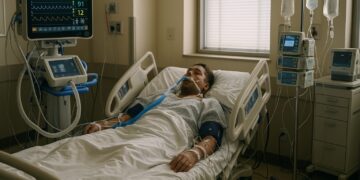
A recent report from the Health Services Safety Investigations Body (HSSIB) has drawn attention to the troubling prevalence of temporary care environments in emergency departments, often referred to as “corridor care.” Dr Den Langhor, the emergency care lead for the BMA consultants committee, has described the findings as a significant indictment of the current state of emergency medicine in the UK.

Dr Langhor indicated that the report highlights a concerning trend where emergency departments have become accustomed to providing care in unsuitable spaces, such as corridors, waiting areas, and even offices or storage rooms. “Anyone working in, or being treated in, an emergency department will have their experiences of patients being seen in inappropriate spaces every day,” he remarked, underscoring the normalization of this practice among healthcare staff.

The report’s revelations are alarming, particularly regarding the acceptance of “corridor care” as a viable option. “What’s particularly disheartening is how accepted it has become – spelled out in this report that it’s often seen by staff as the ‘least worst’ option,” Dr Langhor noted. This perspective reflects a broader issue within the healthcare system, where medical professionals are compelled to make compromises in the face of overwhelming pressures and resource limitations.

Despite the adaptability and resourcefulness that healthcare professionals consistently demonstrate, the situation has become untenable. Dr Langhor emphasized the critical challenges that staff face, stating, “Doctors and their colleagues time and time again prove how innovative and flexible they are in the face of huge challenges, but there is only so much that individual hospitals and staff can do to adapt to keep patients safe.”

Emergency care environments are designed to manage critically unwell patients, and Dr Langhor pointed out that the current makeshift arrangements compromise both the quality and dignity of the care provided. He warned of the immediate risks associated with such environments, which not only threaten patient safety but also violate privacy protocols. In the long term, these conditions contribute to the demoralisation and burnout of medical staff, who feel unable to deliver the standards of care they are trained to uphold. “Ultimately, these are not spaces designed for high-quality, dignified and safe care for some incredibly unwell patients,” he said, echoing concerns shared by many in the sector.

Dr Langhor’s message was clear: systematic, temporary solutions should not be allowed to evolve into permanent fixtures of the NHS. He called for fundamental changes to address the ongoing issues within emergency care. “Stop-gap, local solutions must never become the new normal,” he urged, reinforcing the importance of sustainable long-term strategies.

Advocates for improved conditions are keenly aware of the Government’s previous commitments to end the practice of corridor care. However, Dr Langhor insisted that these promises translate into reality will necessitate substantial investment in health services. “The reality is that this will require investment in staff, in beds and in buildings across the whole system to create the capacity needed to treat patients in safety and dignity,” he stressed.

This communiqué comes at a time when the NHS is navigating unprecedented pressures, with chief concerns revolving around staffing shortages, rising patient numbers, and limited capacity. As winter approaches, these challenges compound, threatening the ability of the system to adequately serve those in need of urgent care. Hospitals across the UK are finding it increasingly challenging to allocate appropriate space for patients, further exacerbating the state of emergency care.

The introduction of temporary care environments is not a new phenomenon; however, the continued reliance on such measures raises profound questions about the sustainability of the healthcare system. Stakeholders argue that to ensure optimal patient outcomes, a holistic approach should be undertaken, looking at resource allocation, staff recruitment and retention, as well as infrastructural improvements.

While frontline healthcare workers continue to strive to provide the best possible care under difficult circumstances, there is a growing recognition that immediate interventions are insufficient without a strategic vision for the future of the NHS. The healthcare system’s ability to meet growing demands hinges on a comprehensive commitment from the Government to improve working conditions for health professionals and the environments in which they operate.

The urgency of revitalising emergency care services cannot be understated. As Dr Langhor concluded, addressing the injustices faced by patients and healthcare providers alike requires a multi-faceted approach that prioritises safety and dignity in medical treatment. The implications of not addressing these systemic issues now could have lasting consequences for both patient care and the wellbeing of those who work tirelessly within the NHS.

As this situation unfolds, the commitment to delivering high-quality healthcare in the UK will be closely scrutinised, and it remains crucial for all stakeholders to advocate for meaningful reform. The health system is at a crossroads, and the next steps will be pivotal in shaping the future of emergency care in the country.

Our Thoughts

The reported normalization of ‘corridor care’ in UK emergency departments highlights significant breaches of health and safety regulations, particularly under the Health and Safety at Work Act 1974, which mandates that employers ensure the safety and welfare of staff and patients. To avoid such situations, hospitals should prioritize adherence to the Health and Social Care Act 2008, ensuring that facilities are adequate and appropriate for patient care.

Key safety lessons include the need for proper risk assessments, as outlined in the Management of Health and Safety at Work Regulations 1999, to identify hazards associated with treating patients in unsuitable environments. Ensuring compliance with the Care Quality Commission’s standards could also prevent the degradation of care quality.

Investment in resources is critical. Sustainable solutions must be implemented to address staffing levels and patient capacity rather than relying on temporary fixes. Introducing long-term strategies for healthcare infrastructure and staffing would alleviate pressures contributing to corridor care, promoting a safer, dignified environment for both patients and staff.


SummarizeShare34Share197SendSend
ADVERTISEMENT
Jade Anderson

Jade Anderson

Related Posts

UK supermarkets issue health warnings as multiple product recalls commence

UK supermarkets issue health warnings as multiple product recalls commence

by Ellie Cartwright
February 13, 2026
0

Major UK supermarkets have issued urgent recalls for various food products due to potential health risks, prompting "do not eat"...

Family seeks justice after tragic death of man electrocuted while working on hazardous site

Family seeks justice after tragic death of man electrocuted while working on hazardous site

by Michael Harland
March 21, 2026
0

A widow is pursuing legal action against SP Manweb PLC following the tragic accidental electrocution of her husband, Blair Campbell,...

Useful Documents

  • Understanding RIDDOR
  • 10 Workplace Safety Failures
  • A Complete Guide to Reporting Safety Incidents in the UK
  • Understanding RIDDOR
  • Fire Risk Assessment: Meeting the Regulatory Reform (Fire Safety) Order
  • COSHH Basics: A Practical Guide to Control of Substances Hazardous to Health
  • Working at Height in the UK: The Essentials (WAH Regulations 2005)
  • Lock out Tag out LOTO
ADVERTISEMENT
Key changes affecting families as phone bans, smoking laws, and benefit reforms announced
UK Health and Safety Latest

Key changes affecting families as phone bans, smoking laws, and benefit reforms announced

by Tara Rowden
May 2, 2026
0

A series of transformative measures aimed at enhancing children's welfare and supporting families across the UK has been unveiled. Key...

Read moreDetails
Tree surgeon suffers life-threatening injuries after electric shock from powerline

Tree surgeon suffers life-threatening injuries after electric shock from powerline

May 1, 2026
Login issues disrupt access to online services

Login issues disrupt access to online services

May 1, 2026
Cardiff University fined after staff develop asthma from laboratory allergens

Cardiff University fined after staff develop asthma from laboratory allergens

May 1, 2026
UK Safety News

Copyright © 2025
UK Safety News

Navigate Site

  • About
  • Advertise
  • Policies
  • Useful Documents
  • Contact
  • Agent

Follow Us

Welcome Back!

Login to your account below

Forgotten Password?

Retrieve your password

Please enter your username or email address to reset your password.

Log In
No Result
View All Result
  • Home
  • News

Copyright © 2025
UK Safety News

This website uses cookies. By continuing to use this website you are giving consent to cookies being used. Visit our Privacy and Cookie Policy.