















Story Highlight
– Higgsy’s burger shed denied trading from A-road lay-by.
– Health and safety concerns cited by licensing committee.
– Business claims it hasn’t outgrown the lay-by site.
– Queueing vehicles posed danger to passing drivers.
– Alternative site assistance offered by highways officers.
Full Story
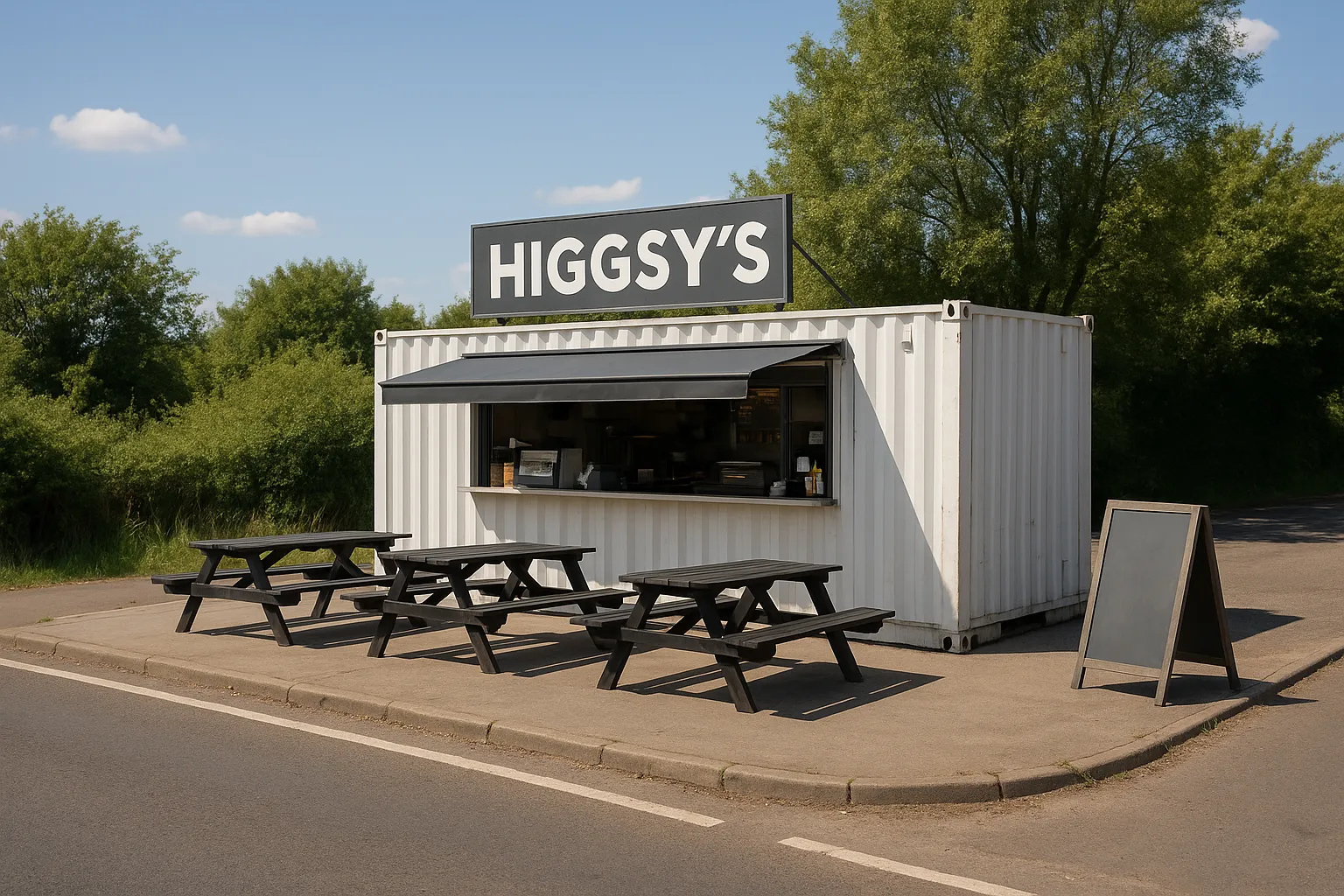
A burger business operating from a roadside lay-by has been barred from continuing its trade, facing significant scrutiny over safety concerns linked to its growing popularity. Higgsy’s, located on the A15 at Norman Cross in Yaxley, close to Peterborough, began serving customers in 2022 from a converted shipping container. The establishment, owned by Adam Miller and his partner Amber Higgs, has now seen its license renewal refused by a sub-committee of the Huntingdonshire District Council.
The decision follows a report from Cambridgeshire County Council’s highways team which identified the location as inappropriate for commercial trading due to safety issues stemming from the increasing number of patrons. Officials highlighted concerns that traffic congestion was becoming hazardous, with customer queues sometimes spilling onto the main road, thus posing a risk to passing vehicles.
During an appeal hearing held this week, Miller defended the business’s operations, insisting it had not outgrown its lay-by location. “We’re being punished for being relatively successful,” he expressed, challenging the council’s findings. Despite the refusal, the council’s sub-committee acknowledged that there were no significant breaches of licensing conditions by Higgsy’s. However, the appeal was ultimately rejected due to the pressing health and safety issues highlighted by local authorities.
George Hay, a representative from the county council, remarked during the proceedings that Higgsy’s had evolved beyond a mere burger stall. “It has ceased to be just an outlet for selling burgers – it became a destination,” he noted, indicating that its popularity was steadily increasing, and implications surrounding its customer influx could not be ignored.
Prior to the refusal in February, the business faced setbacks when the county council determined that the site did not meet the necessary criteria for safe operations. The establishment had also been reported for constructing an outdoor seating area without necessary permissions, although this structure has since been dismantled, as confirmed by Miller during the hearing.
In light of the circumstances, the authorities have suggested that Higgsy’s explore alternative locations to accommodate its expanding customer base safely. Discussions regarding potential sites have been initiated, with highways officers expressing their willingness to assist the business in this transitional phase.
The situation surrounding Higgsy’s reflects broader challenges faced by independent food businesses operating in unconventional locations. As more consumers gravitate towards unique dining experiences, the pressure on local councils to maintain public safety has intensified.
Local residents have expressed mixed feelings regarding the closure of the burger shed. While many in Yaxley appreciate the community atmosphere and the quality of the food, others have raised concerns over the traffic problems the business has contributed to. One resident remarked, “It’s unfortunate to see the burger shed go, but safety has to come first. The roads can be quite chaotic around that lay-by.”
The council’s regulations aim to strike a balance between encouraging local entrepreneurship and ensuring that infrastructure can support increased commercial activity. Experts in local government suggest that councils need to adapt their policies to better accommodate small businesses that draw significant footfall while also prioritising the safety of all road users.
The future of Higgsy’s now rests on the couple’s ability to secure a new site that meets all necessary compliance and safety regulations. Miller has voiced optimism about their prospects. “We’ve received a lot of support from the community, and we’re determined to find a new home for Higgsy’s,” he stated, underscoring their commitment to continuing the business model that has garnered them a loyal following.
As discussions unfold, the case of Higgsy’s serves as a poignant example of the delicate balance between local enterprise and the regulatory frameworks designed to protect communities. The story continues to resonate both within Yaxley and across similar regions grappling with the implications of thriving small businesses within limited geographical constraints.
Local councils, businesses, and residents will be watching closely to see how this situation evolves and what implications it may have for other small businesses navigating the complexities of local governance and public safety. The outcome will likely shape how future roadside eateries and pop-ups are viewed and regulated within the crowded marketplace of independent dining.
Our Thoughts
The refusal of the trading licence for Higgsy’s burger business highlights critical health and safety failings that could have been addressed. To avoid the situation, the owners should have conducted a thorough risk assessment in accordance with the Management of Health and Safety at Work Regulations 1999, ensuring that they identified potential hazards related to customer volume, traffic, and site suitability.
Key lessons include the importance of obtaining the necessary permissions before expanding operations, as required by the Planning (Listed Buildings and Conservation Areas) Act 1990 and relevant local planning regulations. The business should have consulted with local authorities for advice on site selection to ensure compliance with health and safety standards, particularly regarding customer safety and traffic management.
The incident indicates a breach of the Health and Safety at Work Act 1974, as it appears unsafe conditions were not adequately managed, leading to increased risk for customers and passing motorists. To prevent similar incidents, businesses must regularly review their operational impacts on safety and engage with local councils proactively regarding site suitability and licensing requirements.