












Story Highlight
– Multiple food recalls issued by the Food Standards Agency.
– Porridge products recalled due to potential mouse contamination.
– Walkers crisps recalled for allergen labeling issues.
– Lidl snacks recalled due to possible foil contamination.
– Danone’s baby formula recalled over toxin contamination risk.
Full Story
A series of food product recalls has prompted urgent warnings from the Food Standards Agency (FSA) regarding several items available in supermarkets across the UK. This notification serves as a critical reminder for consumers to be vigilant about their purchases, particularly highlighting risks associated with specific products.
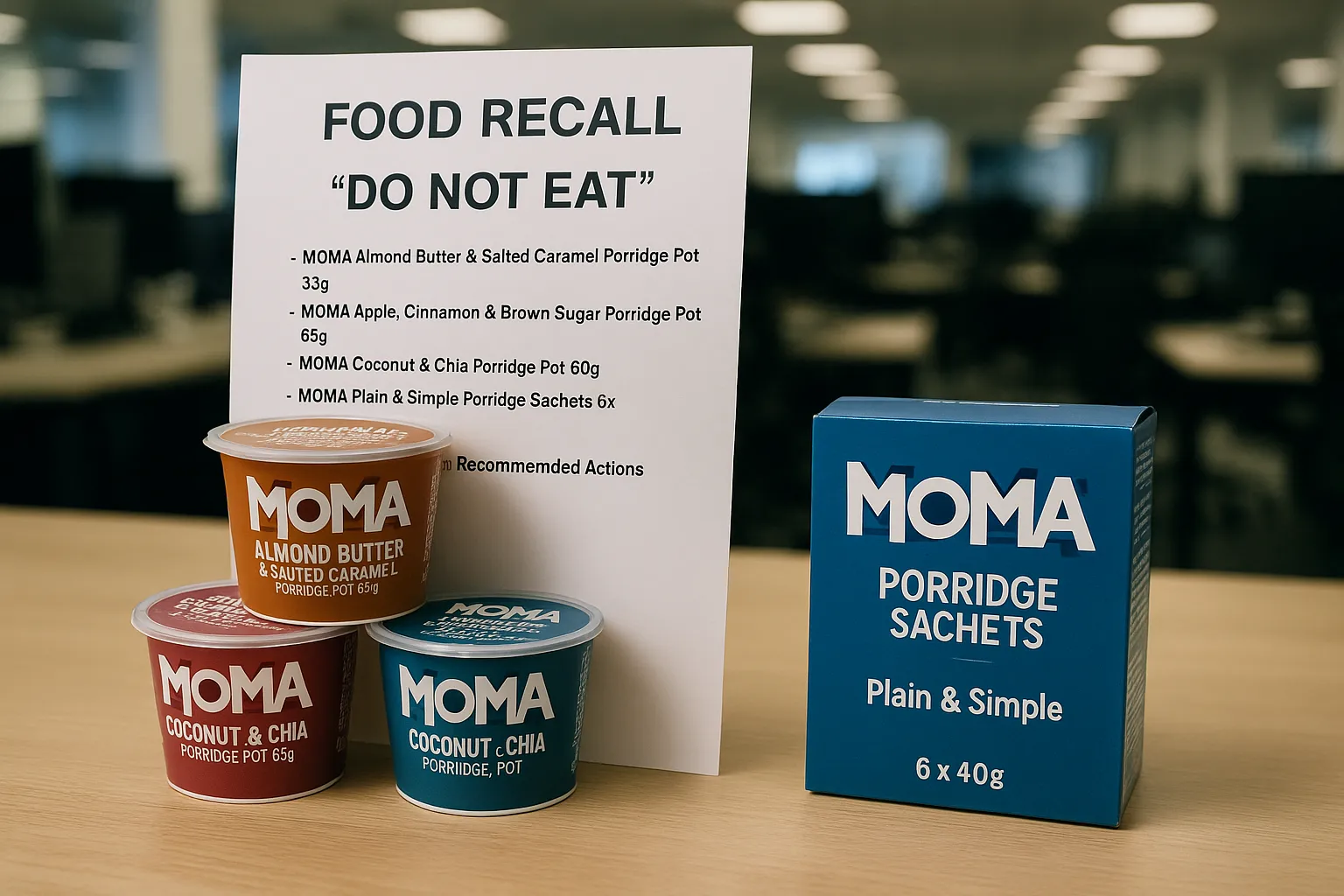
Among the various recalls, nine types of porridge offered by MOMA Foods are under scrutiny due to potential contamination issues related to mice. The affected items were distributed across prominent retail chains, including Tesco, Morrisons, and Sainsbury’s, leading to widespread concern.
Customers who have purchased the implicated porridge products are advised to heed the FSA’s directive to refrain from consumption. Instead, they should return the items to the place of purchase to receive a complete refund. The FSA has issued a clear “do not eat” warning involving these products, classifying them as “unsafe to eat” due to the contamination risk.
According to MOMA Foods, the recall encompasses several varieties of porridge pots and sachets, which were found to potentially contain mouse-related contaminants at the manufacturing facility. Despite the company’s assertion that the likelihood of contamination remains low, they have opted for precautionary measures to prioritize consumer safety.
The specific products being recalled include:
– MOMA Almond Butter & Salted Caramel Porridge Pot in sizes of 55g across multiple pack configurations (batch codes: M5296, M5297, etc.)
– MOMA Apple, Cinnamon & Brown Sugar Porridge Pot (65g) in both single and multi-packs (batch codes: M5261, M5328, etc.)
– MOMA Banana & Peanut Butter Protein Porridge Pot (65g) in single and multi-pack formats (batch codes: M5248, M5251, etc.)
– MOMA Blueberry & Vanilla Porridge Pot (65g) in various pack configurations (batch codes: M5283, M5284, etc.)
– MOMA Cranberry & Raisin Porridge Pot (70g) in various formats (batch codes: M5293, M5294, etc.)
– MOMA Golden Syrup Porridge Pot (70g) in multiple packaging options (batch codes: M5241, M5244, etc.)
– MOMA Plain No-Added Sugar Porridge Pot (65g) in different pack sizes (batch codes: M5279, M5280, etc.)
– MOMA Almond Butter & Salted Caramel Porridge Sachets (7x40g) in single or five-pack (batch codes: M5289, M5290)
– MOMA Apple, Cinnamon & Brown Sugar Porridge Sachets (6x40g) in one or five-packs (batch codes: M5293, M5294, M5295)
In a related matter, Walkers has issued a recall concerning its six-pack of Hot Honey crisps. The crisps, available at popular retailers such as Tesco and Ocado, have been flagged due to a mislabelled ingredient that could pose a risk to those with milk allergies. Although the product features precautionary allergen labelling indicating the presence of milk, this ingredient was omitted from the main list, resulting in concerns for consumers with dairy intolerances.
The affected items bear a best before date of May 16, 2026, and fall under the batch code GBB 584 031. Walkers has implored anyone who has bought these crisps to avoid consumption and return them to the store for a full refund. The company has emphasised that this recall is limited to the identified batch code, asserting that no other products are included within this notice.
In another separate recall, Lidl has expressed regret to its customers after deciding to pull Snaktastic Multigrain Bites Sour Cream & Black Pepper from the shelves. The recall is a response to the potential presence of foil pieces within the packaging, presenting a physical hazard to consumers. Shoppers in possession of these snacks are urged to refrain from eating them and can return the packets to any Lidl outlet for a complete refund; the affected products display a best before date of April 4 with batch code 207 345.
Additionally, Danone has issued a warning regarding its Aptamil First Infant Formula after discovering the possible presence of cereulide, a toxin potentially harmful to infants. This toxin can lead to symptoms such as nausea, vomiting, and stomach cramps, posing a significant risk to consumers. The implicated batch has a best before date of October 31, 2026, and was sold between May and July 2025. The FSA has advised parents to stop using this formula and return any affected products, even if no health issues have been observed in their infants.
Meanwhile, at TK Maxx and Homesense, TJX Europe has recalled a collection of drinks that could endanger consumers due to unlabelled allergens. The Ten Acre Gifts/Coffee Syrup collection may contain nuts and gluten, which are not specified on the product label. Customers with allergies to these ingredients are advised to avoid consumption and return the items for a full refund.
To summarise, the recent food recalls illustrate the ongoing vigilance necessary for maintaining food safety standards. The FSA plays a critical role in managing the communication of these risks, providing clear guidance to consumers to ensure their health and safety while shopping. As these recalls unfold, consumers are urged to stay informed through official channels and take proactive measures with any products that may pose health concerns.
Our Thoughts
The recent food recalls due to potential contamination and mislabeling highlight significant lapses in compliance with UK health and safety regulations, specifically the Food Safety Act 1990 and relevant food hygiene legislation. To prevent such incidents, manufacturers need to implement more robust quality control processes at their production sites, including regular pest control measures to eliminate risks of rodent contamination, which aligns with Regulation (EC) No 852/2004 on food hygiene.
Moreover, effective allergen management systems must be established to ensure accurate labeling, as evident in the Walkers crisps case where milk allergens were incorrectly communicated. Adhering to the Food Information Regulations 2014 would ensure consumers are adequately informed about potential allergens, reducing the risk of serious health issues for those with food allergies.
In addition to preventive measures at manufacturing sites, ongoing staff training in food safety protocols is crucial. Implementing a more comprehensive incident reporting system would aid in quick identification and rectification of potential hazards, thus fostering a culture of safety. By focusing on these areas, similar incidents can be significantly mitigated in the future.