















Story Highlight
– Paul Coulson, 56, crushed by three-tonne timber pallet.
– Incident occurred at Herringswell Sawmills on May 22.
– Company fined over £2 million after serious safety breaches.
– Previous dangerous practices recorded on CCTV before incident.
– New safety measures implemented post-accident to prevent access.
Full Story
A prominent building supplies company has received a hefty fine exceeding £2 million following a tragic workplace incident that led to the death of one of its employees. The case has raised serious concerns about safety protocols and practices in the construction industry.
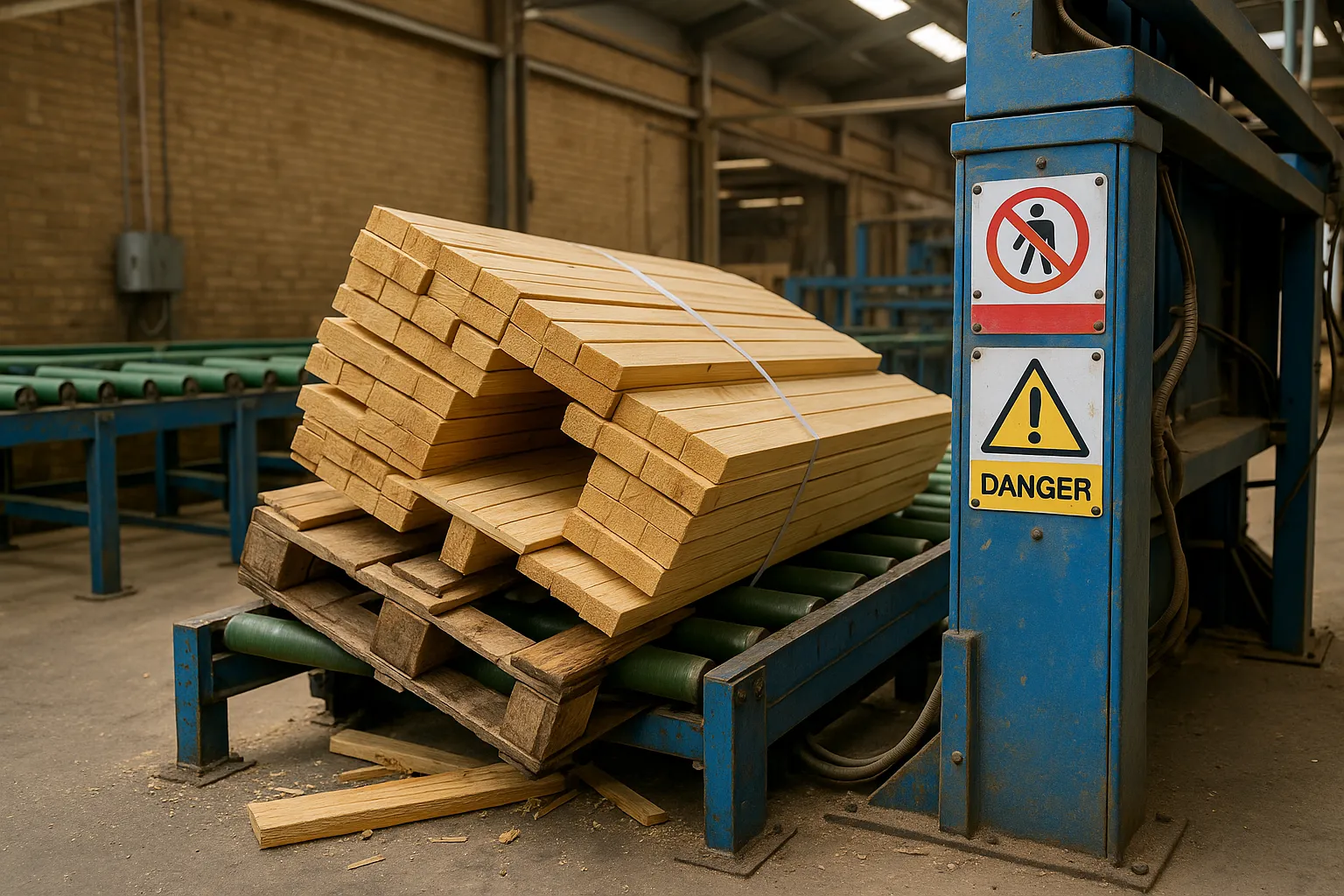
On 22 May 2024, Paul Coulson, a 56-year-old labourer at Herringswell Sawmills, situated in Bury St Edmunds, Suffolk, lost his life due to a preventable accident involving a heavy load of timber. Mr. Coulson was engaged in a critical task that required him to remove plastic wrapping from pallets of timber prior to processing. During this operation, he climbed into the conveyor system to access the packaging more effectively. Unbeknownst to him, a colleague initiated the conveyor, resulting in a three-tonne timber pallet crushing him against the machinery.
The sequence of events that day was particularly tragic. While Mr. Coulson attempted to clear the packaging, another worker, unable to see him due to the enclosed nature of the conveyor, activated it. This action caused the loads of timber to advance and collide with Mr. Coulson. A moment later, noticing the machinery was not functioning as expected, the colleague attempted to reverse the conveyor. However, this inadvertently led to the timber moving forward again, crushing Mr. Coulson once more. The severity of his injuries was catastrophic, and he was pronounced dead at the scene.
Following the incident, the Health and Safety Executive (HSE) conducted a thorough investigation and found that Herringswell Sawmills, owned by Huws Gray Limited, had inadequately addressed hazardous practices that had previously been observed on site. Surveillance footage revealed that employees had entered the confines of the conveyor system on no less than 19 separate occasions in the weeks leading up to the incident. Although the company had installed warning signs discouraging entry into this danger zone, no tangible measures were implemented to prevent access.
In light of the findings, Huws Gray Limited was charged under the Health and Safety at Work etc. Act 1974. During their appearance at Chelmsford Magistrates Court on 26 March 2026, the company acknowledged their guilt and was fined £2.2 million. Additionally, they were ordered to cover the court costs amounting to £9,929. This significant penalty reflects the seriousness with which the judiciary views workplace safety lapses.
HSE inspector Joanne Williams, commenting on the case, denounced the failures that led to Mr. Coulson’s death. “This was a staggering failure that has cost a man his life and robbed a family of their loved one,” she expressed. “The scale of the fine handed down reflects the gravity of this case. All companies, regardless of their size, must follow the hierarchy of control for guarding dangerous parts within work equipment.”
Williams highlighted that the company’s decision to rely on instructive measures rather than implementing effective safeguarding was a critical oversight. “Had Huws Gray Ltd taken robust action when they became aware of the problem, Paul Coulson would be alive today,” she added. Her remarks underscored the importance of proactive risk management in sectors such as construction and sawmilling, which are inherently fraught with danger.
The introduction of more rigorous safety measures post-incident includes the installation of guarding around the conveyor to prevent unauthorised access. Furthermore, operational procedures have been revised to ensure that pallets are unwrapped prior to being placed on the conveyor system. Additional surveillance equipment has also been fitted to enhance visibility across all areas of the conveyor, aimed at preventing similar tragedies from occurring in the future.
Despite advancements in health and safety regulations over recent years, industries like sawmilling continue to present significant hazards to workers. The HSE has consistently stressed the necessity of safeguarding machinery to protect employees from potential accidents. Guidelines stipulate that effective guarding systems should be in place, including fixed-distance measures and other appropriate safeguards to limit access to dangerous areas during standard operations.
The tragedy that befell Paul Coulson not only serves as a somber reminder of the risks faced by workers in this sector but also highlights the urgent need for companies to adopt comprehensive safety practices. The loss of life in such a manner calls for a response that prioritises worker safety and cultivates a culture of vigilance against potential hazards.
Mr. Coulson’s family and friends are left to grapple with the profound impact of this loss, which has resonated throughout the community. As investigations and legal proceedings unfold, the outcome may act as a catalyst for change, encouraging other businesses in the industry to closely examine their own safety measures and practices.
In the end, the responsibility for workplace safety lies with each employer, regardless of their scale. The case is a crucial reminder of the essential nature of proactive measures and the need for an unwavering commitment to protecting workers in potentially dangerous environments.
Our Thoughts
The tragic death of Paul Coulson could have been avoided through stronger safety measures and adherence to health and safety regulations. The Health and Safety at Work etc Act 1974 Section 2(1) was breached as the company failed to implement adequate guarding to prevent access to dangerous areas of machinery.
Key safety lessons include the importance of a proactive approach to risk management rather than relying on instruction alone. Despite identifying the dangerous practice of workers entering the conveyor’s danger zone, the company did not take effective action until after the incident.
To prevent similar incidents, effective control measures should include fixed guarding around moving machinery and comprehensive training for all employees about the risks involved. Regular safety audits and a culture that encourages reporting unsafe practices could foster a safer work environment. The introduction of guarding and a revised system of work post-incident highlights reactive measures; however, proactive interventions are essential to ensure employee safety before incidents occur.