










Story Highlight
– Multiple food recalls issued by the Food Standards Agency.
– Nine porridge products recalled due to mouse contamination.
– Walkers crisps recalled for incorrect milk labeling risks.
– Lidl recalls snack due to possible foil contamination.
– Aptamil baby formula recalled for potential harmful toxin.
Full Story
A series of food recalls has been announced by the Food Standards Agency (FSA), prompting significant “do not eat” advisories for several products available in supermarkets across the UK. These recalls, affecting a variety of food items from well-known brands, are due to health safety concerns that could pose risks to consumers.
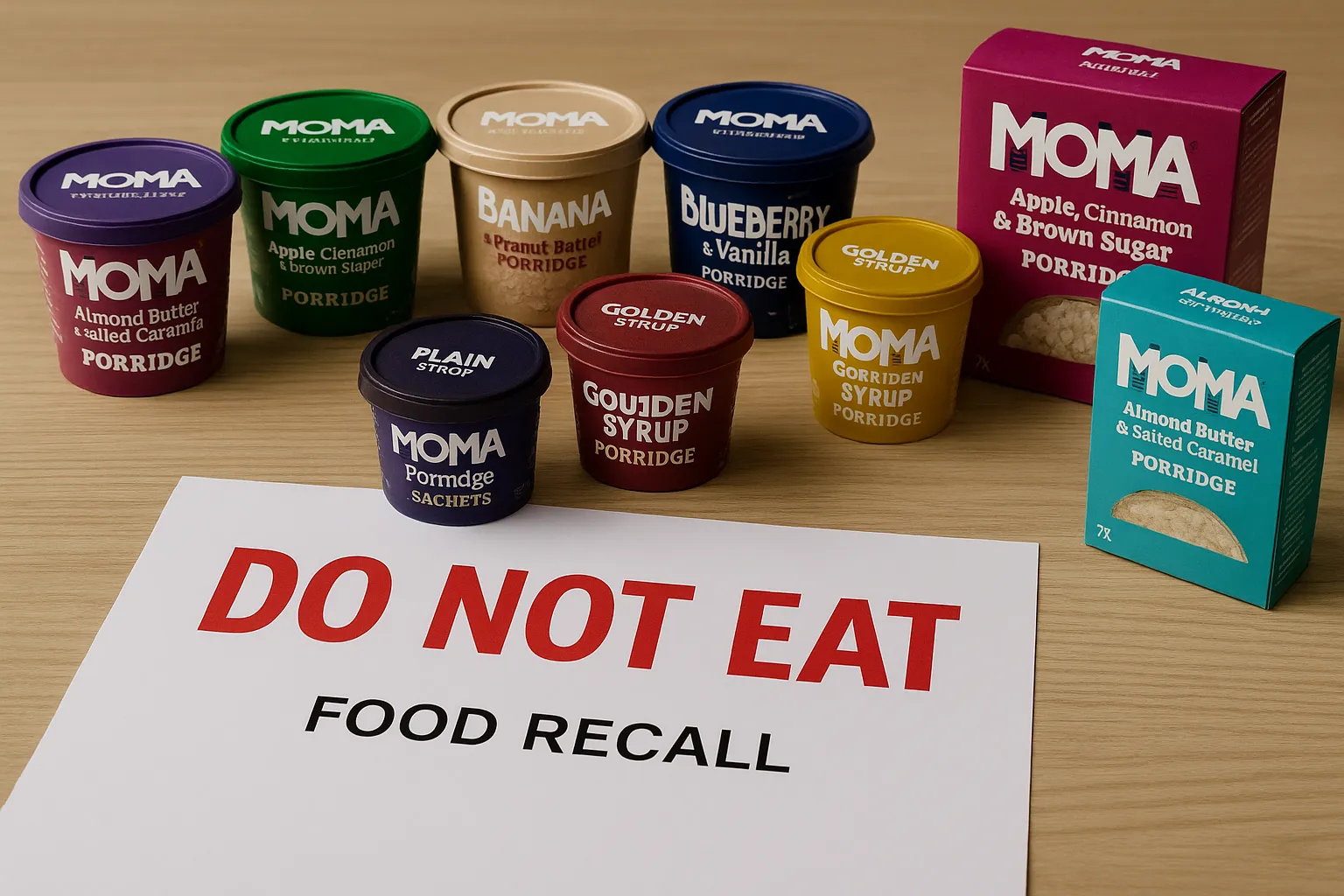
Among the most notable incidents is the recall of multiple porridge products attributed to potential contamination by mice. MOMA Foods has initiated this recall for several of its porridge pots and sachets distributed in major chains such as Tesco, Sainsbury’s, and Morrisons. The FSA has categorized these products as “unsafe to eat,” advising customers who possess any affected items to return them to the retailer for a complete refund rather than consume them.
According to MOMA Foods, while the likelihood of contamination is considered low, the company is taking precautionary measures to ensure consumer safety. The specific products being recalled include:
– MOMA Almond Butter & Salted Caramel Porridge Pot (various pack sizes)
– MOMA Apple, Cinnamon & Brown Sugar Porridge Pot (various pack sizes)
– MOMA Banana & Peanut Butter Protein Porridge Pot (various pack sizes)
– MOMA Blueberry & Vanilla Porridge Pot (various pack sizes)
– MOMA Cranberry & Raisin Porridge Pot (various pack sizes)
– MOMA Golden Syrup Porridge Pot (various pack sizes)
– MOMA Plain No-Added Sugar Porridge Pot (various pack sizes)
– MOMA Almond Butter & Salted Caramel Porridge Sachets
– MOMA Apple, Cinnamon & Brown Sugar Porridge Sachets
The FSA and MOMA Foods recommend that customers check the batch codes to ensure they are not in possession of these products.
In a separate recall affecting snack foods, Walkers Crisps has issued a warning regarding its six-pack of Hot Honey crisps. These products may inadvertently contain Mild Cheese & Onion seasoning, which was not correctly labelled to indicate the presence of milk, posing a risk to those with milk allergies. The recall applies specifically to the batch code GBB 584 031, with a best before date of May 16, 2026. A spokesperson from Walkers stated that allergen information was insufficiently clear in this instance, which necessitated the recall. Consumers are instructed to return the product to the point of purchase for a full refund.
Meanwhile, Lidl has also announced a recall of its Snaktastic Multigrain Bites Sour Cream & Black Pepper flavour. This product is being pulled off the shelves due to the potential presence of foil pieces, raising health safety concerns. The affected packets, which bear a best before date of April 4, and a batch code of 207 345, are advised against consumption, with Lidl recommending that customers return the product for a full refund. The supermarket has expressed regret over any inconvenience the recall may cause.
In another alarming instance, Danone has issued a recall for its Aptamil First Infant Formula due to the potential presence of cereulide, a toxin produced by certain strains of Bacillus cereus. This toxin can lead to serious health issues, including nausea and abdominal discomfort. The recall affects a specific batch, with a best before date of October 31, 2026. Danone has urged parents not to use this product and has initiated a refund process for affected customers. The FSA underscored the importance of immediate action for parents who may have already fed this formula to their infants.
Furthermore, TJX Europe has recalled its Ten Acre Gifts/Coffee Syrup collection that was available in TK Maxx and Homesense. This recall stems from possible undisclosed allergens, including nuts and gluten, which could pose serious health risks for those with specific food allergies. Customers who have purchased this item are advised to return it for a refund.
The FSA plays a critical role in monitoring food safety, issuing Product Withdrawal Information Notices and Product Recall Information Notices to keep consumers informed about potential hazards. These actions include a “Food Alert for Action,” which outlines specific steps local authorities should undertake in relation to the affected products.
Consumers are encouraged to remain vigilant regarding food recalls, checking for notices both in-store and online. Keeping informed about potential hazards is essential to ensure food safety within the home. Those who have purchased any recalled products should adhere to the guidelines provided by the manufacturers and retailers to secure refunds and prevent health risks.
As these incidents illustrate, product recalls arise from a variety of safety concerns, underscoring the importance of rigorous quality control measures throughout the food production and distribution process. The proactive steps taken by companies to recall affected items help ensure that consumer safety is prioritised and protected.
Our Thoughts
To prevent the contamination and labeling issues highlighted in the food recalls, several measures could have been implemented. First, robust hazard analysis and critical control point (HACCP) systems should be mandated at manufacturing sites to identify and control potential contamination risks, such as rodent entry and allergen mislabeling. Regular inspections and audits would ensure compliance with these safety systems, aligning with the requirements of the Food Safety and Hygiene (England) Regulations 2013.
Additionally, improving staff training on allergen awareness would mitigate risks associated with mislabeling, as mandated by the Food Labelling Regulations 1996. Enhancing quality control processes, particularly during the packaging stages, could prevent cross-contamination and ensure accurate labelling of ingredients, reducing health risks for consumers with allergies.
Furthermore, stronger communication protocols between food manufacturers, suppliers, and retailers would facilitate quicker responses to safety concerns, aiding compliance with the General Food Law Regulation (EC) No 178/2002. Implementing these safety measures could significantly reduce the incidence of similar food safety incidents in the future.