















Story Highlight
– Royal Mail reports 2,197 dog attacks on postal workers.
– Urges displaying “I have a dog” signage for safety.
– Attacks lead to delivery suspensions if dogs are unrestrained.
– Sheffield has the highest increase in dog attacks reported.
– Safety training and community cooperation emphasized for prevention.
Full Story
Royal Mail has issued a stark reminder to dog owners across the UK, urging them to display a simple four-word sign at their homes, following a concerning rise in dog attacks on postal workers. The company is warning customers that failure to take adequate precautions could result in the suspension of mail deliveries to their addresses. As the Easter holiday approaches, which typically sees an uptick in parcel deliveries, Royal Mail is advising immediate action to prevent potential incidents.
The latest statistics published by Royal Mail reveal that dog attacks on postal employees have reached a troubling high, with 2,197 incidents reported in the past year—a 2% increase compared to the previous year. This figure translates to approximately 42 incidents weekly, with some postal workers suffering serious, life-altering injuries as a result.
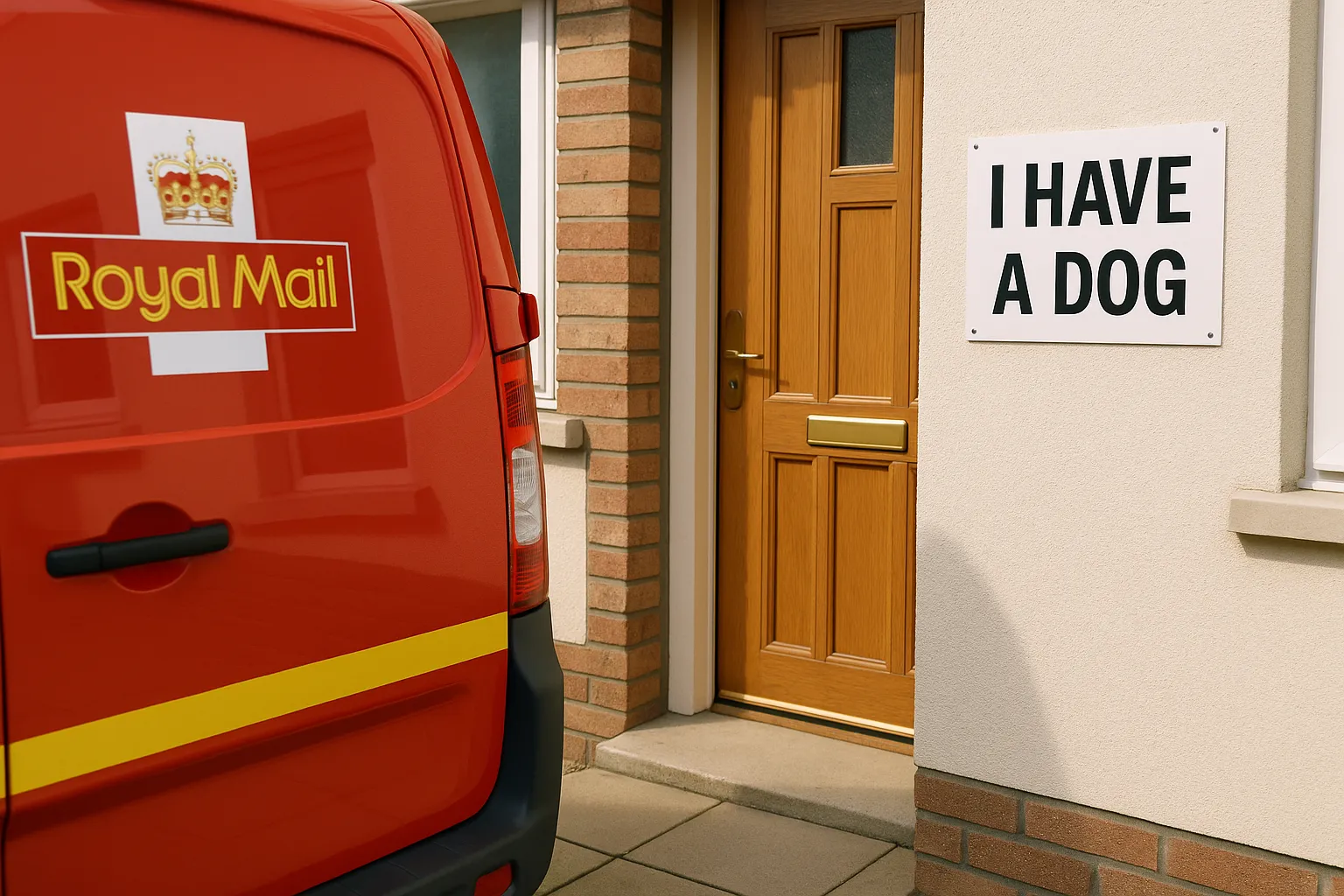
To address this alarming trend, Royal Mail is advocating for simple yet effective measures to protect its staff and ensure that deliveries can proceed without disruption. One of the recommended actions is a printable postcard stating, “I have a dog.” This sign serves to inform postal workers that the household has a dog, allowing them enough time to secure their pet inside before answering the door.
In correspondence sent to customers, Royal Mail acknowledged the importance of receiving letters and parcels but stressed that the safety of its employees is paramount. “Getting these items to you safely is our priority, and I hope that you can help me with that,” the letter reads. The communication highlighted the alarming reality that around 2,000 postal workers are injured by dogs each year, regardless of the size of the animal. Following such incidents, deliveries to affected homes must be suspended, as Royal Mail cannot risk further attacks.
The company has also drawn attention to specific postcode areas where dog attacks are most prevalent. The S postcode area surrounding Sheffield has seen a staggering 61% rise in attacks, with 66 incidents reported this year, a sharp contrast to the 41 attacks recorded the previous year. This notable surge marks the S postcode area as one of the most dangerous locations for postal workers, a distinction it has maintained consistently over the years.
Similarly, the PO postcode area in Portsmouth recorded a slight decrease in dog attacks, with 60 incidents reported, down from 62 the previous year. Despite this drop, the PO area has long been marked as a high-risk location, ranking among the top danger zones for dog attacks since Royal Mail began documenting these statistics.
In the TN postcode area, which covers parts of Kent, Sussex, and Surrey, there was a 33% rise in attacks this year, with 56 incidents logged. This trend follows a significant 35% decline the year prior, underscoring the inconsistent nature of these incidents.
The GU postcode area, encompassing Guildford, recorded 54 attacks, reflecting a 29% increase from the 42 incidents reported last year. The NG postcode area in Nottingham, with 49 recorded dog attacks, also experienced a 17% rise, marking its fifth consecutive year on the list of high-risk locations.
Two areas, CM (Chelmsford) and BN (Brighton), shared the sixth position for dog attacks this year, with each region witnessing 47 incidents. Notably, Brighton has consistently appeared in the high-risk category for nearly a decade, while Chelmsford’s status has been recognized three times since 2018.
Furthermore, the BT postcode area (Belfast) saw a notable reduction in attacks, with 45 incidents reported this year, down from 62 the previous year. This decrease marked a positive shift, contrasting with the area’s historical reputation as a hotspot for dog-related attacks. The NE postcode area (Newcastle) matched this figure of 45 attacks, a significant concern given the consistent appearance of these areas on danger lists since data collection began.
The SN postcode area (Swindon) reported 44 dog attacks this year, indicating a 10% increase from 2022/23 and underlining its status as a recurring risk location. For the first time, the DN postcode area (Doncaster) appeared on the high-risk list with 42 reported incidents, a substantial rise from the previous year.
Royal Mail’s Health and Safety Director, Lizz Lloyd, commented on the persistent threat posed by dog attacks, stating, “Dog attacks remain one of the most significant safety risks faced by postal workers. In many cases, these incidents result in serious injuries, emotional distress, and time away from work.” Lloyd further urged the public to take responsibility by securing their dogs prior to answering the door for mail or packages, reinforcing that community cooperation is essential in mitigating these events.
As Royal Mail continues to enhance its safety training and awareness initiatives for employees and the public alike, the hope is that by encouraging responsible pet ownership and communication, the frequency and severity of dog attacks can be significantly reduced. The call to action for dog owners is clear: safeguarding postal workers not only protects those individuals but also ensures a reliable mailing service for everyone.
Our Thoughts
Royal Mail’s reported increase in dog attacks on postal workers highlights significant failures in ensuring safety for delivery personnel. Key actions that could be implemented to mitigate these risks include stricter regulations on pet ownership and control, alongside more robust educational campaigns aimed at dog owners regarding the responsibilities of managing pets effectively.
Relevant breaches of UK health and safety legislation may include the Health and Safety at Work Act 1974, which mandates that employers ensure, so far as is reasonably practicable, the health and safety of their employees. In this case, Royal Mail’s reliance on customer compliance for securing dogs suggests an oversight in proactive risk management.
To prevent similar incidents, Royal Mail could advocate for legislation requiring dog owners in high-risk areas to register their pets and partake in training to reinforce responsible ownership. This would not only serve to enhance community safety but also improve compliance with safety regulations.
Overall, a collaborative approach involving local communities, reinforced public awareness, and potentially regulatory changes could significantly reduce the risk of dog attacks on postal workers.