














Story Highlight
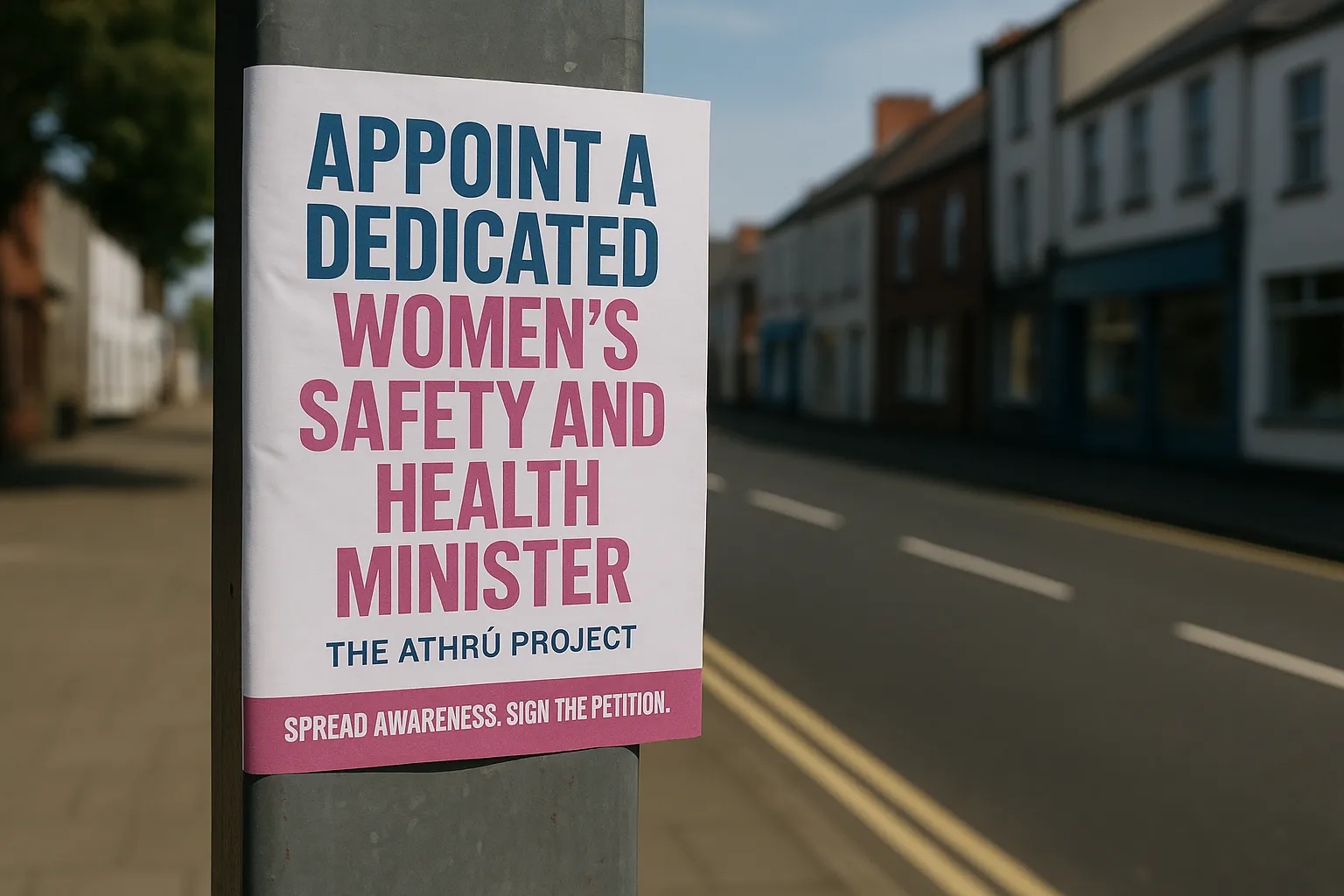
– Athrú Project campaigns for women’s safety and health minister.
– Over 1,500 signatures collected in support.
– Northern Ireland has one of Europe’s highest femicide rates.
– Women’s healthcare issues include long endometriosis diagnosis times.
– 97.8% public support for a dedicated women’s minister.
Full Story
A collective of young activists in Northern Ireland has initiated a campaign aimed at establishing a dedicated minister responsible for women’s safety and health at Stormont. Known as The Athrú Project, this initiative commenced in August 2025 and seeks to raise awareness about the challenges faced by women and girls in the region, particularly concerning issues of safety and healthcare access.
The group, primarily composed of individuals aged 18 to 19 from the Ballycastle area, has garnered support from local Members of the Legislative Assembly (MLAs) and community members spanning various demographics. Central to their efforts is a petition that has gained momentum, with over 1,500 signatures collected to date. According to a representative from The Athrú Project, the need for a dedicated minister stems from the pervasive impact of violence against women and girls, which “impacts every aspect of life.”
In discussing the critical need for this ministerial role, they highlighted the dire reality many women face in their daily lives. Many women in Northern Ireland find basic freedoms—such as walking alone at night—nearly unattainable due to insufficient street lighting and a lack of security measures like CCTV. They remarked, “Everything a man may take for granted would be a luxury for many women here.”
The spokesperson elaborated on the psychological burden this places on women: “Even with CCTV and lighting, there are still cases of women being assaulted in broad daylight… women are forced into walking home with their keys between their fingers or not leaving the house after a certain time.” The group argues that it is society’s responsibility to enhance safety measures rather than placing the onus on women to navigate such risks.
The call for a dedicated women’s safety and health minister comes against a backdrop of increasing violence against women in Northern Ireland, as the region records one of the highest femicide rates in Europe. Alarmingly, statistics reveal that since 2020, 30 women have lost their lives as a result of gender-based violence. A recent survey from Ulster University found that about 70% of women reported experiencing some form of violence or abuse within the last year, further underscoring the necessity of systemic change.
The Athrú Project argues that establishing a defined ministerial role for women’s issues would facilitate focused attention and funding on matters that greatly affect women’s lives. “This would encourage a proactive rather than reactive approach to policies that could significantly improve women’s circumstances,” they stated.
Furthermore, they proposed that a women’s minister would work to reinforce existing laws and implement community outreach initiatives aimed at educating men about their behaviours. Such initiatives would also empower women by informing them about their rights and available support. Acknowledging the rise of misogyny in educational settings, they warned about the increasing prevalence of harmful ideologies that embed negative attitudes toward women.
In addition to safety concerns, The Athrú Project directed attention to the inadequacies of women’s healthcare in Northern Ireland. The group pointed out that waiting lists for certain gynaecological conditions, particularly endometriosis, are significantly higher than the UK average. Data from Endometriosis UK indicates that the average time to receive a diagnosis for this painful condition has soared to nearly ten years, an increase from the previous average of approximately eight and a half years reported in 2020.
“The demand for healthcare that meets women’s needs is clear,” a spokesperson explained. “Healthcare issues affect everyone; however, women disproportionately suffer from the failings of the system.” They stressed that the desire to improve women’s health services was one of the most prominent concerns voiced in their research survey, indicating a strong call for dedicated attention at the governmental level.
The issue of medical misogyny was also raised, highlighting instances where women’s health complaints are often dismissed as hormonal or weight-related issues, rather than being taken seriously. “Violence also comes in the form of healthcare,” they stated, advocating for a systemic overhaul to ensure women’s health concerns are acknowledged and adequately addressed, especially when conditions like endometriosis can go untreated for years.
In response to these calls for a dedicated minister, a spokesperson from The Executive Office acknowledged the importance of addressing women’s health and safety, stating that “promoting the health and safety of women, including ending violence and abuse, is a priority for the Executive.” They noted that this commitment is reflected in the inclusion of the Ending Violence Against Women and Girls Strategy in the Programme for Government.
The Department of Health echoed similar sentiments, emphasizing a commitment to women’s health services that includes tackling long waiting times for gynaecological treatments. In 2025, a package was announced, earmarking £3.5 million to address these waiting lists, with long-term goals to significantly reduce them over the next few years.
Local community engagement around this initiative has been robust, with The Athrú Project conducting a survey that revealed overwhelming public support for the establishment of a dedicated minister for women’s safety and health. Almost 98% of respondents endorsed the idea, with only a small margin expressing uncertainty.
The project’s outreach has been positively received on social platforms, which has helped broaden their campaign’s visibility. For those wishing to lend their voices to this cause, The Athrú Project invites participation through social media, sharing personal views via their campaign forms, or signing their petition for a dedicated women’s minister.
The ongoing dialogue surrounding women’s safety and healthcare in Northern Ireland is not just a political issue but a societal imperative, requiring collective action and commitment to ensure improvement in the lives of women and girls across the region.
Our Thoughts
To prevent issues highlighted in the article, a proactive approach to women’s safety and health must be prioritized, emphasizing infrastructure improvements such as enhanced street lighting and increased CCTV in public spaces to deter violence against women. The UK Health and Safety at Work Act 1974 obligates employers and local authorities to ensure the safety and wellbeing of individuals in the community, which includes implementing effective measures against violence. The lack of attention to women’s specific health needs, particularly in areas like endometriosis, points to a breach of the Equality Act 2010, as it places certain groups at a disadvantage in accessing healthcare. Furthermore, community outreach programs focusing on educating men about respectful behavior could help mitigate violence, aligning with the principles advocated in the Health and Safety Executive’s guidelines on health, safety, and wellbeing in the workplace. Establishing a dedicated women’s minister could ensure a more focused allocation of resources and legislative attention to these critical issues, promoting a holistic approach that encompasses prevention, health, and safety.