










Story Highlight
– 3D Trading recalls M&M’s Pipoca popcorn for safety risk.
– Contains undeclared allergens: peanuts, gluten, barley, rye, wheat.
– All 35g bags with 3D Trading label included in recall.
– Affected customers advised to return product for refund.
– FSA informs allergy support organisations about the recall.
Full Story
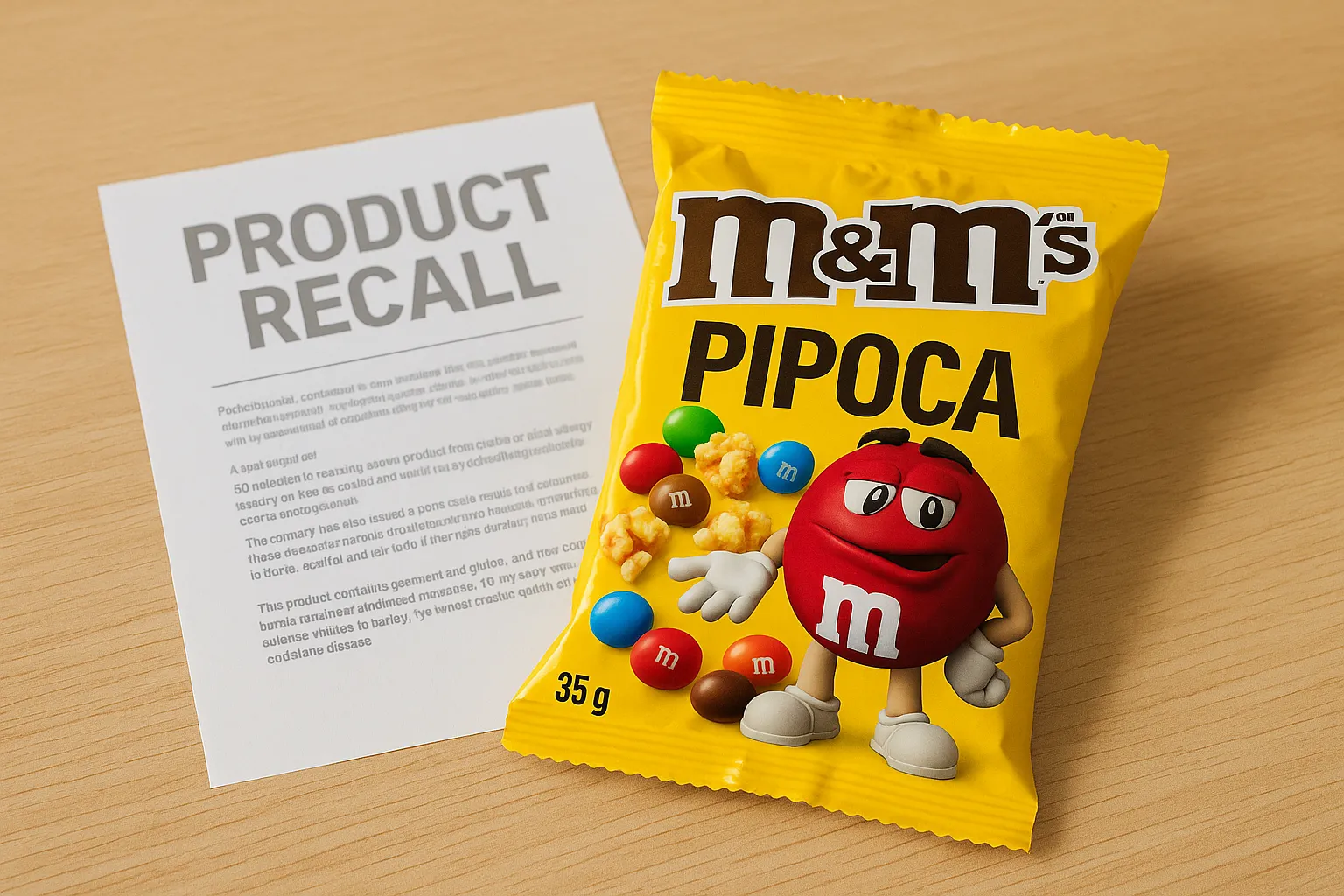
In a recent development regarding food safety, 3D Trading has issued a recall for its M&M’s Pipoca popcorn, highlighting significant allergen concerns that have emerged in the UK market. The product, produced specifically for Brazilian consumers, contains potential allergens that are not listed on the packaging sold in the UK, posing health risks to individuals with specific dietary restrictions.
The recall is limited to M&M’s Pipoca bearing the 3D Trading ingredients label. Affected items are available in 35g bags and include all batch numbers and best-before dates associated with this label. The decision to recall has been prompted by the discovery that the product contains allergens such as peanuts, gluten, barley, rye, and wheat, which were not properly disclosed on the UK packaging. This oversight raises considerable concern, especially for consumers who suffer from allergies or intolerances relating to these ingredients.
A representative from the Food Standards Agency (FSA) commented on the situation, stating, “3D Trading is recalling the above product from customers and has been advised to contact the relevant allergy support organisations, which will tell their members about the recall.” The spokesperson confirmed the company’s compliance with safety protocols, including notifying consumers about the recall through various channels.
To aid consumers, 3D Trading has released notices at points of sale, which clarify the reasons behind the recall and provide instructions for those who may have purchased the product. The advisory specifies that anyone with allergies to peanuts or intolerances to gluten-containing cereals, such as barley, rye, and wheat, should refrain from consuming the affected popcorn. “If you have bought the above product and have an allergy to peanut or an allergy or intolerance to barley, rye, wheat or cereals containing gluten, or coeliac disease, do not eat it,” the notice warns.
Consumers are advised to return any purchased packets to the store for a full refund, regardless of whether they have a receipt. For further assistance, 3D Trading has provided a contact number, 07596 571086, and an email address, UK@3dcandy.co.uk, for inquiries related to the recall.
The notion of product recalls is an essential safety mechanism within the food industry. When a safety concern arises with a food item, companies may choose to withdraw the item or issue a recall, urging consumers to return it. The FSA plays a pivotal role in this process by disseminating Product Withdrawal Information Notices and Product Recall Information Notices to inform the public and local authorities about any food-related issues.
In certain instances, the FSA may issue a ‘Food Alert for Action,’ which details specific actions local authorities must undertake on behalf of consumers. This system is vital for ensuring that food safety standards are upheld and that consumers are kept informed about potential hazards in the products they purchase.
The recall of M&M’s Pipoca underscores the importance of accurate labelling in food products, particularly for those who may be vulnerable due to allergies or intolerances. The sale of food items containing undisclosed allergens can lead to serious health risks, and it is crucial that producers take responsibility for the accuracy of their packaging and ingredient lists.
This incident also highlights the need for consumers to remain vigilant when purchasing food items. It serves as a reminder to always check product labels and be aware of any potential allergens that may not be immediately obvious, particularly with trendy or novelty food items that may appeal to broader markets.
Local health authorities and allergy support organisations are expected to help disseminate information regarding the recall. These support groups play an important role in educating individuals about food allergies and ensuring that they have the necessary information to make safe choices.
The investigation into this recall will likely prompt further discussions within the food industry concerning the labelling of imported products. Ensuring that items manufactured for different markets are correctly labelled for local consumers is fundamental in preventing future incidents.
As consumers become more health-conscious and aware of food safety, manufacturers must stay ahead of regulatory requirements and public expectations. Clear communication and prompt action can mitigate risks and protect consumers, fostering trust between the public and food producers.
In conclusion, the recall of M&M’s Pipoca by 3D Trading serves as a critical reminder of the importance of food safety and the need for rigorous compliance with labelling standards. As the situation develops, further updates may be forthcoming from both 3D Trading and the Food Standards Agency, ensuring that all affected customers are informed and that their wellbeing is safeguarded.
Our Thoughts
The recall of M&M’s Pipoca by 3D Trading highlights significant lapses in food safety compliance, particularly regarding allergen labeling. To prevent such incidents, stringent adherence to the Food Labelling Regulations 1996 and the Food Safety Act 1990 is crucial, ensuring that all allergens present in products are clearly stated on labels, especially for goods sold in the UK.
Key lessons include the importance of comprehensive risk assessments to identify allergenic ingredients and proper labeling practices that meet regulatory standards. Regular audits and training for staff on allergen management could reinforce compliance and mitigate risks.
This incident underscores the necessity for manufacturers to implement effective quality control systems to ensure that labels match the contents of their products prior to distribution. Additionally, enhancing communication channels with retailers and consumers can foster swift action in case of recalls, preserving public trust and safety.
In summary, clearer allergen communication, rigorous labeling checks, and proactive risk management are vital in preventing similar food safety breaches in the future.