
















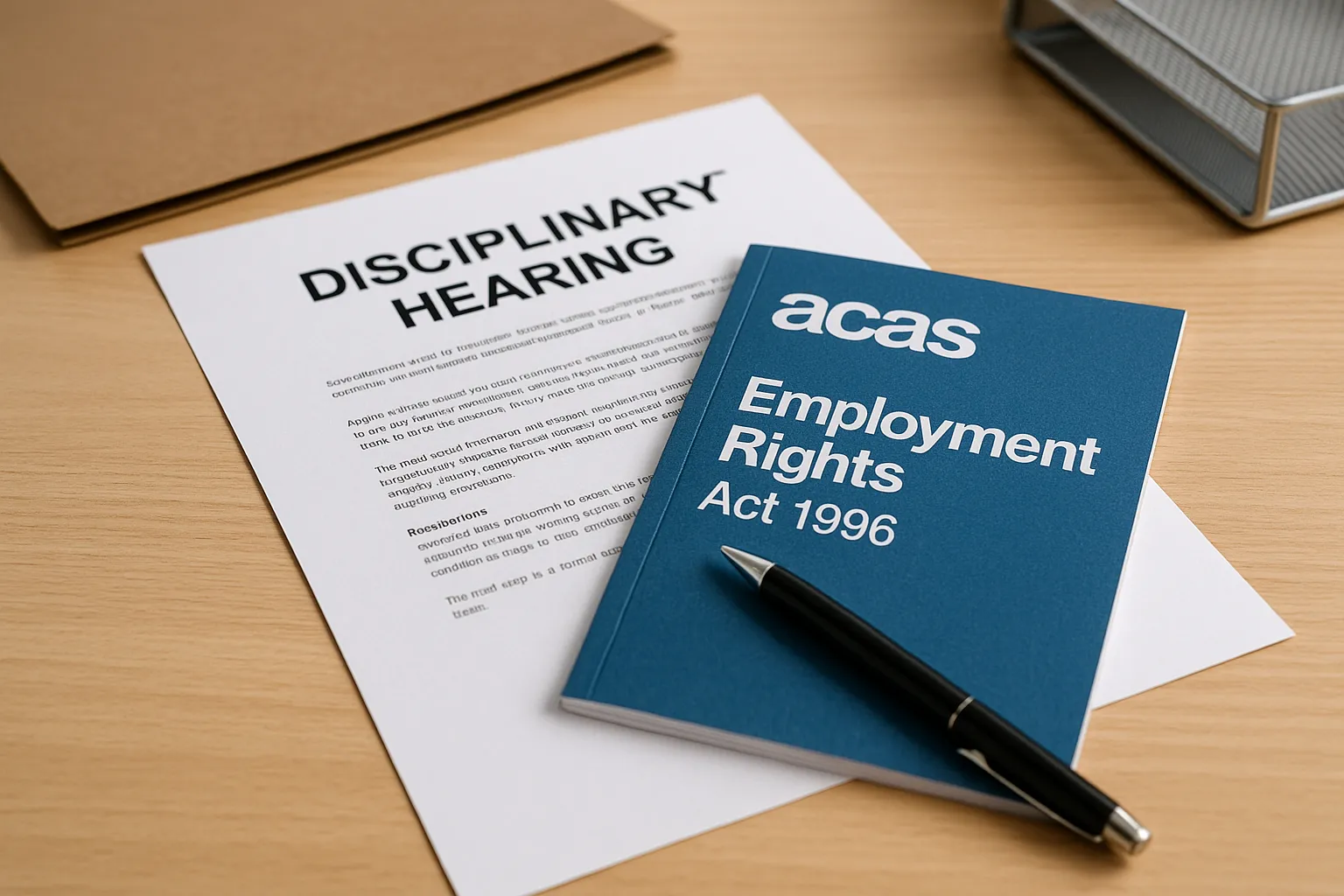
Story Highlight
– UK employment laws regulate workplace disputes and resolutions.
– ACAS Code outlines fair disciplinary and grievance procedures.
– Employers must investigate allegations before taking action.
– Employees have rights to representation and appealing decisions.
– Training for managers reduces legal risks in disputes.
Full Story
When workplace conflicts arise, they can present challenges for both employers and employees. These disputes, often stemming from issues like misconduct or perceived unfair treatment, highlight the necessity of understanding the legal frameworks that govern them. In the UK, both parties must navigate established disciplinary and grievance procedures that help ensure justice and maintain productive working environments.
### Understanding the Legal Framework
In the UK, the Employment Rights Act 1996 serves as the cornerstone legislation for addressing workplace disputes. Complementing this act is the Advisory, Conciliation and Arbitration Service (ACAS) Code of Practice on Disciplinary and Grievance Procedures. While the ACAS Code itself does not possess the force of law, employment tribunals are obligated to consider it when resolving relevant cases. Consequently, any failure by employers or employees to adhere to its guidelines can lead to an adjustment in any compensation awarded, which may reach a reduction of 25 per cent.
The combined principles of the Employment Rights Act and the ACAS Code stress the importance of resolving workplace disputes efficiently, fairly, and consistently. The aim is to address issues informally whenever possible, which not only promotes a respectful workplace but also reduces the risks associated with formal disputes.
### Disciplinary Procedures Explained
Disciplinary procedures are vital for handling employee conduct or performance issues. Common triggers for initiating disciplinary action include unprofessional behaviour, chronic lateness, failure to meet expectations, aggression, or violations of company policies.
#### Key Steps in the ACAS Code
The ACAS Code outlines a series of essential steps for employers to follow during the disciplinary process. Initially, it is crucial for employers to establish the facts surrounding the case by conducting a thorough and reasonable investigation before launching any formal proceedings. Avoiding premature conclusions without sufficient evidence is a common pitfall that can lead to successful claims for unfair dismissal.
After concluding the investigation, the employer must notify the employee in writing about the allegations against them. This written communication should provide adequate detail, allowing the employee to comprehend the claims and to prepare an informed response. A lack of clarity or late notification may compromise the fairness of the process.
The subsequent step involves a formal disciplinary meeting at which the employee has a statutory right, as outlined in the Employment Relations Act 1999, to be accompanied by a colleague or union representative. During this meeting, the employer must present their evidence, listen to the employee’s account, and consider any mitigating factors before arriving at a decision.
Once a decision has been reached, the employer is obliged to communicate the outcome in writing and inform the employee of their option to appeal. The appeal should be conducted by a manager uninvolved in the original decision to maintain impartiality whenever feasible.
#### Potential Outcomes of Disciplinary Procedures
The consequences of disciplinary action can vary depending on the nature of the issue and any previous warnings issued. Outcomes may range from a first written warning to a final warning, or, in severe cases, outright dismissal. In instances of gross misconduct, such as theft or violence, employers may bypass prior warnings, although it remains essential to conduct a fair investigation and hearing prior to dismissal.
Proactive employers can mitigate such incidents through comprehensive training on health and safety measures during both the onboarding process and ongoing employee development initiatives. It is important to recognise that summary dismissal does not equate to instant termination without due process. Employees retain the right to present their case even in the gravest situations.
### Grievance Procedures
A grievance refers to any concern, issue, or complaint that an employee raises with their employer, covering an extensive range of matters such as salary disputes, workplace conditions, or allegations of discrimination and bullying.
#### Formalising a Grievance
The ACAS Code encourages employees to articulate their grievances in writing. This formal notification enables employers to grasp the complaint’s nature and respond appropriately. Following this, employers should promptly arrange a meeting with the employee to delve into the issue at hand.
Similar to disciplinary meetings, employees have the right to bring a colleague or representative to the grievance meeting. After the discussion, the employer should issue a written response detailing their decision and, if applicable, the actions to follow. They must also inform the employee of their appeal rights if the outcome is unsatisfactory.
#### Recognising the Significance of Grievances
Ignoring or dismissing legitimate grievances can prove perilous for employers. Such negligence may pave the way for claims of constructive dismissal, where an employee resigns, asserting that their employer’s conduct constitutes a fundamental breach of contract. Employment tribunals intensively scrutinise whether an employer followed a fair process, and a pattern of neglecting complaints could reflect poorly on the employer’s practices.
### Navigating Overlapping Procedures
Disciplinary and grievance procedures occasionally overlap, particularly when an employee facing disciplinary action files a grievance concerning that very action or the manager managing it. Employers must approach these situations with caution, weighing whether to suspend the disciplinary process pending the grievance investigation or to allow both procedures to run concurrently. The ACAS Code advises an individual assessment of each scenario based on its specific circumstances.
### Addressing Unfair Dismissal Claims
If disciplinary measures result in dismissal, employees with two or more years of continuous service typically have the right to challenge the dismissal at an employment tribunal. The tribunal’s role is to evaluate whether the employer had a justified reason for termination—such as misconduct, capabilities, or redundancy—and whether their conduct was reasonable given the situation. Procedural fairness plays a critical role in the tribunal’s evaluation.
Before proceeding with a tribunal claim, the claimant is required to first engage with ACAS for early conciliation, aiming to foster a resolution outside the courtroom.
### Final Considerations
For employers, the essential takeaway is to establish clear written policies, adhere to them consistently, conduct thorough investigations, and afford employees the opportunity to voice their perspectives before drawing conclusions. Providing disciplinary and grievance training for management is an effective strategy for minimizing legal risks.
For employees, understanding one’s rights is equally imperative. Employees are entitled to precise information regarding allegations, the opportunity to respond, accompaniment at formal meetings, and the ability to appeal decisions they perceive as unfair.
Disciplinary and grievance procedures extend beyond mere administrative requirements. When managed effectively, they uphold the dignity of individuals and bolster workplace standards, enabling the resolution of conflicts before they escalate into potentially costly legal disputes. In a legal environment that prioritises fairness, the importance of executing these processes with care is paramount.
Our Thoughts
To avoid workplace disputes escalating to formal proceedings, employers should strictly adhere to the ACAS Code of Practice on Disciplinary and Grievance Procedures, which is aligned with the Employment Rights Act 1996. Key safety lessons include the necessity of conducting thorough investigations before taking action, as premature conclusions often lead to unfair dismissal claims. Employers must ensure clear communication of allegations to employees, providing adequate detail to enable informed responses.
When grievances arise, addressing them promptly is crucial; ignoring complaints can lead to claims of constructive dismissal. Employers should consider pausing disciplinary processes when grievances are raised to maintain procedural fairness, as both processes can overlap.
Relevant regulations that could be breached include the duty to provide a fair and just workplace environment as established under the Health and Safety at Work Act 1974, particularly regarding the mental wellbeing of employees under relevant health and safety regulations.
Preventative measures include comprehensive training on these procedures for managers, fostering an environment where issues are addressed swiftly and informally, thereby reducing the likelihood of disputes escalating. Maintaining robust policies reduces legal risks and upholds workplace standards.