
















Story Highlight
– Ongoing IT issues pose risk to patient safety.
– Medical practice faces outages up to twice weekly.
– Staff struggle to access patient records during outages.
– Delays impact urgent referrals and overall service delivery.
– Workers demand urgent intervention for digital infrastructure failure.
Full Story
Concerns have been raised by an esteemed healthcare professional regarding persistent IT failures within the NHS, with implications that these are endangering patient safety and likening the situation to “potholes in the road.” The remarks come in light of the experiences of staff at a medical practice in north Kent who have reported a troubling increase in technology outages, specifically at the Oakfield Health Centre in Gravesend.
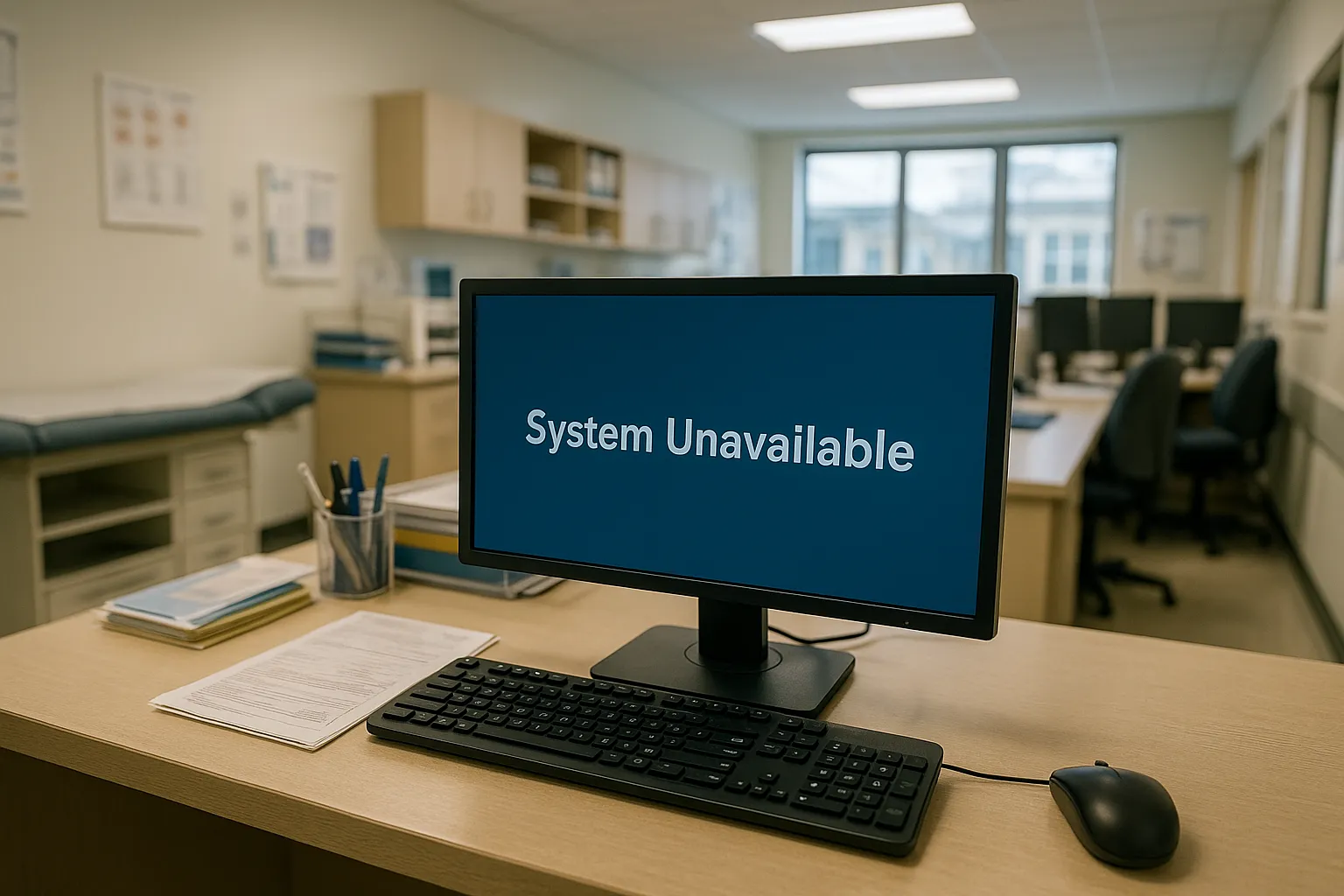
Dr Rubin Minhas, managing partner at the practice, which caters to around 10,000 patients, has described the situation as “horrific.” Over the past six months, outages have reportedly escalated to twice a week, creating “absolute chaos” for already overburdened staff. Dr Minhas expressed that the IT failures impede the ability to access crucial patient information, prescribe medications, and carry out urgent referrals, thereby increasing pressure on healthcare professionals who are already working in a high-stress environment.
“The absence of a functioning IT system means that when patients arrive, we lack a foundation for meaningful conversation,” explained Dr Minhas. He further elaborated that when the system is dysfunctional, healthcare providers must duplicate their efforts, effectively doubling their workload. “It creates an enormous amount of strain,” he added.
The disruptions primarily occur on Monday and Friday mornings, with outages lasting up to four hours. During such incidents, staff often find their computers frozen if they are already logged in or are unable to log in altogether. Consequently, medical records must be handwritten, and staff now face the cumbersome task of later entering this information into the digital system. “That creates all kinds of risks in itself,” Dr Minhas noted. “It’s very stressful for patients and for staff alike.”
This ongoing struggle with IT infrastructure has been identified by Dr Minhas as one of the most significant challenges in the field of general practice, further eroding staff morale. He has raised alarms that if these issues remain unresolved, it could lead to increased attrition rates among healthcare workers, including premature retirements. “It’s the NHS equivalent of the potholes in the road, really,” he stated, underlining the dire need for improvement.
Denise Payne, the practice manager at Oakfield Health Centre, echoed Dr Minhas’s concerns, stating that IT failures lead to “absolute chaos,” forcing staff to operate without vital patient data. While some patients are understanding of the difficulties, many are visibly dissatisfied. “The clinicians will still see patients, but it creates delays as they are working without complete information,” Payne explained. She highlighted the particular dangers of consulting with patients without access to their medical histories or ongoing medications.
Payne further stressed that the administrative team also suffers under these conditions; they are unable to access essential lab results, which could include urgent diagnostics like X-rays or ultrasounds. This lack of access exacerbates existing delays in patient care, particularly for time-sensitive cases such as cancer referrals.
The issues at Oakfield Health Centre are not isolated; they are affecting multiple facets of the regional health service, including the Accident & Emergency department at the Darent Valley Hospital in Dartford. “Everyone is quite frustrated because you’re sitting there not doing anything,” Payne remarked, highlighting how the reliance on flawed systems hampers productivity.
Philippa Fellows, who leads the reception team at Oakfield Health Centre, articulated the challenges staff face when dealing with increasingly disgruntled patients. “It’s very frustrating,” she said, acknowledging the emotional toll that ongoing IT problems impose on the team. “Some receptionists have said to me, ‘I was just worried this morning that it might all go wrong,’” she added, illustrating the ongoing anxiety surrounding the potential for technical failures.
In spite of these significant hurdles, staff have endeavoured to maintain a supportive environment, relying on teamwork and camaraderie to navigate the difficulties. They believe the recurring IT issues represent a broader systemic failings within NHS digital infrastructure that demand urgent attention from both NHS leadership and government authorities.
The management team at Oakfield Health continues to voice their concerns, advocating for immediate intervention to rectify these persistent problems. With the future of patient care hanging in the balance and the capacity of healthcare professionals being tested, the emphasis shifts towards a collective call for action to overhaul the existing digital systems in use across the NHS.
NHS Kent and Medway has been approached for comments on these alarming issues, although a response has yet to be provided. As the conversation around patient safety and operational efficacy continues, the plight of practices like Oakfield Health Centre serves as a crucial reminder of the impact that technology can have on healthcare delivery in the UK.
Our Thoughts
The ongoing IT issues at Oakfield Health Centre highlight significant failures in the NHS’s duty to ensure a safe working environment under the Health and Safety at Work Act 1974. To avoid these recurrent outages, a proactive IT management strategy, including regular maintenance, updates, and staff training on the system, should have been implemented. Furthermore, conducting risk assessments as mandated by the Management of Health and Safety at Work Regulations 1999 would have identified potential risks associated with IT failures.
Key safety lessons include the importance of reliable access to patient records for informed medical decision-making and the need for contingency plans during IT outages to minimize disruption. The lack of these procedures significantly contravenes the requirement to ensure employee and patient safety.
To prevent similar incidents, NHS organisations should consider investing in robust IT infrastructure, conducting periodic audits, and establishing protocols to manage outages effectively. Increased support from central government could help implement these necessary improvements, thereby safeguarding patient care and staff wellbeing in future situations.