
















Story Highlight
– First trial of bird flu vaccine for humans launched.
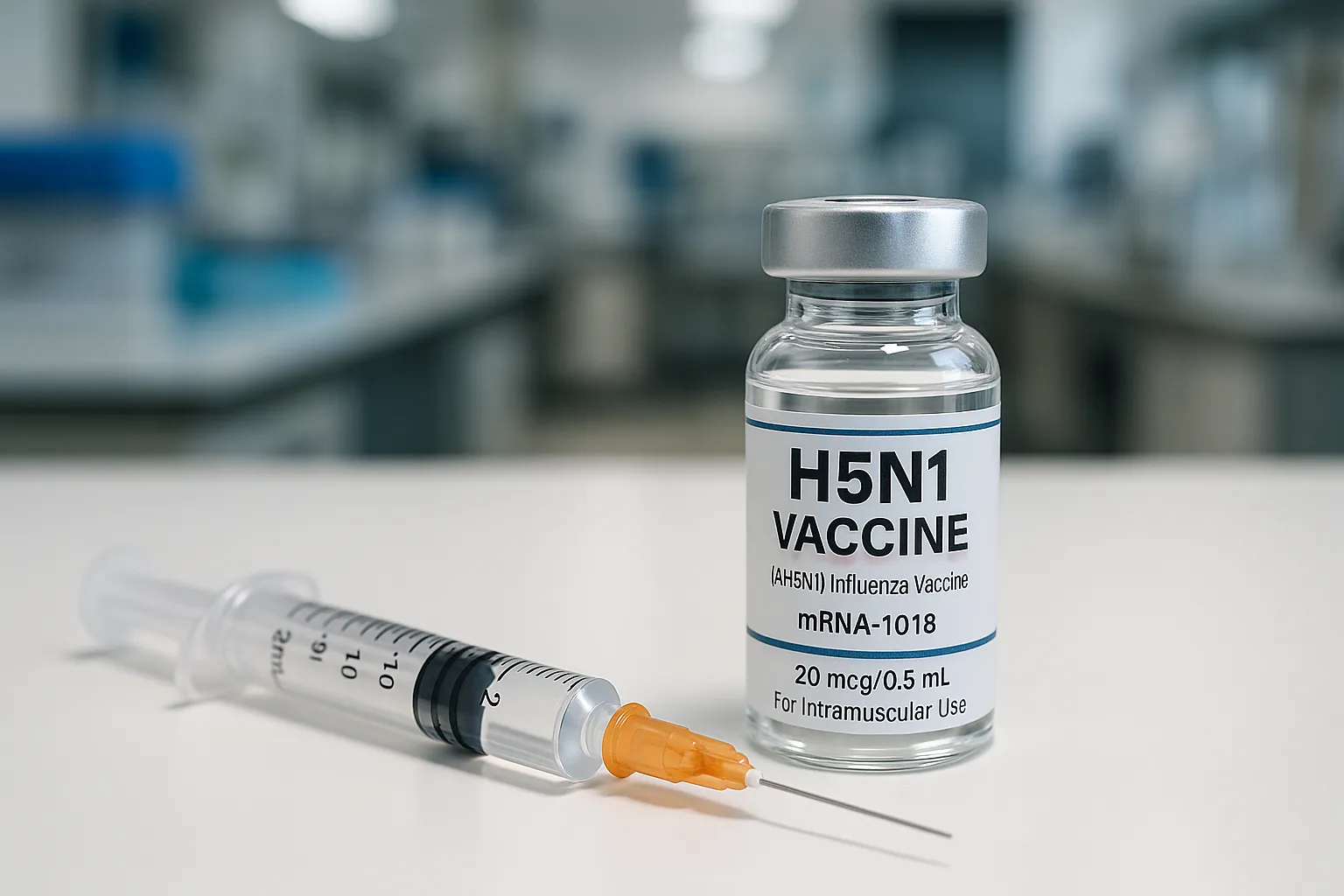
– mRNA-1018 vaccine developed by Moderna shows promising results.
– A(H5N1) strain evolving and spreading among animal species.
– Study involves 4,000 participants, prioritizing poultry workers.
– Trial aims to improve preparedness for future flu pandemics.
Full Story
A significant clinical trial is underway in the UK to explore the efficacy of a groundbreaking vaccine designed to protect humans against avian influenza, specifically the A(H5N1) virus. The initiative, set to involve thousands of participants across the UK, is particularly encouraging those engaged in agriculture or who frequently interact with birds to take part.
Experts have expressed growing concern regarding the A(H5N1) virus, noting its ongoing evolution and geographic spread among flora and fauna. Although human-to-human transmission remains rare, it poses a credible risk that cannot be ignored. The vaccine in question, named mRNA-1018 and developed by Moderna, harnesses similar mRNA technology to that used in Covid-19 vaccinations. This innovative approach instructs the immune system to generate particular proteins linked to the A(H5N1) virus, thereby equipping the body to recognise and combat the virus should exposure occur.
The scope of this phase 3 clinical trial is considerable, with an estimated 4,000 participants drawn from both the UK and the United States. Within the UK segment, about 3,000 individuals will receive the vaccine at 26 designated sites across England and Scotland, with a specific focus on recruiting poultry farmers and those with close ties to avian species.
In recent years, the A(H5N1) strain has increasingly affected bird populations but has also led to outbreaks in various mammals, including mink and marine life. Furthermore, cases have emerged among dairy cows in the United States, with documented instances of humans contracting the virus while working closely with these livestock.
The research, which has received support from the National Institute for Health and Care Research (NIHR) and is sponsored by Moderna, is anticipated to last for seven months. Participants will receive two doses of the vaccine spaced three weeks apart. According to Dr Hiwot Hiruy, Senior Director of Clinical Development at Moderna, preliminary findings suggest the vaccine is “generally well tolerated”. Most side effects experienced have been mild to moderate, with no significant safety issues reported. Furthermore, initial data indicates a strong immune response, detectable as soon as seven days post-first dose, which appears to sustain over time.
Given that bird flu is currently not prevalent among humans, the researchers will rely on measuring immune responses as a proxy for the efficacy of the vaccine. Dr Rebecca Clark, who serves as the national co-ordinating investigator for the trial at Layton Medical Centre in Blackpool, stated, “We know that the A(H5N1) strain is evolving and spreading across animal species, and though it does not yet move easily between humans, we have to treat human-to-human transmission as a real possibility.”
Dr Clark further emphasised the trial as a proactive measure, aimed at fortifying defences against this potential health threat and enhancing future pandemic readiness. With recruitment sites strategically located within various communities, the initiative seeks to move away from conventional hospital settings, allowing broader access to diverse populations across the country.
The origins of the A(H5N1) bird flu virus can be traced back to southern China in 1996, with the first recorded human infections following in 1997. By 2024, there had been 116 confirmed human cases of bird flu globally, the majority stemming from direct contact with infected animals.
Dr Richard Pebody, Director of Epidemic and Emerging Infections at the UK Health Security Agency (UKHSA), commented on the challenges of predicting future pandemics, stating, “We clearly don’t know when the next pandemic is going to be, we obviously don’t know what it’s going to be caused by, but what we do know is that a flu pandemic is the most likely future pandemic.” He reassured that while the immediate risk to humans remains low, the evolving nature of the virus necessitates ongoing vigilance.
“The UKHSA remains alert to the potential for this pathogen to adapt into a form that spreads between humans,” Dr Pebody added, pledging to monitor emerging data closely. He labelled the ongoing trial of this mRNA pandemic influenza vaccine as a pivotal move in enhancing the UK’s capacity to safeguard public health against future influenza pandemics.
In late 2024, the UK Government had announced a significant contract for an H5 influenza vaccine, securing over five million doses in an effort to boost pandemic preparedness. However, Dr Pebody noted that the available stockpile utilises traditional vaccine methodologies, contrasting with the newer mRNA technology employed in the Moderna vaccine. Dr Hiruy also acknowledged the advantages of mRNA vaccines, highlighting their capacity for rapid production and adaptability to emerging strains.
She remarked that while a variety of vaccines are currently in circulation, this new addition would serve as a valuable supplementary tool in the collective endeavour towards pandemic readiness. The results of this trial could potentially shape the landscape of avian flu prevention and control, paving the way for enhanced public health measures in the face of a changing epidemiological landscape.
Our Thoughts
The article highlights the proactive approach taken by UK health authorities in response to the evolving A(H5N1) bird flu strain and emphasizes the importance of pandemic preparedness. However, key lessons for future prevention include enhancing biosecurity measures in poultry farming and related industries to mitigate risks of zoonotic diseases. Implementation of robust health and safety practices would help reduce human exposure to infected animals, aligning with the Health and Safety at Work Act 1974, which mandates the safety and welfare of workers.
Additionally, ensuring comprehensive training for those in close contact with birds on recognizing and managing health risks could further protect against potential infections. Continuous risk assessments and monitoring should comply with the Control of Substances Hazardous to Health (COSHH) Regulations to mitigate exposure to pathogens.
Although the current risk of bird flu in humans is low, fostering effective surveillance and response systems would enhance overall public health safety. Establishing these preventive measures could significantly reduce the likelihood of similar incidents in the future, ensuring that potential human-to-human transmission scenarios are adequately addressed ahead of time.