















Story Highlight
– Worker suffered life-changing injuries while cleaning a machine.
– Tyco Electronics fined £340,000 for safety breaches.
– Inadequate training and supervision were highlighted in investigation.
– Company previously faced lawsuits for worker safety issues.
– HSE emphasizes need for proper machinery isolation procedures.
Full Story
Tyco Electronics, operating out of Swindon, Wiltshire, has been held accountable in a recent court ruling regarding a serious workplace incident that occurred in March 2023. A factory worker sustained significant injuries that have drastically altered the course of his life.
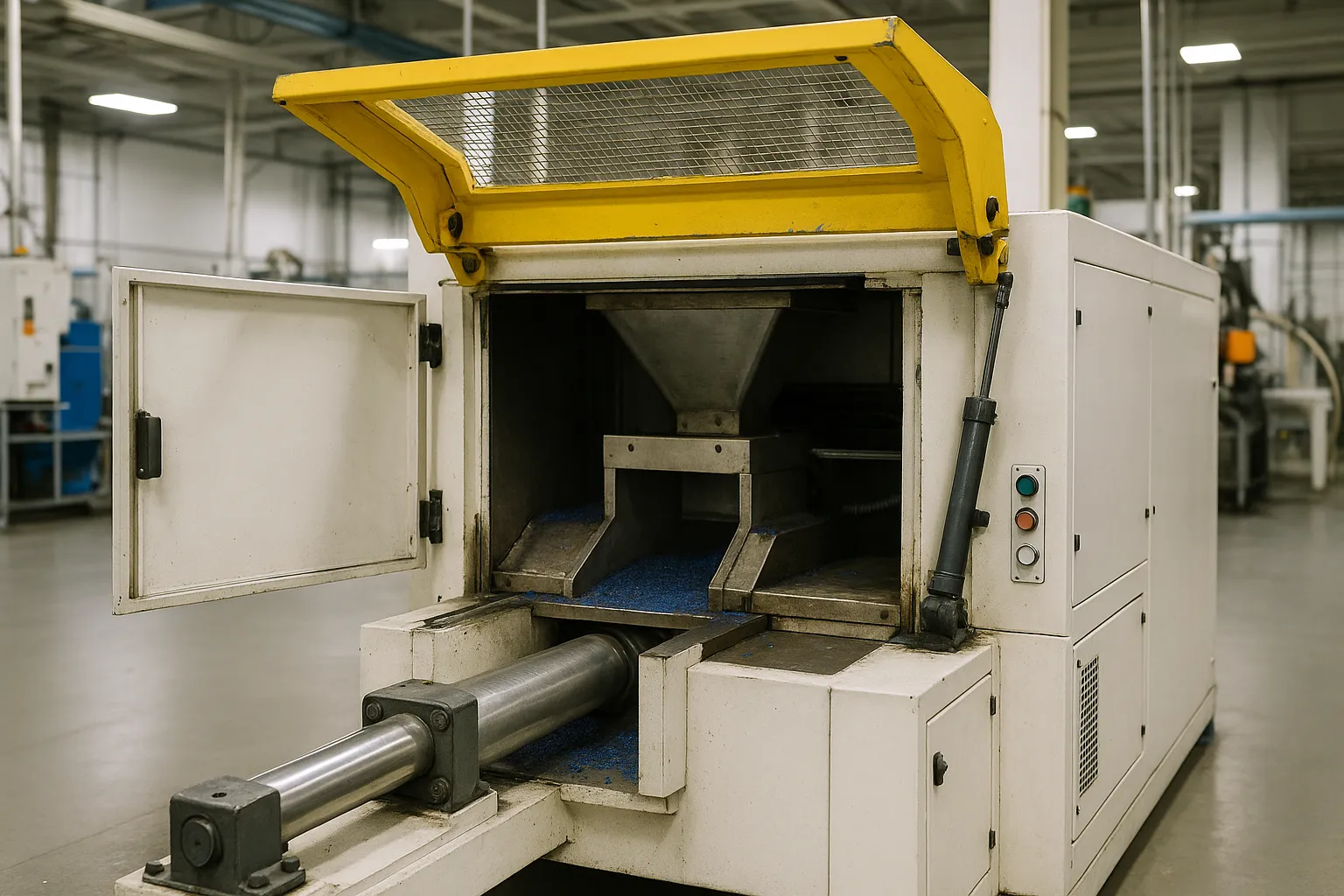
On the night of 7 March, during a routine cleaning operation of a pellet manufacturing machine, the unnamed worker inserted his left hand into the apparatus. As he was performing this task, a door on the front of the machine unexpectedly fell, inadvertently activating the hydraulic ram. This sequence of events resulted in his arm becoming ensnared within the machinery.
Faced with a harrowing situation, the worker was forced to extricate his arm, which led to severe damage, including the tearing of nerves and tendons. He urgently called for assistance, and paramedics were quick to transport him to the hospital. His condition necessitated three surgical operations aimed at reattaching his fingers.
Despite the medical intervention and ten days of hospital care, the worker’s condition remains dire. He continues to undergo physiotherapy on a weekly basis but unfortunately reports that he still experiences complete loss of sensation and movement in his fingers, leaving him with permanent physical impairments.
Subsequent to a thorough inquiry led by the Health and Safety Executive (HSE), it was revealed that Tyco Electronics admitted to violating the Health and Safety at Work Act 1974. During a sentencing hearing held at Bristol Magistrates’ Court on 17 April, the company faced a substantial financial penalty. They were ordered to pay a fine amounting to £340,000 along with additional costs of £5,145.
The HSE’s investigation highlighted serious failures in the company’s safety protocols. It was determined that Tyco Electronics had not implemented adequate safety measures to protect employees from the operational hazards posed by the machinery. Additionally, there was a lack of comprehensive training and supervision, which further jeopardised worker safety.
In the wake of these findings, the company was approached for comments by local media; however, Tyco Electronics opted not to provide any statement regarding the incident or the subsequent court ruling.
This latest court case is not an isolated incident for Tyco Electronics, which has faced previous legal challenges related to workplace safety. Notably, in February 2019, the company was also sued by a factory worker who suffered from inhalation injuries due to gas exposure.
Tom Heron, the worker involved in that case, represented himself in court after the tribunal found that the company had neglected to maintain a safe working environment and had been slow to address his health concerns. His ordeal began in February 2016, when a dryer was relocated within the factory without proper adjustment to its extraction ventilation system. Following an inspection by an outside firm, it came to light that the dryer required immediate replacement of its contaminated components.
Mr Heron ultimately won £28,000 in compensation for his suffering. His victory against the multinational company, also known as TE Connectivity, is indicative of the challenges employees face when seeking justice for workplace-related injuries, particularly against well-resourced corporations.
In the aftermath of the case involving the unnamed worker from the most recent incident, HSE Inspector Emma Preston offered insights into the broader issue of workplace safety. She pointed out that incidents involving machinery during maintenance and cleaning procedures are unfortunately common and often lead to serious injuries. Inspector Preston stressed the necessity for rigorous lock-off procedures, stating, “Workers should ensure that machinery is properly isolated from all sources of power so that it cannot restart during the task.” This highlights an ongoing concern within the manufacturing sector regarding the safety measures necessary to protect workers.
The injuries sustained by the worker have prompted discussions about improving training and safety standards within the industry. The gravity of the situation serves as a stark reminder of the importance of adhering to health and safety regulations. Companies like Tyco Electronics must reevaluate their procedures to ensure the wellbeing of their workforce.
As the case unfolds, it raises significant questions about accountability, employee rights, and the measures that need to be taken to prevent such incidents from recurring. The lasting impacts of workplace injuries not only affect the victims but also resonate throughout the communities they belong to, emphasizing the critical need for enhanced workplace safety protocols and employee support systems.
Our Thoughts
The incident at Tyco Electronics highlights several failures in health and safety practices that contributed to the worker’s life-changing injuries. Key safety lessons include the necessity for proper risk assessments, adequate training, and effective supervision. The company breached the Health and Safety at Work Act 1974 by failing to implement “suitable and sufficient measures” to safeguard employees during machine maintenance. Specific lapses included insufficient instructions on safely using and cleaning the machinery, which directly contributed to the accident.
To prevent similar incidents, it is vital to establish robust lock-off procedures to ensure that machinery is properly isolated from power sources during maintenance tasks, as emphasized by HSE Inspector Emma Preston. Regular training and clear communication regarding the safe operation of equipment are essential to mitigate risks. Continuous monitoring and supervision are also critical, especially in high-risk environments like manufacturing, to ensure compliance with safety regulations and protocols. Employers must prioritize employee safety to prevent such accidents and the severe consequences that follow.