














Story Highlight
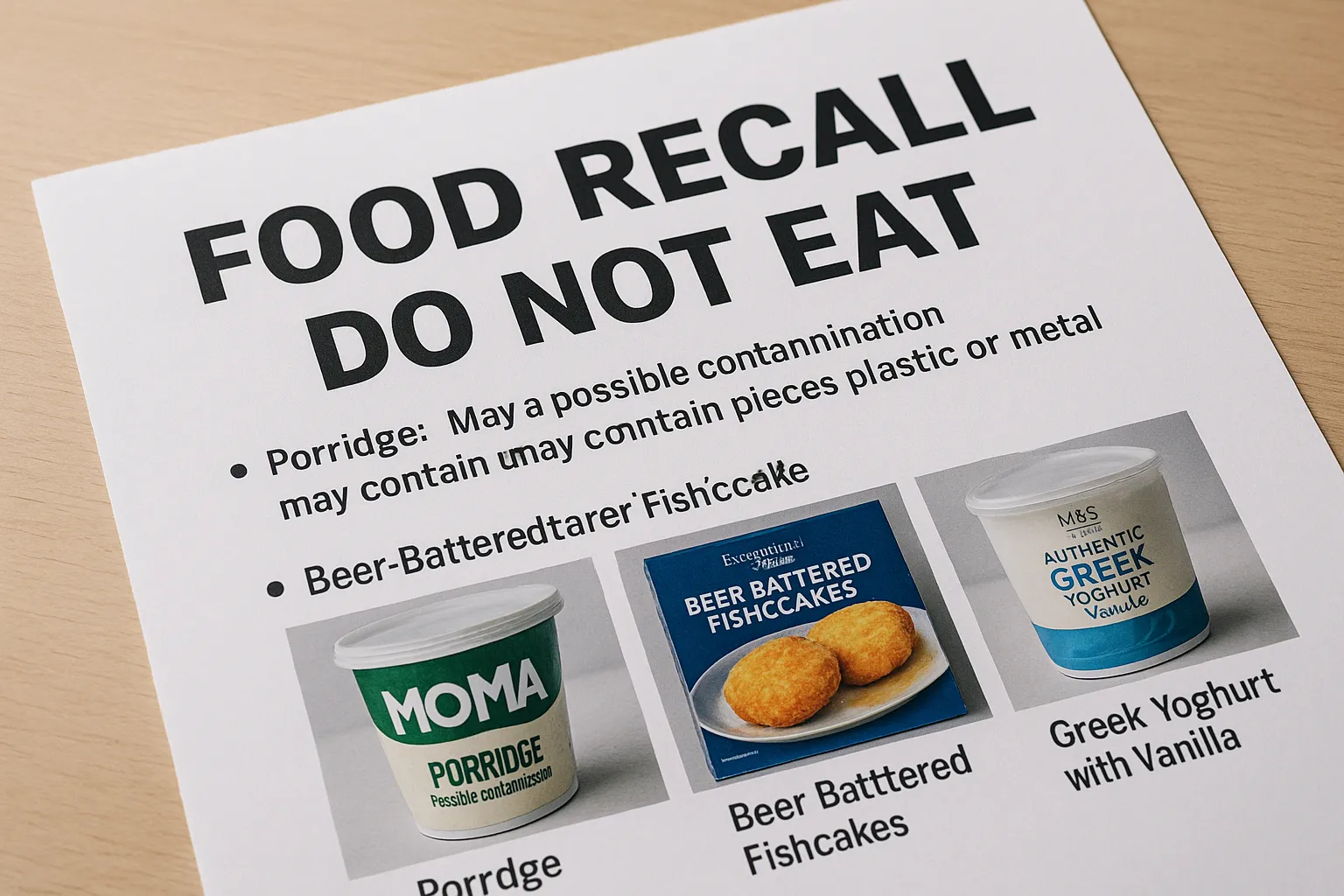
– Multiple products recalled nationwide over health risks.
– Asda recalls fishcakes due to plastic or metal contamination.
– Marks & Spencer yoghurt recall for undeclared gluten allergen.
– Aldi recalls salmon fillets due to incorrect use-by date.
– MOMA porridge products recalled for potential mouse contamination.
Full Story
Concerns over food safety have led to a series of product recalls across various major supermarkets in the UK. The Food Standards Agency (FSA) has issued several “do not eat” alerts amid warnings regarding potential health risks from certain items found in stores nationwide. These recalls encompass a variety of goods, including some porridge products and ready-made meals.
Among the notable recalls is Asda’s Exceptional by Asda Beer Battered Cod Fishcakes, which are being removed from shelves due to potential contamination with foreign objects, specifically plastic or metal fragments. Asda customers are urged to refrain from consuming these products and to return any purchased items to their nearest store for a full refund. The FSA has assured shoppers that point of sale notices will be present in all Asda outlets that stock the affected product to inform customers adequately.
In a statement, an Asda spokesperson expressed regret for any inconvenience caused by this recall, confirming that the specific use-by dates affected range from May 1 to May 5. “You do not need your receipt,” they noted, encouraging customers to ensure their safety by returning any implicated fishcakes.
Another significant recall is from Marks & Spencer, which has raised alarms over its Authentic Greek Yoghurt with Vanilla. The FSA reported that this product poses a health risk due to undeclared gluten, which could be dangerous for individuals with gluten allergies, intolerances, or coeliac disease. Customers who have purchased the 500g yoghurt with a use-by date of May 12, 2026, are required to return it for a full refund. The label did not correctly list gluten as an ingredient, leading to the urgent recall affecting those who might be adversely affected if consumed.
A similar situation arose at Aldi, where a potential health risk was identified concerning The Fishmonger Hot Smoked 2 Salmon Fillets – Honey Roasted. This product faced recall due to a packaging error that displayed an incorrect use-by date. The retailer noted that some products incorrectly marked as having a use-by date of June 25 should actually have shown April 25, rendering them unsafe for consumption long before the anticipated date. Aldi customers have been instructed to return the affected items for a full refund. An Aldi spokesperson also apologised for the oversight, assuring customers that their safety remains a priority.
The MOMA Foods brand has also taken significant precautionary steps by recalling nine different porridge products sold in various well-known supermarkets, including Tesco, Sainsbury’s, and Morrisons. These products are under scrutiny for possible contamination at their manufacturing site, specifically concerning mouse droppings. The FSA’s warnings indicate that affected customers are advised to return any of the implicated porridge pots or sachets for reimbursement. The impacted products range across different flavours and pack sizes, with MOMA Foods highlighting that the probability of contamination is low but taking such measures to ensure consumer safety is essential.
Walkers, the popular crisp brand, has issued a recall for a six-pack of Hot Honey crisps. The recall was initiated after it was found that some packets could contain a seasoning with mild cheese and onion, a dairy product that is inadequately labelled on the packaging. This poses an allergy risk to consumers with milk intolerances. Walkers has ensured that only specific batch codes are affected, and they have advised anyone purchasing the implicated products to refrain from eating them. Members of the public can contact their consumer care line for further assistance, including a potential refund.
The FSA has reiterated the importance of product safety and recalled consumables by issuing detailed Product Withdrawal and Recall Information Notices. These notices are meant to keep consumers informed on food safety and provide actionable guidance on steps to take if a product is recalled, including returning it for a refund.
The rationale behind these calls for recalls is not just regulatory compliance but a commitment to public health. Food brands and retailers are under intense scrutiny to ensure that their offerings meet safety standards and that any issues affecting consumers are promptly rectified. The FSA is actively working alongside affected retailers and allergen groups to ensure that customers are informed and protected from potentially harmful products.
With food safety under the spotlight, consumers are encouraged to remain vigilant, check product labels carefully, and adhere to any recall instructions provided by retailers and health authorities. As this issue unfolds, ensuring consumer protection remains critical for both the industry and public health sectors, reinforcing that safety standards are paramount in the food supply chain.
Our Thoughts
The article highlights several product recalls due to contamination and labeling issues that could pose significant health risks. To avoid such situations, enhanced quality control measures should be adopted at the manufacturing level, ensuring that strict hygiene practices are followed to prevent contamination, as outlined in the Food Safety Act 1990. Regular audits and checks are essential to identify potential hazards proactively.
Training staff on allergen management and ensuring clear labeling in compliance with the Food Information Regulations (FIR) 2014 can minimize incidents involving undeclared allergens, as seen with the Marks & Spencer yoghurt. Furthermore, adherence to good manufacturing practices (GMP) is crucial to prevent labeling errors, exemplified by Aldi’s incorrect use-by date issue.
Consumer safety can be better guaranteed by establishing a robust traceability system, ensuring all products can be tracked and recalled efficiently if necessary. The incidents underline the importance of compliance with Regulation (EC) No. 178/2002, which emphasizes product safety and consumer protection measures. These lessons can help prevent similar incidents by reinforcing food safety culture within organizations.