















Choose an AI chat
Inverness tackles rising gull menace as urban wildlife clashes escalate
UK Health and Safety Latest

Inverness tackles rising gull menace as urban wildlife clashes escalate

by Tara Rowden
May 12, 2026
0

Inverness is facing increasing disturbances from aggressive herring gulls, prompting the Highland Council to devise a new management strategy. The...

Read moreDetails
Waste company fined over dangerous skip stacking and safety failures

Waste company fined over dangerous skip stacking and safety failures

May 12, 2026
University of Sussex garden named finalist for sustainability award

University of Sussex garden named finalist for sustainability award

May 12, 2026
Spain implements meticulous plan for passenger repatriation at Granadilla port

Spain implements meticulous plan for passenger repatriation at Granadilla port

May 11, 2026
Calls for urgent action on farm safety after spate of fatal incidents

Calls for urgent action on farm safety after spate of fatal incidents

May 11, 2026
  • About
  • Advertise
  • Policies
    • Privacy Policy
    • Editorial Policy
    • Corrections & Complaints policy
  • Useful Documents
    • Understanding RIDDOR
    • 10 Workplace Safety Failures
    • A Complete Guide to Reporting Safety Incidents in the UK
    • Fire Risk Assessment: Meeting the Regulatory Reform (Fire Safety) Order
    • COSHH Basics: A Practical Guide to Control of Substances Hazardous to Health
    • Working at Height in the UK: The Essentials (WAH Regulations 2005)
    • Asbestos in the Workplace: Control of Asbestos Regulations 2012 (CAR) Essentials
    • Managing Contractors Under CDM 2015: Roles, Duties & Controls
    • DSE & Ergonomics: Healthy Workstations for Office & Hybrid Teams
    • Lock out Tag out LOTO
    • Workplace Transport Safety: Forklifts, Pedestrians & Traffic Management
    • Noise & Vibration at Work: Practical Controls (2005 Regulations)
    • Confined Spaces in the UK: Safe Entry under the Confined Spaces Regulations 1997
  • Contact
  • Agent
Wednesday, May 13, 2026
20 °c
London
16 ° Sat
15 ° Sun
12 ° Mon
  • Login
UK Safety News
  • Home
  • News
    • All
    • UK Health and Safety Latest
    Lift capacity signs in Europe fail to reflect rising obesity trends

    Lift capacity signs in Europe fail to reflect rising obesity trends

    Inverness tackles rising gull menace as urban wildlife clashes escalate

    Inverness tackles rising gull menace as urban wildlife clashes escalate

    Waste company fined over dangerous skip stacking and safety failures

    Waste company fined over dangerous skip stacking and safety failures

    University of Sussex garden named finalist for sustainability award

    University of Sussex garden named finalist for sustainability award

    Spain implements meticulous plan for passenger repatriation at Granadilla port

    Spain implements meticulous plan for passenger repatriation at Granadilla port

    Calls for urgent action on farm safety after spate of fatal incidents

    Calls for urgent action on farm safety after spate of fatal incidents

    WHO warns of potential new hantavirus cases due to long incubation period

    WHO warns of potential new hantavirus cases due to long incubation period

    Chancellor rebrands infrastructure bank as National Wealth Fund

    Chancellor rebrands infrastructure bank as National Wealth Fund

    Workers face deadly silicosis epidemic linked to kitchen surfaces

    Workers face deadly silicosis epidemic linked to kitchen surfaces

    BMA ballots senior doctors in England for potential industrial action

    BMA ballots senior doctors in England for potential industrial action

    Trending Tags

    • Donald Trump
    • Future of News
    • Climate Change
    • Market Stories
    • Election Results
    • Flat Earth
No Result
View All Result
UK Safety News
No Result
View All Result
Home News UK Health and Safety Latest

Lift capacity signs in Europe fail to reflect rising obesity trends

Jade Anderson by Jade Anderson
May 12, 2026
in UK Health and Safety Latest
Reading Time: 4 mins read
0
Lift capacity signs in Europe fail to reflect rising obesity trends

Story Highlight

– Lift capacity signs in Europe need urgent updates.
– Average weights have significantly increased since the 20th century.
– Current standards overestimate lift capacities, compromising safety.
– Research assesses lifts across multiple European countries.
– UAE enforces strict regulations, unlike European standards.

Full Story

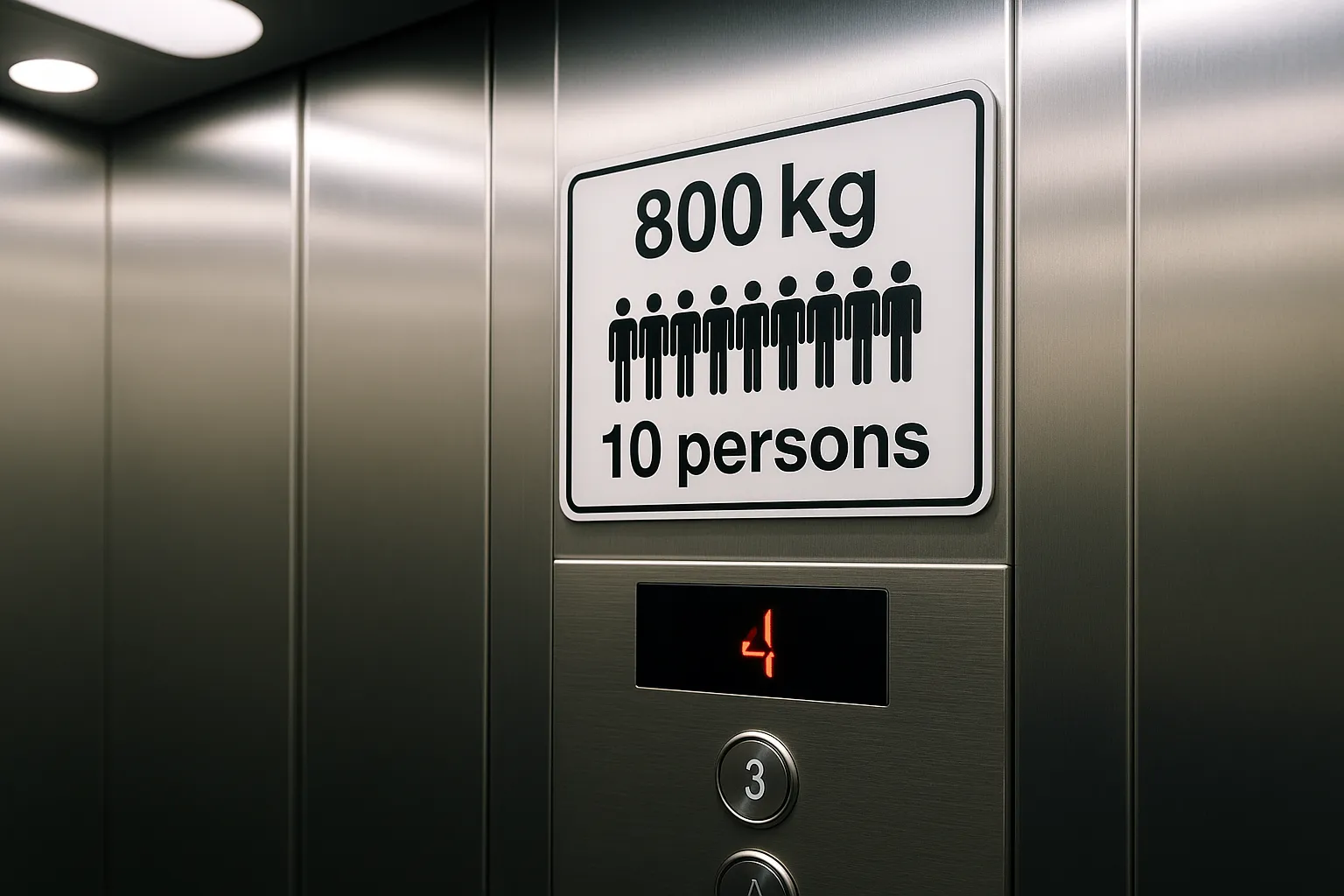
Research highlights a pressing need to revise lift capacity signage and guidelines across Europe, reflecting the changing demographics of a global population burdened by increasing obesity rates. The design specifications for elevators, commonly found in hotels and high-rise buildings, predominantly reference average weights established in the 20th century, failing to cater to today’s realities.

According to estimates, approximately three billion individuals worldwide now fall into the overweight or obese category, significantly surpassing historical figures that defined lift capacities. This data was presented by Professor Nick Finer during the European Congress on Obesity held in Istanbul. He emphasises the importance of updating the regulations to accommodate the current population’s size and safety.

Lift manufacturers are required to provide accurate indications of both the maximum weight a lift can handle and the total number of passengers it can safely transport. Current industry standards calculate passenger capacity by taking the lift’s maximum load and dividing it by an average weight per person. While European norms suggest that this average sits around 75 kilograms, actual figures show that the average individual is now much heavier than this.

In the UK, for example, average weights have shifted. In the 1970s, men weighed an average of about 75 kilograms, while women were approximately 65 kilograms. Current figures indicate that both genders have increased in weight by around 10 kilograms, resulting in a heightened demand placed on lift infrastructure across Europe.

Professor Finer, who leads the International Prader Willi Syndrome Organisation, warns that the failure of elevator manufacturers to adapt their weight capacities to these changes can lead to overestimations in lift capacity. This miscalculation may result in prolonged wait times for users and, importantly, could compromise safety during operation. He adds that suggesting a greater number of passengers can utilise a lift than what is comfortable could lead to stigmatisation, particularly for individuals dealing with obesity.

Recent recommendations point towards a new sizing methodology for lifts, which emphasises providing adequate personal space based on two-dimensional (2D) measurements rather than solely on a weight basis. However, Professor Finer criticises this approach, noting that it does not sufficiently consider the shifting trends in obesity and body shape, making a comprehensive review of the guidelines urgent.

A comprehensive study assessed the pertinent data from 112 elevators across various countries including the UK, France, Germany, Spain, Italy, Austria, and Finland. The analysis involved lifts produced by 21 manufacturers over a 54-year period, from 1970 to 2024. Researchers gathered information regarding the year of manufacture, maximum weight capacity, and passenger limits as listed on their safety labels.

The findings revealed substantial increases in the average weight allowance for lift passengers between 1972 and 2002, with allowances rising dramatically from 55 kilograms to 91.7 kilograms. Moreover, this data strongly correlates with the rising average weights of the population, suggesting that manufacturers have historically responded to increases in obesity prevalence by adjusting their safety guidelines.

Contrasting this, the United Arab Emirates (UAE) follows meticulous regulations surrounding lift capacities. Equipment with lifting capabilities exceeding 100 kilograms is mandated to undergo inspections every six to twelve months, while apparatuses lifting beyond 1,000 kilograms require scrutiny every three to six months. In addition, lifts in the UAE are explicitly required to show their maximum weight or passenger capacity on their safety signs, with typical passenger lift capacities ranging from 630 kilograms to 1,250 kilograms.

In Europe, regulations from the 1990s saw individual lift weight allowances rise to approximately 80 kilograms against an average population weight of around 76 kilograms. However, with no ensuing increases in the perceived average weight of lift users since 2002, despite an actual average population weight of 79 kilograms, significant gaps remain in updating industry standards.

Professor Finer suggests that this stagnation may stem from a shift in lift manufacturers who began to focus on calculations of capacity based on assumed floor space, moving away from a strict reliance on user weight. He expresses concern that this transition from a weight-based model to one based on a 2D elliptical floor area has not kept pace with the trend of increasing waist circumferences and body shapes.

In summary, as the global population battles rising obesity levels, it is crucial for lift capacity standards and signage to evolve accordingly. Failure to do so not only jeopardises user safety but may inadvertently contribute to societal stigmas surrounding body weight. The call for reform within this sector reflects a broader societal need to adapt to an increasingly diverse population, ensuring that safety and comfort are prioritised for all elevator users.

Our Thoughts

To prevent safety issues related to outdated lift capacity standards, manufacturers should have regularly updated their guidelines in line with UK health and safety regulations, particularly the Health and Safety at Work Act 1974, which emphasizes the provision of safe equipment. Recognizing the increasing average weight of users, lift manufacturers could have performed routine assessments and modified capacity signage accordingly to reflect contemporary demographics.

Additionally, incorporating recommendations from the Lifting Operations and Lifting Equipment Regulations 1998 (LOLER) would ensure the maximum permissible weight and passenger specifications are within safe limits based on current averages, rather than outdated figures from previous decades.

Key safety lessons include the importance of continuously monitoring societal health trends and adjusting equipment standards to meet these realities. Establishing clear inspection protocols similar to those in the UAE for safety compliance may further mitigate risks. Engaging in a proactive dialogue with public health authorities to better understand and implement changes relevant to increasing body sizes could also enhance safety and comfort for all users.


SummarizeShare34Share197SendSend
ADVERTISEMENT
Jade Anderson

Jade Anderson

Related Posts

Health and safety improvements vary across UK industries despite worrying trends in construction

Health and safety improvements vary across UK industries despite worrying trends in construction

by Tara Rowden
April 1, 2026
0

Research by Astutis reveals troubling stagnation in fatal injuries within the UK construction industry, with fatalities remaining unchanged since 2015...

Three men jailed for £60,000 construction exam cheating scheme

Three men jailed for £60,000 construction exam cheating scheme

by Jade Anderson
April 1, 2026
0

Three men have been sentenced for orchestrating a fraudulent scheme that enabled over 70 candidates to cheat on health and...

Leave a Reply Cancel reply

Your email address will not be published. Required fields are marked *

I agree to the Terms & Conditions and Privacy Policy.

Useful Documents

  • Understanding RIDDOR
  • 10 Workplace Safety Failures
  • A Complete Guide to Reporting Safety Incidents in the UK
  • Understanding RIDDOR
  • Fire Risk Assessment: Meeting the Regulatory Reform (Fire Safety) Order
  • COSHH Basics: A Practical Guide to Control of Substances Hazardous to Health
  • Working at Height in the UK: The Essentials (WAH Regulations 2005)
  • Lock out Tag out LOTO
ADVERTISEMENT
Calls for urgent action on farm safety after spate of fatal incidents
UK Health and Safety Latest

Calls for urgent action on farm safety after spate of fatal incidents

by Jade Anderson
May 11, 2026
0

The tragic loss of six agricultural workers since April has prompted urgent calls for improved safety measures in the farming...

Read moreDetails
WHO warns of potential new hantavirus cases due to long incubation period

WHO warns of potential new hantavirus cases due to long incubation period

May 11, 2026
Chancellor rebrands infrastructure bank as National Wealth Fund

Chancellor rebrands infrastructure bank as National Wealth Fund

May 11, 2026
Workers face deadly silicosis epidemic linked to kitchen surfaces

Workers face deadly silicosis epidemic linked to kitchen surfaces

May 11, 2026
UK Safety News

Copyright © 2025
UK Safety News

Navigate Site

  • About
  • Advertise
  • Policies
  • Useful Documents
  • Contact
  • Agent

Follow Us

Welcome Back!

Login to your account below

Forgotten Password?

Retrieve your password

Please enter your username or email address to reset your password.

Log In
No Result
View All Result
  • Home
  • News

Copyright © 2025
UK Safety News

This website uses cookies. By continuing to use this website you are giving consent to cookies being used. Visit our Privacy and Cookie Policy.