














Story Highlight
– Engineered stone worktops linked to rising silicosis cases.
– Workers in their 20s and 30s are affected severely.
– Poor ventilation and safety measures exacerbate health risks.
– Campaigners call for urgent action to prevent deaths.
– Australia banned engineered stone; UK slow to respond.
Full Story
A rising health crisis in the UK relates to engineered stone, a material often favoured for kitchen worktops, which poses severe risks to workers’ health. Health professionals and advocates have raised alarm over a significant number of individuals succumbing to a rapidly progressing and incurable lung disease named silicosis, which is increasingly afflicting younger workers rather than those in traditional hazardous industries like coal mining.
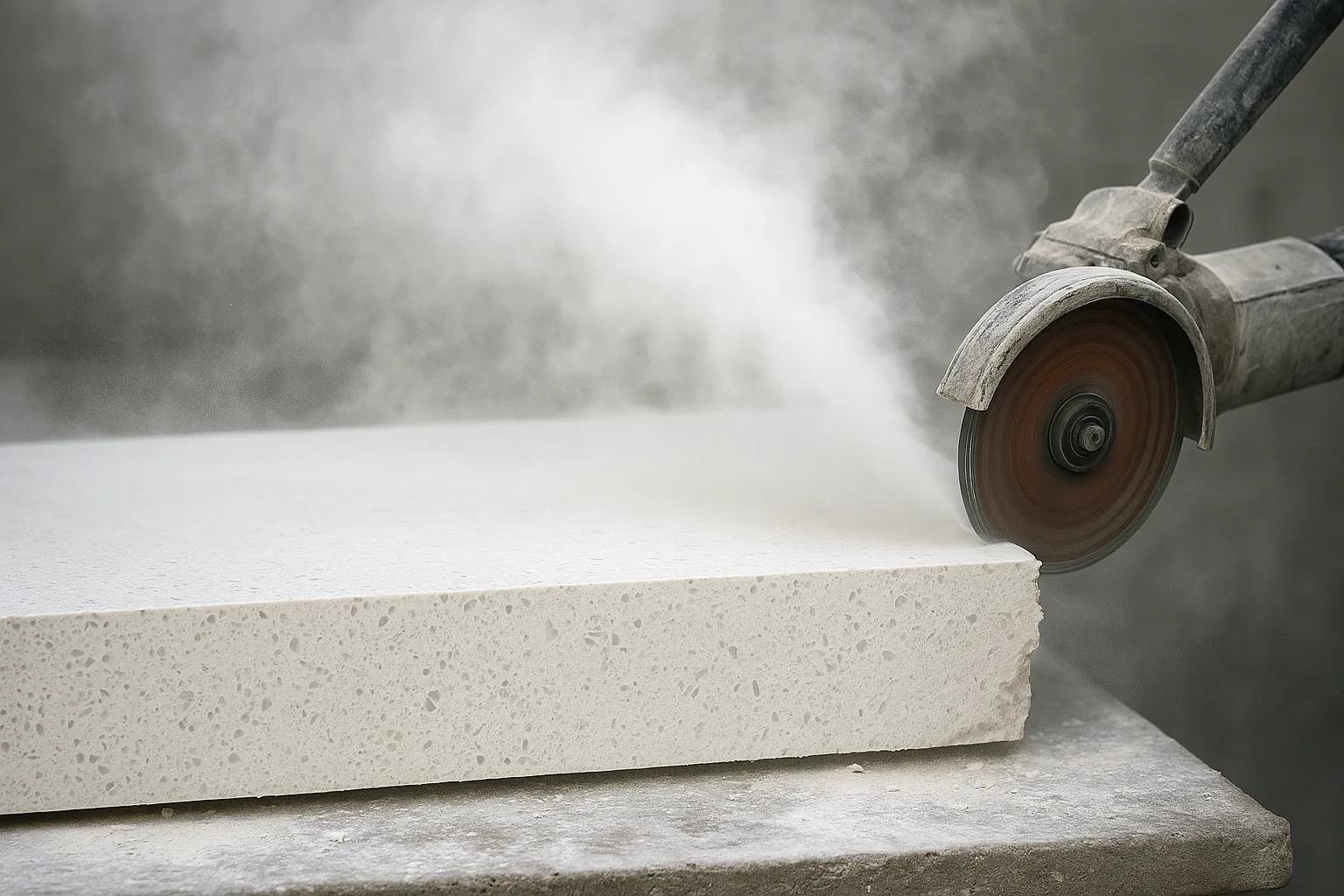
Engineered stone, distinguished by its visual appeal and cost-effectiveness compared to natural alternatives such as granite and marble, holds a substantial silica content, reaching as much as 95%. When these materials are cut or polished, they emit minuscule dust particles capable of scarring lung tissue irreversibly, resulting in a dangerous variant of silicosis. Unlike the classical form of silicosis, which requires extensive exposure over decades, this new, accelerated version can develop in individuals in their 20s, 30s, and 40s within just a few years on the job.
The issue was starkly highlighted by a Sky News investigation, which included the distressing account of Marek Marzec. The 48-year-old stonemason spent several years shaping quartz worktops in poorly ventilated spaces and shared harrowing details about his working conditions. Speaking from his hospital room shortly before his passing in November 2024, Marzec drew comparisons between the factory environment and being caught in a tornado, illustrating the extreme levels of dust and inadequate safety measures.
“We just had masks, and there was no extractor at all. You wouldn’t see anything a yard away from you,” Marzec lamented. He had relocated to the UK in hopes of providing better prospects for his family, yet the very work he undertook led to debilitating health issues, leaving him “unable to breathe and in terrible pain.”
The surge in popularity of engineered stone comes amid a home renovation boom, but experts caution that its high silica levels render it hazardous, particularly when safety protocols are not properly enforced. Workers have described the perilous practice of using handheld saws to cut raw slabs in cramped workshops lacking effective ventilation and dust extraction systems, resulting in a heavy clouds of white dust permeating the area.
Dr Jo Feary, a thoracic consultant involved in treating those affected, has expressed deep concern regarding the growing prevalence of the disease in younger populations. “We are seeing young men in their 20s and 30s with a disease that we used to see in miners in their 70s. This is an entirely preventable, man-made epidemic,” she stated.
The plight of Wessam, a 28-year-old worker who tragically died as his health deteriorated beyond the point of medical intervention, further underscores the severity of the situation. His medical records indicated that he was deemed unfit for a lung transplant due to his rapidly declining condition.
Advocates insist that these premature fatalities could have been entirely averted, emphasising that knowledge surrounding the risks associated with silica exposure has existed for centuries. They argue that effective control measures, such as employing wet-cutting techniques, enhancing ventilation, and ensuring proper extraction methods, are crucial to safeguarding workers.
Australia took decisive action last year by banning engineered stone amidst escalating health concerns, whereas campaigners argue that UK authorities have lagged behind in addressing the issue adequately. Although the country enforces stringent workplace regulations pertaining to silica under the Control of Substances Hazardous to Health (COSHH) guidelines, advocates claim that enforcement is particularly lacking in smaller workshops, often referred to as “cowboy” operations that evade regulatory scrutiny.
Ian Lavery, chair of the All-Party Parliamentary Group on Occupational Safety and Health, articulated the urgency of the matter, stating, “No more lives should be cut short by a dust we’ve known how to control for centuries. This is a silent, ongoing tragedy.”
As the death toll rises, Marzec left a poignant message before his passing, imploring for “urgent action to stop these dangerous working conditions before other stone workers contract this terrible disease and die.” His warning highlights the need for regulatory urgency to prevent further tragedies and ensure that others do not experience similar fates.
Efforts to engage with the Health and Safety Executive (HSE) for insights into regulatory actions have been initiated, though responses from the agency are pending. The growing distress surrounding this public health issue necessitates immediate attention from both lawmakers and industry stakeholders to avert further loss of life and to cultivate a safer working environment within the sector.
Our Thoughts
The article highlights a preventable crisis linked to silicosis among workers handling engineered stone in the UK. Key safety lessons include the importance of effective risk assessments and adherence to the Control of Substances Hazardous to Health (COSHH) regulations, which mandate the management of exposure to hazardous substances, including silica dust.
To avoid such incidents, implementing proper ventilation systems and dust extraction equipment is essential. The use of wet-cutting techniques should be standard practice to minimize airborne dust generation. Employers must provide appropriate personal protective equipment (PPE) and ensure its effective use.
The article indicates a lack of enforcement in smaller workshops, suggesting a gap in regulatory oversight. Ensuring compliance through regular inspections by the Health and Safety Executive (HSE) is crucial to prevent exposure in unregulated environments.
The swift emergence of silicosis in younger workers emphasizes that awareness and education about the risks posed by silica dust should be prioritized. The UK should learn from other countries’ actions, such as Australia’s ban on engineered stone, to develop proactive measures to protect workers from this long-known hazard.