















Story Highlight
– Nine Brits died in open water during warm weather.
– Royal Life Saving Society urges safety before swimming.
– Most victims were young, increasing drowning risks noted.
– NHS website saw significant surge in safety inquiries.
– Health warnings for heat and thunderstorms remain active.
Full Story
The Royal Life Saving Society has made a significant appeal urging individuals to reconsider their decision to enter open water, especially in light of the recent warm weather that has swept across the UK. This plea follows a distressing week that saw nine fatalities, including a teenager from Cheshire, occurring in various bodies of water as Britons sought relief from the heat.
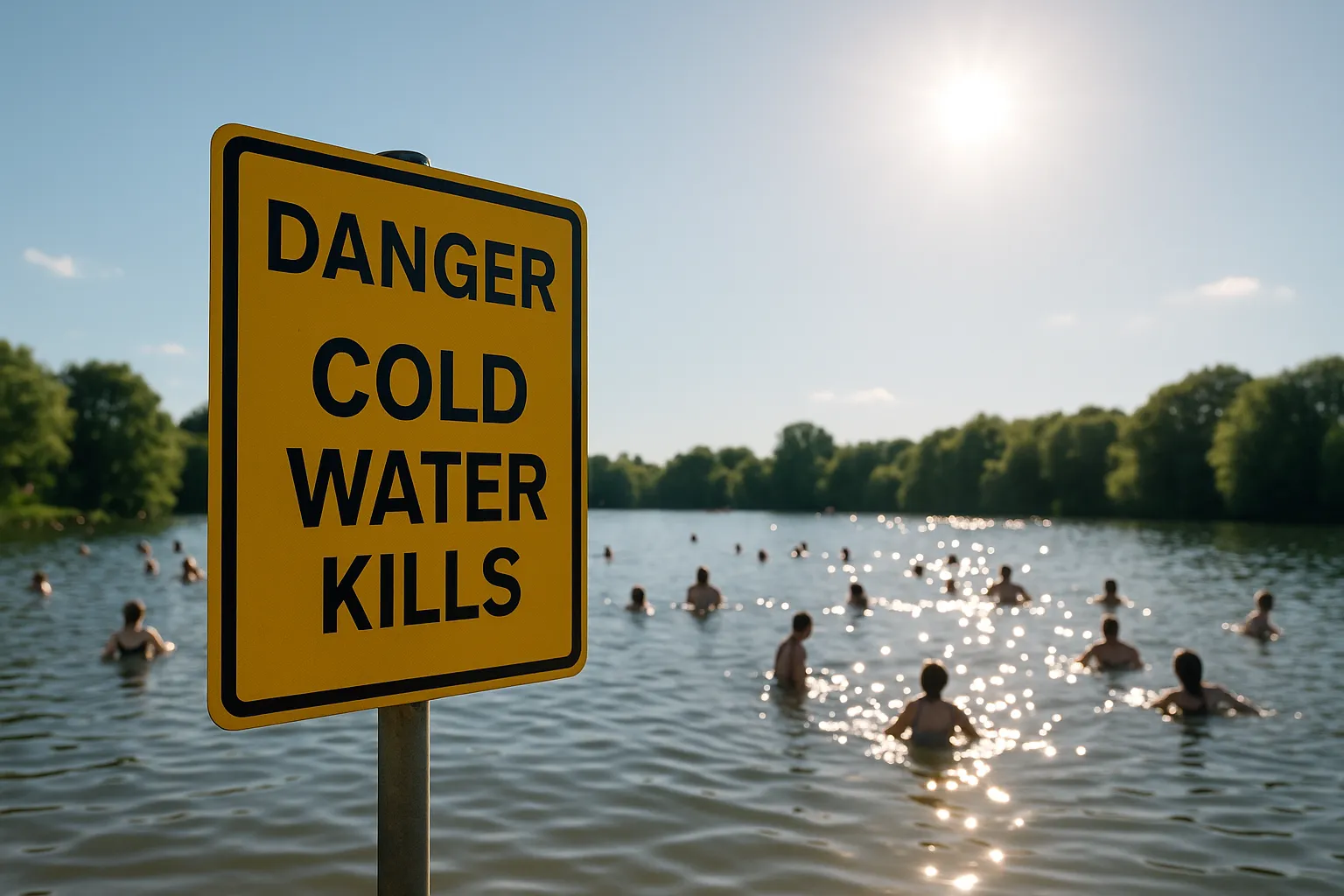
The tragic incidents have prompted safety officials to advise families to exercise increased vigilance around aquatic environments, highlighting a concerning link between warm weather and a rise in accidental drownings. Most alarming is the fact that many of the victims were young individuals. The Society has reiterated the importance of taking a moment to reflect before entering water, underscoring that higher air temperatures do not equate to safe swimming conditions; indeed, the water temperature remains dangerously cold.
The surge in temperatures has been notable, with the Met Office recording unprecedented highs. Kew Gardens saw the thermometer peak at 35.1 degrees Celsius, while Cardiff reached 32.9 degrees Celsius, marking Tuesday as the hottest day ever documented for both England and Wales.
Reports indicate that the recent fatalities occurred in various locations across the country, including South Yorkshire, West Yorkshire, Cornwall, Hampshire, Warwickshire, Cheshire, Pembrokeshire, Lincolnshire, and Lancashire. Among the deceased was Declan Sawyer, a 15-year-old who encountered difficulties at Swanholme Lakes in Lincoln. Also on Sunday, a 72-year-old woman tragically lost her life at West Angle Bay beach in Pembrokeshire.
Additional incidents included the untimely death of a 13-year-old boy—identified as Reco Puttock—who struggled at Leadbeater Dam in Halifax, West Yorkshire. On the same day, a teenage girl’s body was discovered at Kingsbury Water Park in Warwickshire. In another heart-wrenching scene, a man in his sixties suffered a fatal heart attack while trying to save relatives at Tregirls Beach in Padstow.
The subsequent days of the heatwave continued to claim lives, with South Yorkshire Police reporting the recovery of a teenage boy’s body from Rother Valley Country Park. Furthermore, a body was identified during efforts to locate another teenager last spotted swimming at Hawley Lake along the Hampshire and Surrey border. In Ribchester, Lancashire, authorities also recovered the body of a 12-year-old boy, while Cheshire Constabulary confirmed the discovery of a 17-year-old boy’s remains at Pickmere Lake in Northwich.
The tragedies extend beyond the UK, as authorities in Ireland reported the death of a teenage girl at Burrow Beach, a popular swimming area near Howth. The Royal National Lifeboat Institution (RNLI) has issued warnings regarding the dangers of swimming in open waters during the heatwave, emphasizing the risks involved.
As the UK saw an influx of visitors to various NHS health guidelines aimed at maintaining safety in the soaring temperatures, NHS England reported a staggering 20,092 visits to its heatstroke advice page on the bank holiday Monday—a significant jump from the mere 488 visits the previous Monday.
Over the entire holiday weekend, the NHS web pages amassed an impressive 36,724 visits, indicative of public concern about health risks associated with the heat. Notably, there were 5,342 inquiries related to sunburn treatments, alongside a surge in interest for child safety information, which experienced nearly a 3,500% increase in web traffic.
While many revelled in the sun-drenched bank holiday, it is crucial to note that the very young and elderly populations were particularly vulnerable to heat-related illnesses. The dangers of dehydration and heat exhaustion, which can escalate to severe conditions like heatstroke, remain prevalent in hot weather. As temperatures are expected to moderate slightly over the coming days, health authorities are nevertheless continuing to issue warnings.
The UK Health Security Agency announced the extension of amber heat alerts for several areas including the South West, South East, London, East and West Midlands, and the East of England until 5 PM on Thursday. Additionally, yellow heat health alerts are currently active for the North West and North East regions.
The Met Office has issued a yellow thunderstorm warning for Wednesday, expecting severe weather conditions including heavy rain, frequent lightning, hail, and strong winds across parts of Wales, the South West of England, and sections of the Midlands. The warning is expected to remain in effect from 3 PM until just before midnight, creating further challenges in ensuring public safety.
As the country grapples with the consequences of this heatwave and the associated risks, the call for increased awareness and precautionary measures around water sources remains more crucial than ever. Those planning to spend time by lakes, rivers, and beaches are urged to remain vigilant and prioritise safety for themselves and their families.
Our Thoughts
To avoid the tragic fatalities highlighted in the article, several measures could have been implemented:
1. **Public Awareness and Education**: Increased educational campaigns on the dangers of open water swimming, particularly during hot weather, could have raised awareness. The Royal Life Saving Society’s plea for caution could be supported by schools and local authorities to reach younger populations effectively.
2. **Regulation of Swimming Areas**: Ensuring that designated swimming areas are safely monitored and marked can significantly mitigate risks. Implementing signage that warns about cold water temperatures and advises against swimming in non-designated zones is essential.
3. **Lifeguard Presence**: Ensuring adequate lifeguard presence at beaches and open water locations can provide immediate assistance in emergencies.
4. **Emergency Preparedness**: Local authorities should enhance their emergency response strategies, particularly during spells of extreme weather, which are likely to attract more individuals to outdoor activities.
Key regulations potentially breached include the Health and Safety at Work Act 1974, which mandates the duty to protect individuals from risks, and the Management of Health and Safety at Work Regulations 1999, which requires risk assessments for environments attracting public use.
Similar incidents can be prevented through a combination of better public information, improved access to safety resources, and regulatory oversight on open water activities.