















Story Highlight
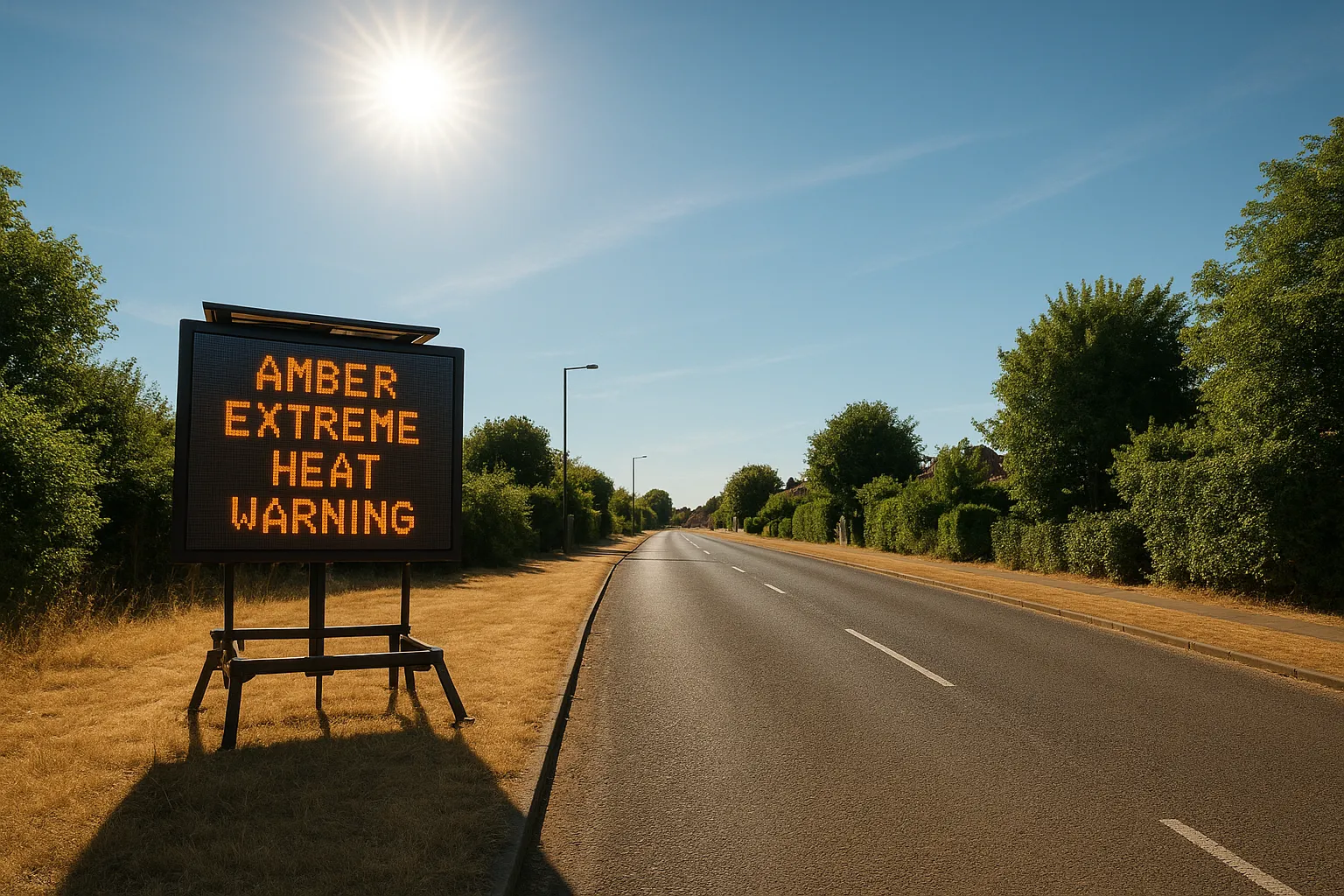
– Amber extreme heat warning issued for southern England, Wales.
– Temperatures expected to reach 34C early next week.
– Health risks increase, especially for vulnerable populations.
– Rise in breakdowns due to overheating vehicles predicted.
– Garden staff prepare for intense heat effects on plants.
Full Story
An amber extreme heat warning has been issued by the Met Office, affecting much of southern England and south-east Wales as a significant heatwave approaches over the next few days. This warning marks the first time in four years that the forecaster has issued an amber alert of this severity. Predicted temperatures are set to reach around 30 degrees Celsius (86 degrees Fahrenheit) over the weekend, with the heat peaking on Monday and Tuesday, potentially climbing to 34 degrees Celsius in some areas, although temperatures could surpass this in certain locations.
The Met Office first introduced amber extreme heat warnings in July 2021, with the last notice of this level given in August 2022. It is important to distinguish this from the amber heat health alerts that are issued by the UK Health Security Agency (UKHSA). The UKHSA has also issued a separate amber health alert warning on Thursday, highlighting the potential impact high temperatures may have on the health and wellbeing of residents in London, the south-east, south-west, and east of England.
According to the UKHSA, these extreme heat conditions may lead to an increase in deaths, particularly among vulnerable populations such as individuals aged 65 and over or those with pre-existing health issues. Additionally, the warning anticipates a corresponding rise in “water-related incidents,” which includes risks associated with cold-water shock and drowning during these hot days.
Ross MacLeod, the water safety manager for the Royal National Lifeboat Institution, emphasised the dangers of cold water shock, urging the public to remain vigilant. He stated, “Cold water shock is a real danger, which we particularly want people to be aware of. The sea or open water may look inviting during hot weather, but it remains cold enough year-round to trigger cold water shock, which can cause uncontrollable gasping, increased heart rate, and can lead to panic and drowning very quickly.” He advised individuals to enter the water gradually to allow their bodies to acclimatise.
MacLeod further explained the appropriate response if someone finds themselves in peril in the water: “Anyone who finds themselves in danger in the water should fight the panic instinct and ‘float to live’: try to relax and float on their back, with head tilted back, gently moving their hands and legs to help them stay afloat. This buys valuable time to get your breathing back under control, before then calling for help or swimming to safety.” He stressed the importance of not entering the water to assist someone in trouble but rather to contact emergency services and suggest to the distressed individual to float while also providing something buoyant, such as a life ring. Tragically, at least 15 individuals lost their lives after encountering difficulties in open water during the hot spell in May.
Greg Wolverson, a deputy chief forecaster at the Met Office, remarked on the imminent heat, stating, “While heatwave criteria will be met for some in the south and south-east of England over the weekend, with temperatures into the low 30s [Celsius] possible, the warmth will expand and intensify at the start of next week, which, coupled with high temperatures overnight, leads to potential impacts.” He also mentioned that some regions might experience “tropical nights,” where temperatures do not drop below 20 degrees Celsius.
However, the heat could also lead to isolated thundery showers on Monday and Tuesday, according to the Met Office’s predictions. This weather forecast comes within the broader context of the climate crisis, which is intensifying the frequency of extreme weather events. The UN climate chief described the heatwaves seen across Europe in May as a “brutal reminder of the spiralling impacts of the climate crisis.”
As the weather heats up, breakdown services are bracing for an upsurge in incidents caused by overheating engines and tyre blowouts due to air expansion in the heat. A spokesperson from the RAC stated, “Demand from drivers for our help will climb by around 10% compared to what’s normal for mid-June.” To ensure safety on the roads, the AA has advised motorists to avoid travel during the hottest part of the day and to keep at least one litre of water per person in their vehicles, along with additional water and a bowl for pets.
In the conservatories of the Cambridge University Botanic Garden, head of horticulture Sally Petitt has been ensuring her new plantings receive sufficient watering ahead of the weekend’s heat. She conveyed her concerns about certain delicate plants, like ligularias, which may suffer in the extreme heat regardless of water availability. “They’re not desperate for a drink, they just don’t like the heat,” she said. “It’s a bit like us when we flag and collapse in a chair in the living room.” Petitt also expressed worry over mature trees, such as Scots pines, which originate from cooler climates and are less tolerant of intense heat. “They don’t die overnight, but they very quickly show signs they are in decline,” she elaborated, noting the loss of at least four such trees over several years. She shared an emotional connection to the trees, saying, “They’re kind of like family. You get so familiar with them. They’re like friends.”
In Kew Gardens, staff members are taking proactive measures to protect their glasshouses from high temperatures. Tom Freeth, a spokesperson for Kew Gardens, explained that it is crucial to maintain ventilation within the glasshouses to prevent dangerous rises in temperature. “The worst thing that could happen is for vents to fail and that not be noticed in one of the glasshouses, because temperatures would rise very, very quickly,” he warned, giving a stark example that the temperature could exceed 50 degrees Celsius if the situation goes unnoticed for just a few hours. Kew’s staff are instructed to water the plants early in the day and to dampen the nursery floors to sustain humidity levels. Freeth mentioned that, in addition to high temperatures, the substantial moisture drawn out of the soil by the heat presents a serious concern for the health of the plants.
Our Thoughts
To mitigate risks associated with extreme heat, several safety improvements could be implemented. Employers should ensure adequate heat stress assessments in compliance with the Management of Health and Safety at Work Regulations 1999, which mandate the evaluation of workplace risks. Enhanced employee training for recognising signs of heat-related illnesses and appropriate response measures, including hydration strategies, are crucial.
The Health and Safety at Work Act 1974 requires that employers maintain the health and safety of employees, which includes provisions for extreme weather conditions. Regular communication about heat-related safety, especially for vulnerable individuals, aligns with this duty.
Regulations under the Control of Substances Hazardous to Health (COSHH) must also be considered, particularly regarding the safe storage and use of chemicals that may react adversely to high temperatures.
Furthermore, public safety awareness campaigns should highlight the risks of cold water shock and drowning, promoting safer behaviours around open water, as recommended by public health authorities. Emergency services should be adequately prepared for increased incidents during heatwaves.
Proactive environmental management, such as maintaining trees and gardens in urban areas, can also reduce the heat’s impact. Overall, a combination of regulation, training, and public awareness can help prevent similar incidents and ensure better safety outcomes.