















Story Highlight
– Red weather warning issued for extreme heat in UK.
– Significant health risk for even healthy individuals identified.
– Maximum temperatures could exceed 37-40C in some areas.
– Disruption to transport and daily life expected nationwide.
– Schools making adjustments to ensure student safety during heat.
Full Story
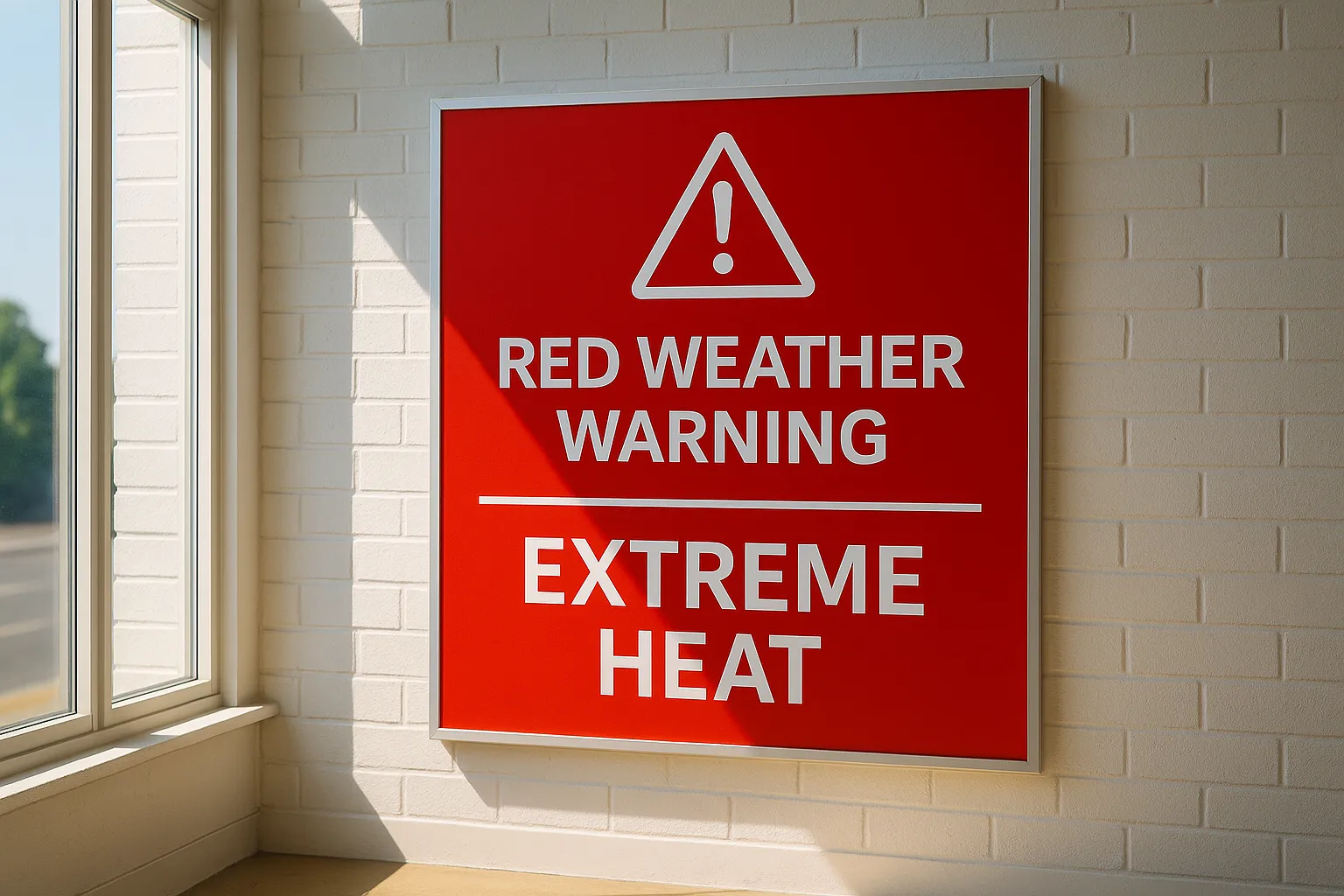
The Met Office has issued an extraordinary red weather warning for Wednesday and Thursday, signalling the possibility of extreme heat and elevated humidity levels across several regions in the UK. Alongside this, a red heat health alert encompassing six regions in England has raised concerns regarding potential health risks impacting even those in good health.
The red weather warning affects southern Wales, extending to areas such as Swansea, and includes a significant portion of England, notably covering London and stretching from Kent in the east to Somerset in the west. Northern boundaries reach Birmingham, while the alert extends northeast to cover parts of southern Cambridgeshire. Residents in these affected areas have been implored to take immediate safety precautions as the UK braces for potentially perilous temperatures.
The UK Health Security Agency has confirmed the issuance of a red heat alert impacting major regions, including the West Midlands, East Midlands, London, the south-east, south-west, and the east of England. This alert, active from 1am on Wednesday until 11pm on Thursday, reflects an urgent need for the public to prepare for the heat. This marks only the second time such a red alert for heat has been issued, the first occurring in July 2022 when temperatures surpassed 40°C (104°F).
Forecasters have indicated that maximum temperatures in shaded areas could exceed 37°C, and could potentially reach between 38°C and 40°C in certain locations. The accompanying high humidity is expected to heighten discomfort and may also pose serious health risks, particularly as warm and humid nights could hinder recovery from the heat.
With significant disruptions anticipated, residents are urged to adjust their daily routines to cope with the unusual heat levels which have historically been rare in the UK. An amber warning has also been put in place, highlighting serious conditions across vast parts of Wales and England, extending from Cornwall in the west to Yorkshire in the north.
The issuance of a red weather warning, indicating a high likelihood of severe weather conditions with substantial impacts, is a rare occurrence within the UK. Authorities warn that individuals must take immediate precautions to safeguard themselves and others during this time. Met Office representatives have noted that these extreme conditions carry a very serious risk to life and that they may lead to considerable disruptions in travel, energy supply, and possible damage to properties and infrastructure.
Professor Bill McGuire, an expert in geophysical and climate hazards from University College London, has suggested that temperatures exceeding 43°C could be a possibility under the current climate conditions. He remarked that heatwaves lasting several days could become more commonplace. However, he pointed out that the UK’s healthcare, transport systems, and energy frameworks are inadequately equipped to manage such extreme weather. He anticipates potential chaos, with individuals being forced to sleep outdoors as poorly insulated homes become uninhabitable; widespread power outages due to sagging utility lines; transport failures resulting from rail issues; and emergency departments overwhelmed by older adults and vulnerable individuals suffering from overheating.
Transport for London anticipates disruptions to both Rail and Tube services due to the heat. The overground services, including the Elizabeth line and the Overground, are expected to be particularly affected, with temporary speed restrictions leading to less frequent services.
Professor Friederike Otto, a climate scientist at Imperial College London, expressed concern that the prospect of reaching 40°C again, particularly so soon after the last occurrence, should serve as a crucial warning. She emphasised the pressing need to address climate change proactively, stating, “Our first 40C day was supposed to be a wakeup call, but clearly someone hit snooze.” Otto underlined the urgency surrounding the situation, highlighting the challenges faced by schoolchildren in sweltering classrooms and older individuals coping with extreme heat in poorly ventilated homes.
In light of the rising temperatures, several schools have opted to close early this week to protect the health and wellbeing of students. For example, Kingdown School in Warminster, Wiltshire, will end classes at 12.25pm from Monday to Thursday. Additionally, other educational institutions are relaxing uniform policies, reducing physical education activities, and moving lessons to cooler environments where possible. Kingsholm C of E Primary School in Gloucester has noted an early finish at 1.30pm and has encouraged children to wear PE kits to school to facilitate comfort during the heat.
Paul Whiteman, general secretary of the school leaders’ union NAHT, acknowledged the absence of a legal temperature limit in schools but affirmed that educational institutions are actively working to mitigate the effects of extreme heat. Adjustments include reducing sun exposure during break times, ensuring adequate hydration, relaxing uniform requirements, and improving classroom ventilation.
While the Department for Education typically advises against school closures in hot weather, insisting that schools can usually manage conditions safely, it encourages protective measures such as applying sunscreen, relaxing uniform guidelines, modifying physical education classes, and ensuring adequate ventilation throughout school buildings. With warmer summers appearing to become the new norm, there are calls for urgent, constructive action to modernise school facilities, particularly regarding ventilation and climate control systems.
Our Thoughts
To prevent the adverse effects of extreme heat as described in the article, several measures could have been implemented. Firstly, the government and relevant authorities should have established and enforced guidelines for workplaces and educational institutions regarding heat exposure, in alignment with the Health and Safety at Work Act 1974. Adequate provisions such as ensuring air conditioning, improved ventilation, and access to water should be mandated, particularly in schools and care facilities where vulnerable individuals are present.
Additionally, awareness campaigns could be launched to educate the public about heat-related risks, as well as the recommended actions during heatwaves. The lack of clear regulations on maximum operational temperatures could be addressed by introducing specific thresholds for high-risk environments, thus ensuring organisations have a plan to manage extreme conditions.
Breaches of regulations may include inadequacies in risk assessments and failing to provide a safe working environment, thus compromising the health and safety of employees. Moving forward, establishment of stricter regulations regarding workplace and public building heat management could help mitigate the risks associated with rising temperatures and climate change-related incidents.