















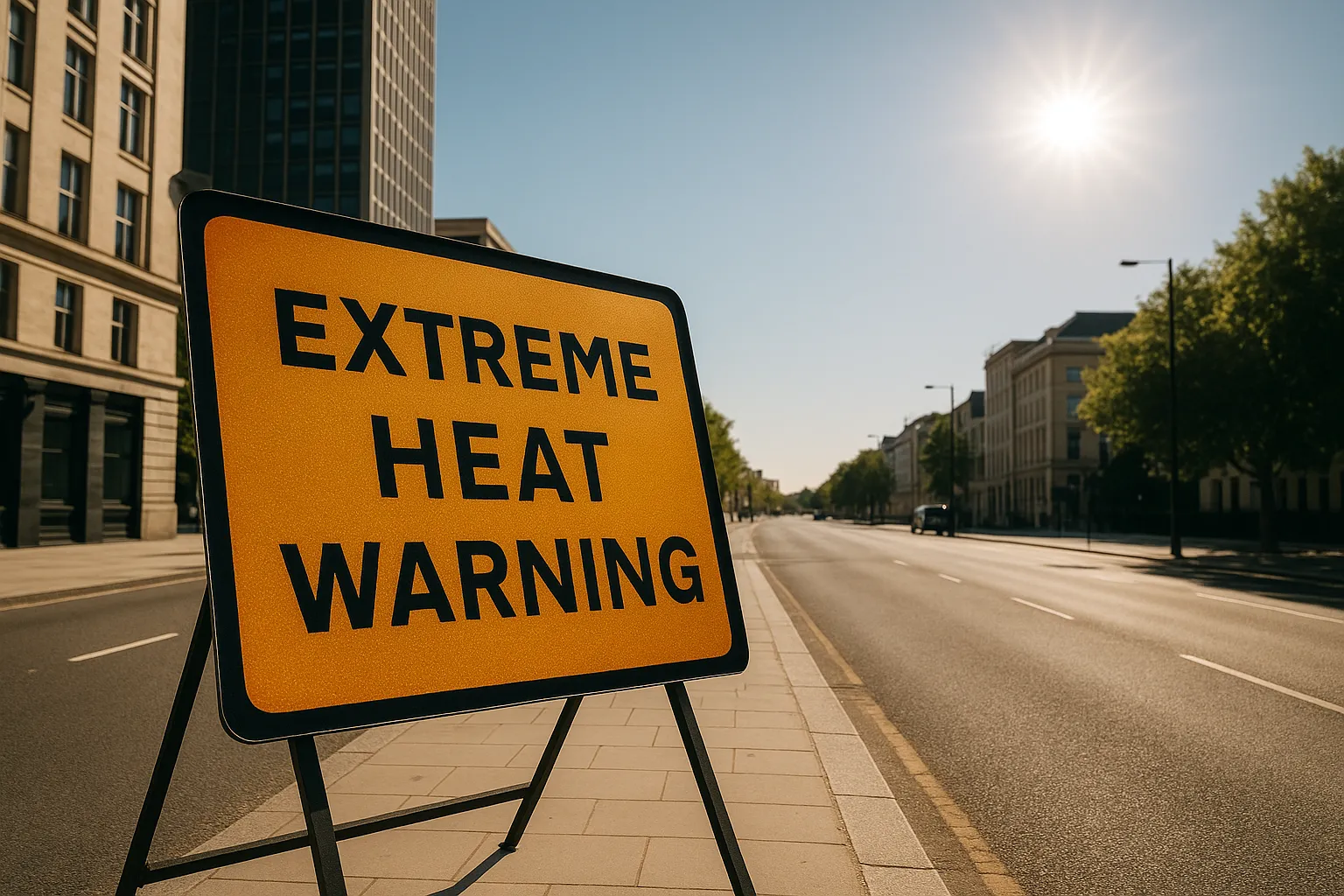
Story Highlight
– UK heatwave warning extended, temperatures could reach 38C.
– Warning covers Kent, London, east, south west, Wales.
– Health risks include sunburn, heat exhaustion, water incidents.
– Possible travel delays and power cuts anticipated this week.
– Advice to stay hydrated, avoid sun during peak hours.
Full Story
An extended heat warning has been issued as the UK prepares for a significant heatwave, with temperatures anticipated to reach an extreme 38 degrees Celsius. The Met Office has confirmed that the amber warning, initially set to expire on Tuesday, will now remain in effect from Monday through Thursday.
The increased alert specifically impacts Kent, now encompassing the entire county, along with London, the South West, Eastern England, and certain areas of Wales. The severe weather conditions forecasted are expected to affect both individuals and infrastructure, with particularly warm nights exacerbating the situation.
Health risks associated with these soaring temperatures include the possibility of sunburn and heat exhaustion. In addition, the likelihood of water safety incidents may increase as individuals flock to coastal regions, lakes, and rivers in search of relief from the heat. Furthermore, transport systems may face disruptions, impacting road, rail, and air travel. The extreme conditions might also jeopardise sensitive equipment, potentially resulting in power outages. As a response, adjustments in work practices and daily activities may become necessary.
The entire region of Kent is poised to experience elevated temperatures this week. Meteorological predictions suggest a “growing confidence” that this week could potentially break the record for the hottest June day, previously established at 35.6 degrees Celsius in Southampton back in 1976. It is also likely that temperatures will exceed those seen in May.
The heat warning covers much of southern England, central and eastern Wales, and significant portions of the Midlands in the early part of the week, while additional alerts for Wednesday and Thursday will extend to parts of Greater Manchester, Yorkshire, and Cheshire. The Met Office has advised residents in these affected areas to stay hydrated, remain out of direct sunlight, and avoid engaging in strenuous activities between the hours of 11 am and 3 pm.
Concurrently, the UK Health Security Agency (UKHSA) has issued separate amber heat health alerts that now span a majority of England effective from Monday morning through to Friday night. Jonathan Vautrey, a meteorologist at the Met Office, conveyed concerns in an online update: “In regions particularly impacted by the amber extreme heat warning, we anticipate that a substantial portion of the population may experience heat-related issues throughout the week.”
This type of high-temperature phenomenon in June is described by Vautrey as “quite exceptional.” In light of the heat alerts, the Health and Safety Executive (HSE) has emphasized the responsibility of employers to safeguard workers while ensuring productivity remains high during these extreme conditions.
In health-related observations, NHS England reported a sharp increase in visits to their online page concerning hay fever advice, which surged by more than double in just a week as warmer weather took hold. On Sunday, the UK recorded its highest temperature thus far at 27.7 degrees Celsius in Writtle, located near Chelmsford, Essex.
The heatwave isn’t confined to the UK, as Europe also grapples with similar extremes. Forecasts indicate that temperatures could reach 37 degrees Celsius in Rome and 39 degrees Celsius in Madrid on Monday, underscoring the widespread impact of this weather event.
As the nation braces itself for such intense heat, local authorities and public health officials are mobilising to manage potential health crises, with messages disseminated through various media outlets to encourage residents to take precautions seriously. Emergency services are likely to enhance preparedness levels to respond to any incidents resulting from the heatwave.
The UK is no stranger to summer heat; however, the expected temperatures this week could set new records and challenge day-to-day living. Experts suggest that societal norms, particularly regarding outdoor activities and work routines, will need to adjust to cope with such extraordinary climatic conditions. Communities are reminded that, in addition to individual health precautions, collective efforts will be vital in ensuring public safety.
Residents are encouraged to check for updates from the Met Office and local authorities, ensuring they remain informed about the heat situation and its potential implications. This week serves as a stark reminder of the effect climate patterns can have, and the importance of preparedness in the face of extreme weather events.
In summary, the UK enters a challenging week fraught with potential health and environmental risks due to the forecasted heatwave. With serious advisories from meteorological and health agencies, the emphasis remains firmly placed on public safety and wellbeing as the nation faces these soaring temperatures.
Our Thoughts
To mitigate the impact of the extreme heat warning in the UK, a range of preventive measures could have been implemented. Employers must adhere to the Health and Safety at Work Act 1974, ensuring that workers are not exposed to unacceptable heat levels. This includes conducting risk assessments to identify vulnerable employees and adapting working hours to avoid heat exposure, especially during peak temperatures (11am to 3pm).
Additionally, providing adequate hydration stations and enforcing rest breaks in cool environments can significantly reduce the risk of heat-related illnesses. The Management of Health and Safety at Work Regulations 1999 requires that temperature is kept within reasonable limits for any working environment.
Awareness campaigns highlighting the dangers of heat exposure and water safety should be enhanced, particularly in coastal and recreational areas, to prevent accidents.
Lastly, potential breaches of regulations concerning the duty of care towards employees and the public should be scrutinized, ensuring that lessons learned can shape responses to future heatwaves and maintain worker and community safety.