














Story Highlight
– National maternity commissioner to be appointed for reforms.
– Urgent need for accountability in maternity care highlighted.
– Report reveals systemic racism and discrimination in services.
– Recommendations include improved triage and safety standards.
– Government plans to address cultural issues in NHS.
Full Story
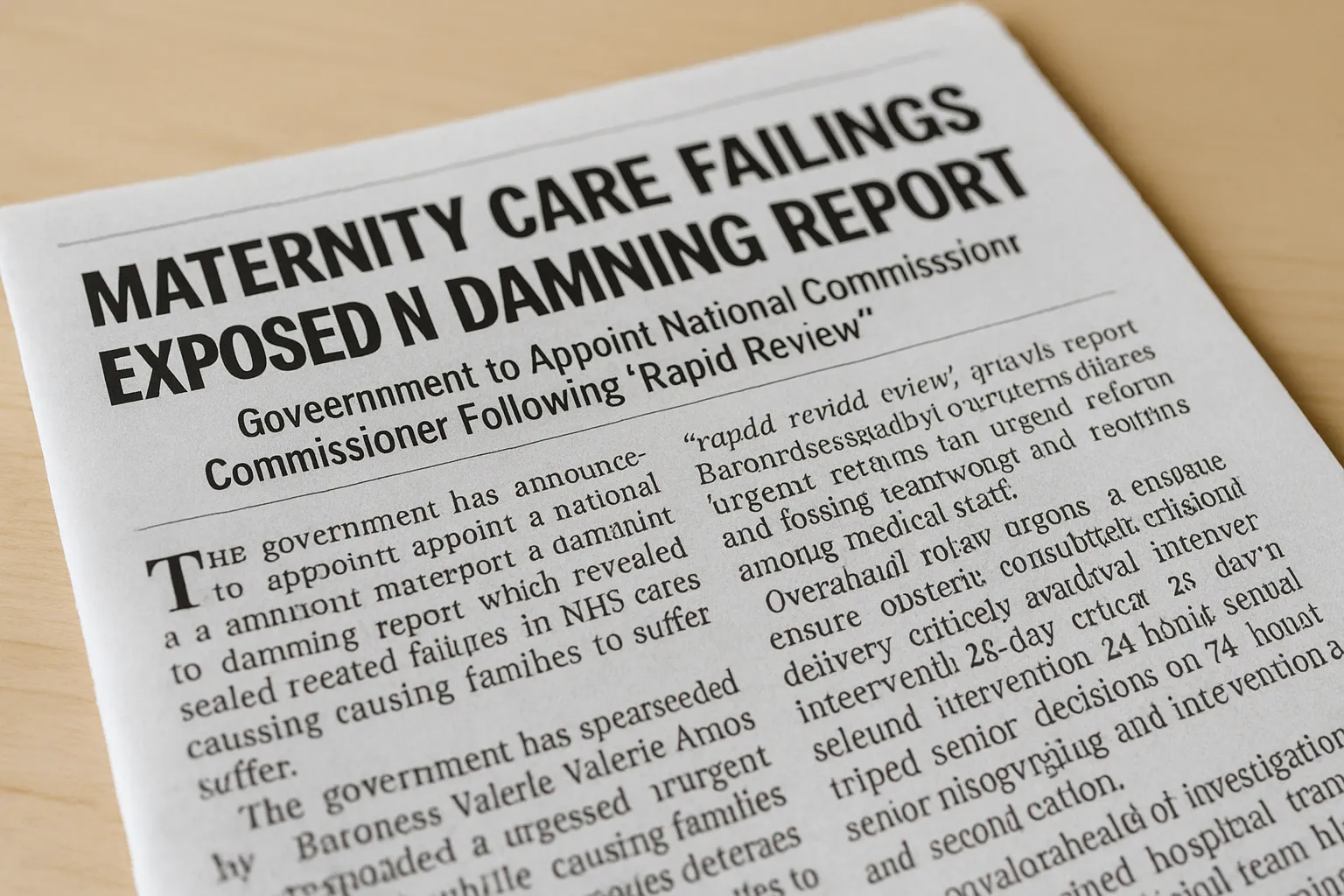
The UK government has revealed its intent to establish a national maternity commissioner, a move prompted by a critical report highlighting persistent shortcomings in NHS maternity care that have led to distress among families. This proposal follows the urgent recommendations of a rapid review led by Baroness Valerie Amos, which calls for widespread reforms in the treatment of women and their families during pregnancy and childbirth.
Baroness Amos emphasised the importance of allowing families the right to seek an independent investigation when they question the results of internal NHS reviews following adverse incidents. She pointed out that improving the culture within hospitals and encouraging better collaboration among midwives, obstetricians, and other healthcare professionals is essential. Additionally, the review advocates for a complete restructuring of staff rotas to guarantee that obstetric consultants and anaesthetists are consistently available in delivery units. This measure aims to ensure “timely critical senior decision making and intervention” around the clock.
Despite the recognition that the majority of pregnancies and births in England lead to positive outcomes, Lady Amos acknowledged troubling evidence of inadequate care that remains entrenched within the system. Health Secretary James Murray, addressing the fallout from the report, indicated that no options would be ruled out, including the potential for a comprehensive public inquiry. He expressed understanding for the strong sentiments regarding accountability related to failures in maternity services.
Murray critiqued what he termed a “culture of cover-up” in NHS maternity care, and when asked about the presence of misogyny within the system, he concurred with the assertion that it exists. He stated, “I think a lot of it is… such a culture where senior leaders are more concerned with covering up failings rather than prioritising patient welfare.”
The government has committed to implementing one of the core recommendations from Lady Amos’s review by appointing a national maternity commissioner. This commissioner will serve an independent role designed to hold the system accountable. Furthermore, the Department of Health plans to release a national action plan for maternity services by December.
The Maternity Safety Alliance, which comprises bereaved families, has expressed its view that establishing a maternity commissioner could be inherently risky, arguing the position may lack genuine independence and that a statutory public inquiry is still essential.
The review conducted by Lady Amos’s team unveiled a number of significant issues including:
– Patients often feeling unheard or dismissed, which has resulted in serious implications for the safety and quality of care, sometimes leading to avoidable harm and a loss of trust in the healthcare system.
– Evidence of racism, discrimination, and systemic inequalities within the maternity and neonatal services, adversely impacting care outcomes for women and infants.
– A lack of coherence in services that compromises safety; for example, antenatal care is often inadequately aligned to meet patient needs.
– Fragmentation of the system, where mental health, antenatal care, and delivery are disjointed and not unified.
– The prevalence of “medical misogyny,” which contributes to a culture where women’s concerns are frequently overlooked.
– Numerous accounts from patients who reported feeling ignored, with stories of inadequate communication hindering informed consent for medical procedures.
– Instances of severe pain during medical interventions, such as Caesarean sections, due to poor anaesthetic administration.
– Experiences of unequal treatment among patients based on race, with reports of delays in care and undermined experiences resulting from bias, including instances of Islamophobia and antisemitism.
– Healthcare staff reported feeling sidelined when they raised legitimate concerns about patient safety or voiced challenges stemming from heavy workloads.
– Staff members themselves encountered racism and spoke of working conditions that were often poor and unsafe, enduring long shifts without adequate breaks.
– Ignored or dismissed concerns about working in hazardous environments with insufficient training and ineffectual leadership practices leading to challenging workplace cultures.
Additionally, the review underscored that the treatment of women’s autonomy must respect their choices to decline certain clinical interventions or to give birth outside of guided protocols—a growing trend noted by NHS staff.
Overall, the report concluded that the current maternity services fail to prioritise consistent safety, leading to avoidable harm and systemic inadequacies. Families seeking clarity on care lapses expressed frustration at internal investigations, which they felt were self-serving and failed to provide comprehensive evaluations of healthcare experiences. Many recounted being told that incidents were merely “just one of those things,” despite evidence of harm.
The review’s findings were informed by the voices of over 450 families, alongside contributions from more than 9,000 NHS staff and evaluations from 12 trusts noted for their poor performance in maternity care. Feedback indicated a convoluted system marred by conflicting governance, unclear responsibilities, and inadequate oversight for safety and improvement.
This report emerges shortly after an inquiry into Nottingham University Hospitals NHS Trust, where a substantial number of mothers and their infants experienced harm due to longstanding systemic failures. Baroness Amos characterised hearing about the painful experiences of families as distressing and emphasised that mothers and babies deserve safe, compassionate, and equitable care.
Lady Amos stated that the new maternity commissioner would be responsible for accountability in Parliament, with a focus on enhancing maternity and neonatal services. This entails establishing minimum national standards for safety and ensuring effective governance. NHS trust boards will be obligated to monitor patient triage processes comprehensively, including routine assessments of waiting times and care performance.
Health Secretary James Murray reiterated the need for profound changes, declaring, “Women, babies, and families have been failed by a system that did not listen. Their stories warrant immediate action.” The government plans to implement a national programme dedicated to perinatal equity and anti-discrimination, creating around 1,000 new roles to assist recently qualified midwives in entering the NHS, supported by over £10 million in funding.
Despite these efforts, the Birth Trauma Association has described the Amos review as falling short for families, calling it a “major missed opportunity.”
Our Thoughts
The report on NHS maternity care failures highlights several key areas for improvement to avert similar incidents in the future. To comply with the Health and Safety at Work Act 1974, it is crucial to foster a culture where patient safety is prioritized over institutional reputation. Training for staff must be enhanced to address issues of communication, discrimination, and inadequate clinical environments. The Care Quality Commission (CQC) must strengthen its oversight to ensure that trusts follow established safety protocols and address the fragmented governance structure.
Regular assessments of staff workloads and the implementation of effective rotas are essential to ensure that senior medical staff are always available for timely interventions. Family voices must be integrated into care protocols, ensuring they are heard and believed, thereby preventing avoidable harm. The report’s recommendation for a national maternity commissioner could help enhance accountability, but the independence of this role must be clearly defined to avoid conflicts of interest.
Addressing systemic racism and discrimination within maternity services is non-negotiable, aligning with the Equality Act 2010, to ensure equitable treatment for all patients. Overall, a comprehensive overhaul of maternity services with an emphasis on safety and open culture is vital to prevent future tragedies.