













Story Highlight
– Family stonemasons diagnosed with silicosis from quartz worktops.
– Over 50 cases reported since mid-2023; four fatalities.
– Calls for national screening program to detect silicosis early.
– Workers face inadequate protection and slow financial support.
– HSE launches inspections; risks from dry cutting highlighted.
Full Story
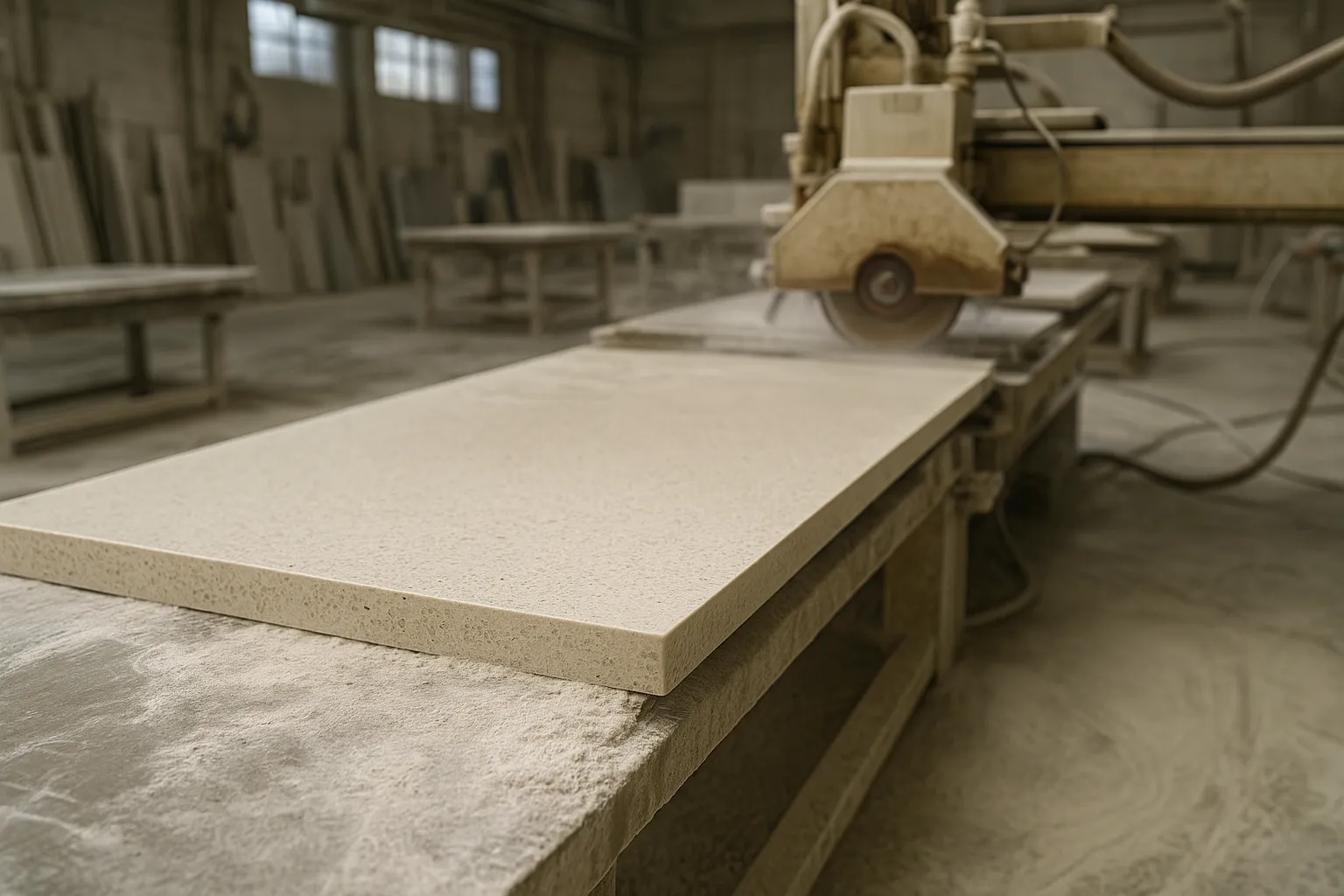
Stonemasons in the UK are facing a serious health crisis, with many members of a single family being diagnosed with silicosis after working with quartz kitchen countertops. This alarming trend has prompted calls for urgent action from health professionals and policymakers alike. Dr Jo Feary, a leading respiratory consultant at the forefront of treating affected stonemasons, has advocated for a nationwide screening programme aimed at identifying cases early and enhancing survival prospects.
Since the middle of 2023, over 50 stonemasons, predominantly those in their twenties and thirties, have received a silicosis diagnosis related to exposure from cutting engineered stone. Tragically, four individuals are reported to have succumbed to the disease, which is linked to inhalation of fine silica dust. During a session of the All-Party Parliamentary Group (APPG) on Respiratory Health, participants expressed concern that UK authorities have repeatedly neglected their obligation to ensure the safety and health of workers in the quartz cutting industry.
Alarmingly, one occupational safety expert highlighted that the protections afforded to many stonemasons today might be less robust than those available to Roman slaves in ancient times. There are rising fears that the prevalence of silicosis in the UK could mirror the global epidemic seen in countries such as Spain, California, and Australia, where more than 6,000 cases have been documented across 12 nations. Dr Feary noted that countries like New Zealand and Australia have implemented effective screening programmes, revealing that between 12% and 29% of tradespeople exhibit signs of silicosis. “With these figures, it’s reasonable to deduce that at least 10% of any population of workers that undergo screening will show instances of the disease,” she stated, adding, “I have absolutely no reason to believe the UK situation is any different.”
Recent findings hint that the number of silicosis cases in the UK could be substantially understated, with analyses suggesting that more than 1,000 of the approximately 7,000 workers in this industry may be affected. Due to the absence of a comprehensive national screening initiative, Dr Feary’s clinic at the Royal Brompton Hospital has developed a self-referral system, with an alarming 78% of the 22 individuals evaluated at the clinic being diagnosed with silicosis.
“This population faces extremely high levels of dust exposure and currently lacks access to regular health surveillance,” Dr Feary explained. “They are incredibly vulnerable, and a significant proportion of them will likely face debilitating outcomes from their condition.” Among her patients, the youngest is just 23, with some diagnosed after only a year of exposure to quartz dust, and nearly 30% of those evaluated have been working with the material for less than a decade. Notably, around 60% of these workers are migrants, which raises concerns about their working conditions and support systems.
Dr Feary recounted instances where entire families are affected, stating, “I see cases where an uncle and his nephew both come in with silicosis due to working closely together,” and added, “We often receive calls from concerned family members expressing worries about loved ones now involved in this trade.” Additionally, she emphasised the urgent need for enhanced financial support for stonemasons diagnosed with silicosis, noting that while they can apply for Industrial Injuries Disablement Benefit (IIDB), they do not receive the same expedited processing as those with asbestos-related diseases. “I sit with men in their forties and fifties, often in tears, expressing their anxiety about what lies ahead for them and their families,” she described. “In the UK, we have little to offer them apart from the IIDB, which can take up to six months to disburse, and only covers travel costs to appointments.”
In light of these concerns, the Health and Safety Executive (HSE) recently initiated its most significant intervention in the engineered stone sector, releasing new regulatory guidance that prohibits “dry cutting” practices without effective water suppression and mandates “wet cutting” as a requirement. As part of this new regulatory approach, the HSE has launched a nationwide inspection campaign targeting 1,000 businesses involved in cutting quartz. Initial findings reveal that four out of 11 inspected businesses have received prohibition notices due to non-compliance with these regulations.
Kevin Bampton, Chief Executive of the British Occupational Hygiene Society, remarked on the situation, asserting that the rise in silicosis cases is indicative of systemic failures. “The variables leading to this situation were entirely foreseeable,” he stated. “In 2020, the influx of engineered stone into the UK surged by 70%, yet we saw no corresponding growth in the production sector.” Bampton pointed out that consumers could now purchase semi-finished stone at DIY shops, possibly escalating risks, and called for improved training and awareness among healthcare providers.
Moreover, he noted that even effective respiratory protective equipment (RPE) was not adequately utilised historically, drawing a comparison to ancient practices where such equipment was employed to protect slaves. “We must ensure that businesses prioritise worker health and safety, while rising to the challenge of fulfilling these basic responsibilities,” he concluded.
In response to concerns raised, Mike Calcutt, Deputy Director in HSE’s Engagement and Policy Division, described preventing silica dust exposure as their top priority, although he remained open to considering complete bans on quartz countertops if necessary. “Our research has indicated that exposure can be mitigated with the right measures in place,” he asserted. “However, should new evidence suggest that these measures are inadequate, we remain prepared to explore all options.”
Our Thoughts
To avoid the silicosis cases among stonemasons, several key actions could have been taken. Firstly, there should have been stringent enforcement of the Control of Substances Hazardous to Health Regulations 2002 (COSHH), which require adequate risk assessments and control measures to reduce exposure to hazardous substances, including silica dust from quartz. Implementing consistent health surveillance for workers in this high-risk industry would have allowed for early detection and intervention.
The lack of a national screening program highlights a significant failure in public health policy. A proactive approach, similar to those in New Zealand and Australia, could have identified affected workers earlier and ensured access to appropriate medical care and support.
Moreover, the requirement for wet cutting methods, now emphasized by the Health and Safety Executive, should have been mandated long before the recent crackdown to prevent dangerous dust exposure. The evident delay in responding to the rise in engineered stone use since 2020 indicates a failure in regulatory oversight.
Overall, rigorous training in occupational health for both employers and workers, alongside more effective regulation and preventive measures, could substantially mitigate similar incidents in the future.