














Choose an AI chat
Health experts warn of ongoing asbestos risks in older UK homes
UK Health and Safety Latest

Health experts warn of ongoing asbestos risks in older UK homes

by Ellie Cartwright
February 3, 2026
0

Homeowners living in properties built before 2000 are urged to be vigilant regarding potential asbestos risks, which often go unnoticed...

Read moreDetails
Peabody's maintenance firm fined after worker's toxic glue death

Peabody’s maintenance firm fined after worker’s toxic glue death

February 3, 2026
Parents criticize councils for sourcing school lunch meat from overseas

Parents criticize councils for sourcing school lunch meat from overseas

February 3, 2026
Adverse reactions to Mounjaro soar by over 300 percent in a year

Adverse reactions to Mounjaro soar by over 300 percent in a year

February 3, 2026
Residents in Wirral express anger over plans for carbon dioxide pipeline

Residents in Wirral express anger over plans for carbon dioxide pipeline

February 2, 2026
  • About
  • Advertise
  • Policies
    • Privacy Policy
    • Editorial Policy
    • Corrections & Complaints policy
  • Useful Documents
    • Understanding RIDDOR
    • 10 Workplace Safety Failures
    • A Complete Guide to Reporting Safety Incidents in the UK
    • Fire Risk Assessment: Meeting the Regulatory Reform (Fire Safety) Order
    • COSHH Basics: A Practical Guide to Control of Substances Hazardous to Health
    • Working at Height in the UK: The Essentials (WAH Regulations 2005)
    • Asbestos in the Workplace: Control of Asbestos Regulations 2012 (CAR) Essentials
    • Managing Contractors Under CDM 2015: Roles, Duties & Controls
    • DSE & Ergonomics: Healthy Workstations for Office & Hybrid Teams
    • Lock out Tag out LOTO
    • Workplace Transport Safety: Forklifts, Pedestrians & Traffic Management
    • Noise & Vibration at Work: Practical Controls (2005 Regulations)
    • Confined Spaces in the UK: Safe Entry under the Confined Spaces Regulations 1997
  • Contact
  • Agent
Tuesday, February 3, 2026
  • Login
UK Safety News
  • Home
  • News
    • All
    • UK Health and Safety Latest
    Council initiatives struggle as car use to schools rises

    Council initiatives struggle as car use to schools rises

    Health experts warn of ongoing asbestos risks in older UK homes

    Health experts warn of ongoing asbestos risks in older UK homes

    Peabody's maintenance firm fined after worker's toxic glue death

    Peabody’s maintenance firm fined after worker’s toxic glue death

    Parents criticize councils for sourcing school lunch meat from overseas

    Parents criticize councils for sourcing school lunch meat from overseas

    Adverse reactions to Mounjaro soar by over 300 percent in a year

    Adverse reactions to Mounjaro soar by over 300 percent in a year

    Residents in Wirral express anger over plans for carbon dioxide pipeline

    Residents in Wirral express anger over plans for carbon dioxide pipeline

    UK cold snap prompts safety advice for vulnerable households

    UK cold snap prompts safety advice for vulnerable households

    Four Britons die after contracting gastric illnesses in Cape Verde holidays

    Four Britons die after contracting gastric illnesses in Cape Verde holidays

    Man rescued from bridge railings in Plymouth

    Man rescued from bridge railings in Plymouth

    Hospital scandal reveals toxic culture and patient safety risks in Welsh NHS

    Hospital scandal reveals toxic culture and patient safety risks in Welsh NHS

    Trending Tags

    • Donald Trump
    • Future of News
    • Climate Change
    • Market Stories
    • Election Results
    • Flat Earth
No Result
View All Result
UK Safety News
No Result
View All Result
Home News UK Health and Safety Latest

AI revolutionizing workplace safety in high-risk environments

Jade Anderson by Jade Anderson
September 25, 2025
in UK Health and Safety Latest
Reading Time: 3 mins read
1
AI revolutionizing workplace safety in high-risk environments

Story Highlight

– Workplace injuries remain high despite safety regulations and training.
– Traditional safety methods are outdated for modern operations.
– AI can identify risks that human inspectors might miss.
– Trust in AI systems is crucial for effective safety measures.
– Future safety processes will be increasingly automated and proactive.

Full Story

AI is beginning to reshape workplace safety protocols, as noted by Chris Coote, Director of Product at Dexory. This transformation is not limited to warehouses, but extends to various high-risk environments.

Despite existing regulations and safety measures, workplace injuries remain prevalent. According to the UK’s Health and Safety Executive, over half a million non-fatal injuries were recorded last year. Notably, Amazon’s UK fulfilment centres experienced 119 serious incidents along with more than 1,400 ambulance callouts between 2019 and 2024. These statistics highlight a pressing reality: traditional health and safety methods are increasingly inadequate.

Current safety practices often feel outdated. Many industrial sites still rely on annual risk assessments, pressure-driven inspections, and delayed reporting systems that depend on workers completing forms after incidents have occurred. Although the intent behind these practices is to foster accountability, they frequently result in a compliance-oriented mentality where the minimum requirements are met, rather than genuinely enhancing safety.

The need for a modernized approach to health and safety is crucial. Framing safety as a mere obligation limits opportunities for innovation. While technological advancements have revolutionised various sectors, safety practices have lagged behind.

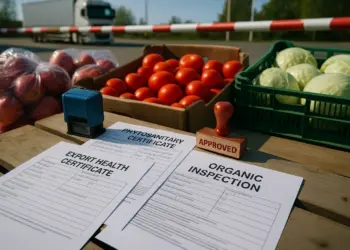
The advent of AI technology is changing this landscape. Unlike human inspectors, AI can process vast amounts of data in real time, significantly reducing the chances of oversight due to fatigue. For instance, in warehouses, AI systems can detect faults in racking beams or identify unsafe loading patterns that may escape manual detection. Similar technologies can monitor bridges, railways, and heavy machinery, spotting potential failures before they pose risks.

The impact of these technologies is profound. By addressing issues proactively, organisations can significantly improve safety outcomes, reduce insurance costs, and minimise downtime, ultimately safeguarding lives.

However, implementing AI in safety measures requires more than just technical capabilities; it necessitates building trust among workers. Experience shows that staff may disregard alerts if they find them intrusive or confusing. Therefore, AI systems must be designed with the user in mind, delivering clear and immediate insights. For example, a straightforward message indicating a potential beam failure within six months is more effective than a complex warning.

Furthermore, to foster trust, organisations must ensure the reliability of these technologies. When workers observe that AI predictions match actual inspections, confidence in the system increases. This way, AI becomes a cooperative tool, aiding personnel in their efforts to maintain a safer work environment.

Looking ahead, automation in safety processes is anticipated to increase. Routine checks will likely be handled by autonomous systems, while incident reporting will evolve to rely on continuous data streams rather than manual input. Safety personnel will shift from administrative tasks to focusing on live data insights, enhancing their effectiveness.

Concerns about potential job losses in health and safety roles are often voiced; however, the fundamental responsibilities of oversight and leadership will remain with humans. Instead, AI will alleviate repetitive tasks, allowing individuals to concentrate on meaningful actions that protect their teams.

Ultimately, health and safety transcends compliance; it embodies a commitment to the workforce that sustains industries. The traditional tools and methods have served their purpose, but the stagnation in reducing injury rates indicates a need for change.

Adopting technologies that promote proactive and predictive safety measures can integrate protection into everyday operations. Organisations that prioritise this transition will not only lower incident rates but will also set a benchmark for safety standards in the modern workplace.

SummarizeShare35Share198SendSend
ADVERTISEMENT
Jade Anderson

Jade Anderson

Related Posts

Rail safety initiative reaches thousands of young people with renewed support

Rail safety initiative reaches thousands of young people with renewed support

by Jade Anderson
October 13, 2025
3

Lumo and Hull Trains have announced a renewed commitment to the Rail Safe Friendly Programme, highlighting a social value impact...

Nurse warns of risks from unregulated earwax removal services

Nurse warns of risks from unregulated earwax removal services

by Jade Anderson
January 3, 2026
0

Concerns are mounting over the safety of earwax removal services in the UK as private providers increasingly fill gaps left...

Comments 1

  1. Dean Russell says:
    3 months ago

    AI offers huge potential to reduce injuries by spotting patterns and hazards that are easy to miss in complex operations. Practical deployment will depend on clear evidence of reliability, open communication about how decisions are made, and proper training so staff trust and can work with these tools. Technology should augment trained safety professionals, not replace them, and organisations must maintain strong governance, data quality and regular review to ensure systems remain effective as risks and processes change.

Useful Documents

  • Understanding RIDDOR
  • 10 Workplace Safety Failures
  • A Complete Guide to Reporting Safety Incidents in the UK
  • Understanding RIDDOR
  • Fire Risk Assessment: Meeting the Regulatory Reform (Fire Safety) Order
  • COSHH Basics: A Practical Guide to Control of Substances Hazardous to Health
  • Working at Height in the UK: The Essentials (WAH Regulations 2005)
  • Lock out Tag out LOTO
ADVERTISEMENT
Residents in Wirral express anger over plans for carbon dioxide pipeline
UK Health and Safety Latest

Residents in Wirral express anger over plans for carbon dioxide pipeline

by Ellie Cartwright
February 2, 2026
0

Residents of Wirral are voicing their opposition to the proposed 200-kilometre carbon dioxide pipeline, part of the Peak Cluster Project....

Read moreDetails
UK cold snap prompts safety advice for vulnerable households

UK cold snap prompts safety advice for vulnerable households

February 2, 2026
Four Britons die after contracting gastric illnesses in Cape Verde holidays

Four Britons die after contracting gastric illnesses in Cape Verde holidays

February 2, 2026
Man rescued from bridge railings in Plymouth

Man rescued from bridge railings in Plymouth

February 2, 2026
UK Safety News

Copyright © 2025
UK Safety News

Navigate Site

  • About
  • Advertise
  • Policies
  • Useful Documents
  • Contact
  • Agent

Follow Us

Welcome Back!

Login to your account below

Forgotten Password?

Retrieve your password

Please enter your username or email address to reset your password.

Log In
No Result
View All Result
  • Home
  • News

Copyright © 2025
UK Safety News

This website uses cookies. By continuing to use this website you are giving consent to cookies being used. Visit our Privacy and Cookie Policy.