














Story Highlight
– Union supports maximum temperature limits for workplace safety.
– Jersey experiences record heat with temperatures reaching 39.3°C.
– Employers urged to implement safety measures for extreme heat.
– Cultural change needed for flexible working hours during heatwaves.
– States of Guernsey classifies heat as a workplace hazard.
Full Story
**Channel Islands Unions Advocate for Maximum Workplace Temperature Regulation Amid Heatwave Concerns**
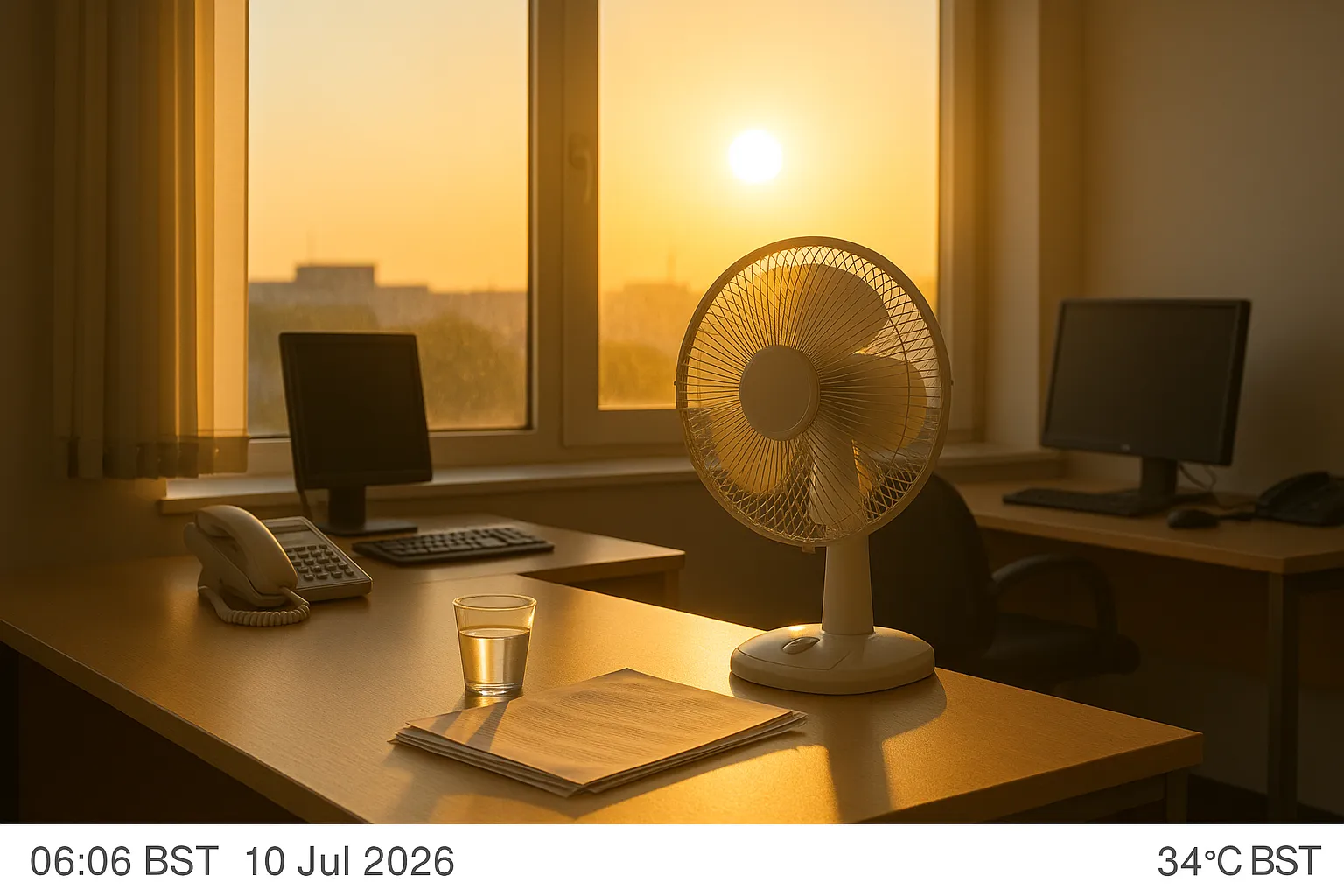
In light of the ongoing heatwave affecting the Channel Islands, unions representing local workers are calling for definitive maximum temperature regulations in workplaces to safeguard employee wellbeing. This is particularly pertinent as the islands experience their third significant heat event of the year 2026, with temperatures forecasted to reach as high as 34°C (93°F) on Friday, shortly after Jersey recorded an unprecedented high of 39.3°C (102.7°F).
Currently, there are no explicit laws in Guernsey, Jersey, or the UK that establish a maximum working temperature. Instead, these jurisdictions reference guidance provided by the UK’s Health and Safety Executive (HSE). As a result, the States of Guernsey has responded to the unions’ demands by stating that imposing a meaningful upper limit on temperature is challenging. They pointed out that many indoor conditions are influenced by work activities, which can lead to high temperatures independent of seasonal factors.
James Turner, a representative of Unite the Union in Jersey, expressed his support for any future measures that set maximum temperatures for workplaces, citing the importance of ensuring safety standards. “All employers must ensure under current legislation that the workplace temperature is ‘reasonable’ to ensure they are following their ‘duty of care’ to all its employees,” Turner remarked. He further advocated for “mitigation” strategies, which could include fitting blinds on windows, allowing airflow through open doors and windows, ensuring access to fresh drinking water, increasing break times for staff, and utilizing fans or air-conditioning systems when necessary.
Turner emphasized the critical nature of reporting any feelings of discomfort or health concerns due to extreme temperatures, urging employees to communicate such concerns as soon as possible to both colleagues and management. The Facebook page of Unite the Union Guernsey reiterated their stance, advocating for a legal cap on working temperatures, stating, “No one should risk their health just to earn a living.” The union highlighted the current uncertainty surrounding what constitutes a “reasonable” temperature and argued for more robust protections to ensure worker safety in extreme conditions.
Additionally, the AGCS branch of the Prospect union has voiced its support for extending employee rights concerning extreme heat in Guernsey. They articulated that “people should not have to worry about excessive and oppressive heat while at work,” additionally urging the States of Guernsey to contemplate a comprehensive, island-wide strategy to address the challenges posed by climate change and the increasingly severe heat levels it brings.
The States of Guernsey acknowledged that heat qualifies as a workplace hazard, accompanied by corresponding legal responsibilities that employers must uphold. Under existing legislation, workplaces are required to maintain a minimum temperature of 16°C, or 13°C when the work entails rigorous physical exertion. However, Robin Gonard, the Chief Health and Safety Officer for Guernsey, highlighted the necessity of not merely imposing a blanket temperature cap without considering the broader work environment. He proposed a reevaluation of working patterns and practices to better adapt to heat conditions.
Gonard cited practices from southern European countries, where it is common for workers to take breaks during the hottest parts of the day and resume work in cooler afternoon hours. “This is an area where a cultural shift is necessary,” he noted, adding that the traditional 9-to-5 or 8-to-4 schedules prevalent in these islands may need to be reconsidered. “Taking a break during the peak heat and resuming work later is a sensible and practical approach.”
A representative for the Government of Jersey stated that under the Health & Safety at Work (Jersey) Law 1989, employers are required to assess the risks posed to staff and implement controls to protect them. Best practices recommend that employers facilitate regular hydration, provide access to air-conditioned or cooler environments where possible, and encourage employees to take regular breaks. Moreover, they should create a culture that encourages workers to voice any health concerns they face due to excessive temperatures.
The spokesperson also mentioned that resources regarding workplace temperature management can be found online through the Health & Safety Executive, urging businesses to familiarise themselves with Jersey’s Approved Code of Practice concerning workplace safety.
As the Channel Islands continue to grapple with extreme temperatures, the spotlight remains on both unions and the local governments to ensure that the rights and health of workers are prioritised. The discourse surrounding maximum temperature regulations reflects a growing recognition of the challenges that climate change poses to the labour force, underscoring the urgency for robust policies that protect workers in increasingly unpredictable weather conditions.
The ongoing conversation serves as a critical reminder of the intersection between worker rights, health and safety standards, and the broader implications of climate change, as communities strive to adapt to the realities of a warming climate.
Our Thoughts
The article highlights the lack of specific legal maximum temperature limits in Guernsey and Jersey, leading to concerns about worker safety during extreme heatwaves. To avoid such situations in the future, the introduction of clear regulations on maximum allowable workplace temperatures would be essential. Currently, employers have a duty under the Health and Safety at Work Act 1974 to ensure a safe working environment, which includes managing risks associated with extreme heat. This includes providing adequate hydration, ventilation, and suitable working arrangements.
Employers could implement mitigation measures like providing fans or air conditioning and encouraging breaks during peak temperatures. Additionally, risk assessments should include temperature-related hazards, as outlined in the HSE’s guidance. The lack of defined thresholds contributes to ambiguity regarding what constitutes a reasonable working temperature, potentially breaching the duty of care owed to employees.
Cultural shifts in working patterns, such as taking breaks during the hottest hours of the day, alongside clearer regulations, could significantly enhance worker safety during heatwaves. Employers must prioritize health and safety through proactive measures to prevent adverse effects on their employees in extreme weather conditions.