
















Story Highlight
– Hannah Spencer proposes maximum workplace temperature legislation.
– Extreme heat impacts worker health and safety.
– Employers must act now to protect workers.
– Schools need better strategies for coping with heat.
– Resilient education systems are crucial for children’s futures.
Full Story
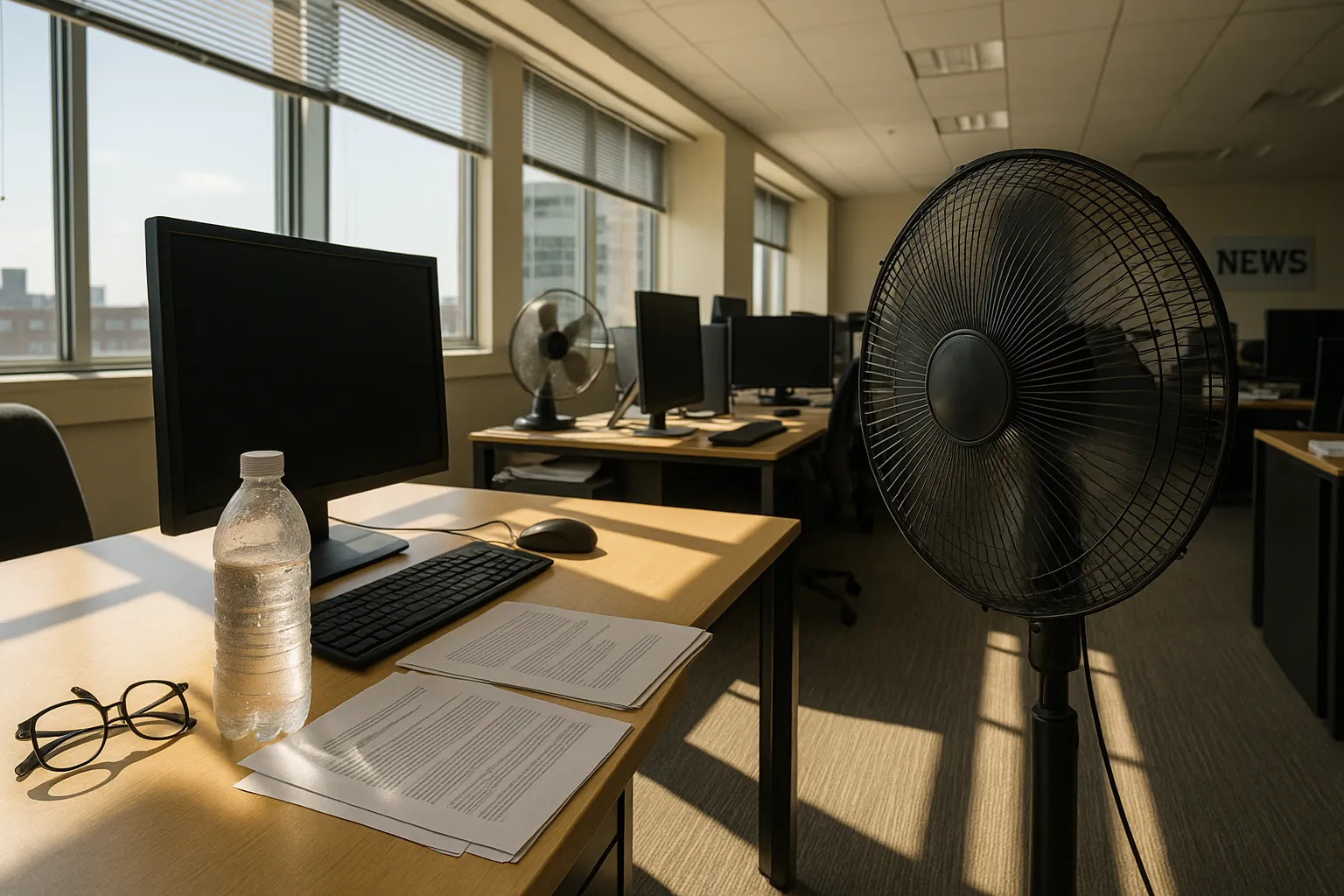
The introduction of a proposed bill by Green MP Hannah Spencer, aimed at establishing maximum temperature limits in workplaces, underscores a growing concern for employee wellbeing amid rising global temperatures. As the heatwaves become more pronounced, it is vital that employers and policymakers address the pressing need for protective measures for workers, rather than waiting for legislative mandates.
Extreme heat can significantly affect workers’ health, leading to decreased concentration, heightened fatigue, and an increased risk of accidents. Under existing UK legislation, employers are mandated to ensure a safe indoor temperature and are required to conduct thorough risk assessments to mitigate potential hazards. In response to high temperatures, employers can adopt various strategies, including adjusting work schedules, relocating strenuous tasks to cooler parts of the day, providing shaded break areas, ensuring easy access to hydration, and relaxing dress codes when necessary.
The discussion surrounding a legal maximum workplace temperature is crucial, but workers’ safety cannot be put on hold. Immediate action is paramount. Responsible employers understand that protecting their staff during heatwaves involves more than mere compliance with laws; it reflects a commitment to safeguarding the health and productivity of their workforce.
Ruth Wilkinson, the Head of Policy and Public Affairs at the Institution of Occupational Safety and Health, stated, “Good employers will recognise that safeguarding staff during heatwaves is not simply about compliance; it is also about preventing harm and demonstrating a genuine commitment to a safe, healthy and productive workforce.”
Addressing the impact of excessive heat is not confined to workplaces. Schools across the UK are facing serious challenges as classrooms swell with temperatures exceeding 40 degrees Celsius. The urgency of these conditions was highlighted in a report indicating that children are struggling to focus and learn in such oppressive heat. The discomfort has prompted pupils to seek relief, saying, “Children were calling for their mummies” as they attempt to cope with the stifling environments.
To effectively navigate these challenges, educators and school leaders are calling for rapid improvements to the resilience of the educational system in the face of extreme weather events. While the Department for Education has mandated climate action plans for schools, many institutions are showing inconsistencies in their execution, indicating a need for more systematic guidelines.
Experts argue that the UK could benefit significantly from international insights and practices developed in regions already adapting to extreme climate conditions. For instance, initiatives in India and Pakistan have demonstrated how employing natural vegetation around educational buildings can effectively cool learning environments and protect students’ academic performance. Research conducted by Cambridge researchers in collaboration with local institutions highlights these innovations as valuable lessons for the UK.
Christine Özden, the Global Director of Climate Education at Cambridge University Press & Assessment, has voiced the need for immediate reforms: “Our education system needs to build climate resilience – and fast.” She elaborates that the current strategies, such as providing wet paper towels and ice pops, fall short of what is truly required to adapt educational environments to a warming planet.
Özden also pointed out that since the disruption caused by the Covid-19 pandemic, there has been a call for a more adaptable approach to educational assessment, emphasizing the importance of resilience in both infrastructure and curriculum. Her insights were shared during a recent UN climate conference, where she addressed the significant impacts of climate change on children’s education.
“There are many ‘milestone moments’ in the summer term,” Özden noted. “Hotter summers threaten these critical moments in young people’s lives. We must adapt with safe, climate-resilient learning infrastructure.” She emphasised that failure to act jeopardises an entire generation’s right to quality education during their formative years.
The convergence of heightened temperatures and the urgency for reform in both workplaces and educational settings indicates a broader need for proactive measures across various sectors. In light of the increasing frequency of extreme weather events, it is essential that employers, educators, and policymakers work collaboratively to implement effective strategies that prioritise both the physical and mental wellbeing of all individuals.
In conclusion, while legislative progress may be on the horizon regarding maximum workplace temperatures, immediate action is crucial for safeguarding the health and productivity of workers. Similarly, the educational sector must prioritise climate resilience to ensure that young people can learn effectively amidst rising temperatures. The path forward necessitates a commitment to innovation, adaptability, and a proactive stance against the adversities posed by climate change.
Our Thoughts
Employers must proactively ensure a safe working environment during extreme temperatures, adhering to the Health and Safety at Work Act 1974, which mandates a reasonable indoor workplace temperature. The Management of Health and Safety at Work Regulations 1999 requires risk assessments, and employers should take reasonable steps to mitigate heat-related risks.
To avoid incidents of heat-related illness, businesses can implement measures such as adjusting workloads, scheduling demanding tasks for cooler times, providing shaded rest areas, ensuring easy access to drinking water, and allowing relaxed dress codes. Notably, reliance on inadequate measures like wet paper towels in schools highlights a breach of the expectation for sufficient risk management.
The proposed legislation for maximum workplace temperatures emphasizes the urgency for immediate action rather than awaiting legal changes. Instances of worker impairment due to heat stress can lead to accidents, making it crucial for employers to prioritize worker health proactively. By learning from international methods of climate resilience in educational settings, UK workplaces can improve their responses to extreme weather conditions, reinforcing the need for comprehensive guidelines and systematic approaches to heat management.