
















Story Highlight
– M&S challenges strict fiber label regulations in the UK.
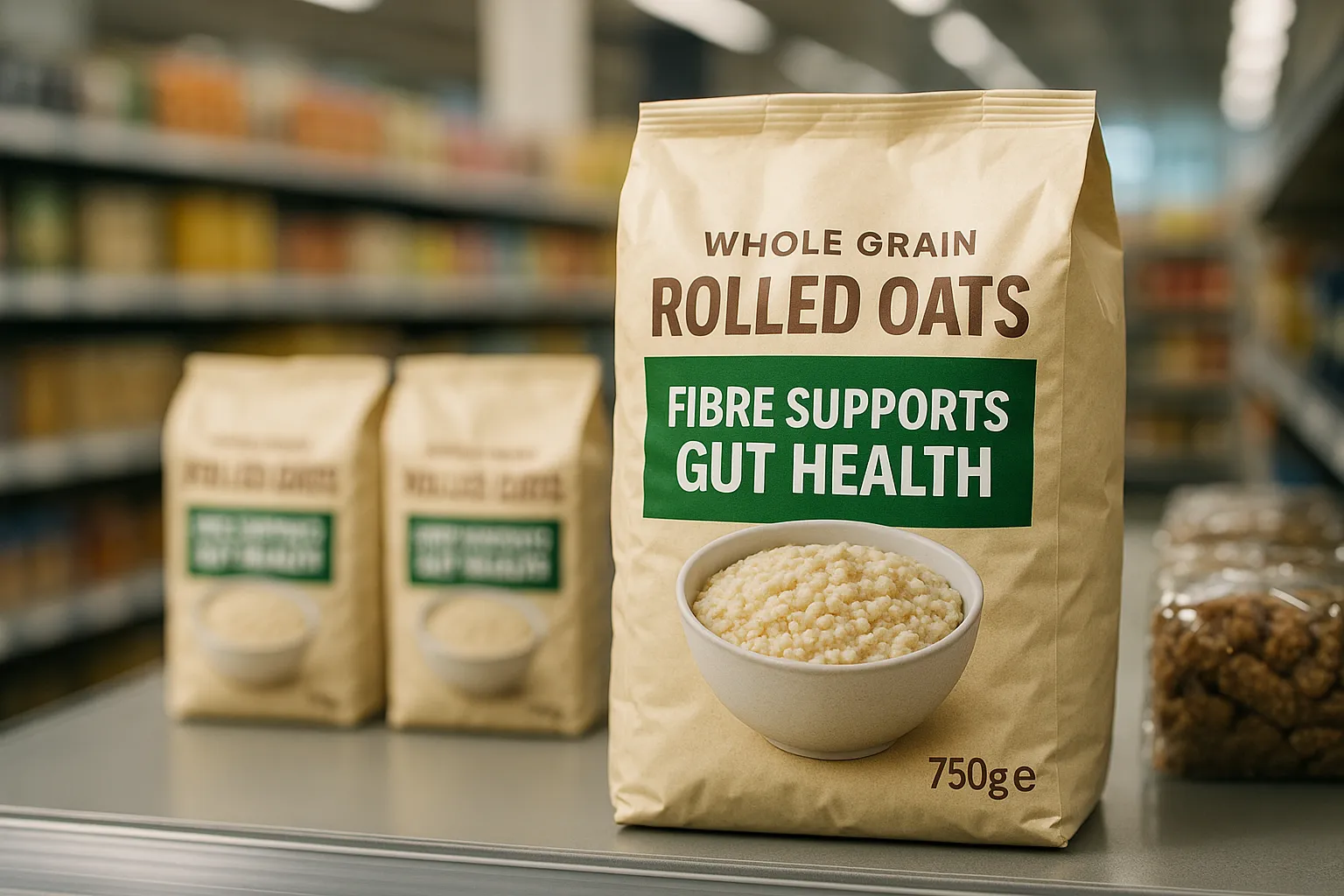
– Retailers can’t claim “fiber supports gut health” legally.
– 96% of UK adults consume insufficient daily fiber intake.
– Current language in regulations is confusing for consumers.
– A simpler wording review could improve public understanding.
Full Story
A recent call from Marks and Spencer (M&S), alongside health and nutrition experts, highlights the disconnection between official dietary guidelines and everyday language used by consumers, particularly concerning fibre intake. Alex Freudmann, M&S’s food managing director, has penned a letter to Yvette Cooper, the Secretary of State for Health and Social Care, advocating for a review of the regulations surrounding nutrition and health claims as they relate to barley grain fibre.
In his correspondence, which was also co-signed by nutritionist Emily English and Dr Anisha Patel, an ambassador for Bowel Cancer UK, Freudmann expresses concern over the complexity and technical nature of current health claims allowed on food packaging. He outlines a pressing issue: while the law permits the statement that “barley grain fibre contributes to an increase in faecal bulk,” it prohibits retailers from using more relatable phrases like “fibre supports gut health.” Such regulations create confusion and undermine the ability of retailers to inform and assist their customers in making healthier dietary choices.
The urgency of this sentiment is underscored by statistics from the National Diet and Nutrition Survey, which reveals that a staggering 96% of adults in the UK fail to meet the recommended daily intake of 30 grams of fibre. M&S’s internal research echoes this concern, indicating that 92% of their customers desire to incorporate more fibre into their diets. This widespread recognition of the need for higher fibre consumption is reflected in contemporary dietary discussions, yet the restrictions on language impede effective communication and education.
Understanding how these regulations came to be is crucial. The current framework stems from the European Union’s 2006 nutrition and health claims regulation, which has been retained in the UK’s legislation since Brexit. This law mandates that all nutritional claims be rigorously evaluated and documented in a register, leading to detailed but often incomprehensible wording that constrains how food products can be marketed. The science supporting these claims is sound, yet the language used lacks accessibility for everyday consumers.
Historical precedents for regulatory absurdities demonstrate the shortcomings of this system. An example of the flawed reasoning behind approved claims includes the rejection by the European Food Safety Authority of a statement asserting that water consumption reduces dehydration risk. Similarly, the initial hesitation regarding the beneficial effects of prunes on bowel function caught many off guard, highlighting a disconnect between scientific research and consumer awareness.
Furthermore, the recent approved language regarding kiwifruit—allowing the phrase “contributes to normal bowel function by increasing stool frequency”—depicts a significant challenge: the phrases permitted are likely to deter consumers rather than attract them. Imagining such language on product packaging brings to light the absurdity of a register that fails to resonate with shoppers’ everyday experiences.
This issue extends beyond dietary marketing into broader patterns within regulated sectors, where complex language often prevails. For instance, pension providers are required to inform clients about their savings with lengthy documents that many find impenetrable. Patients receive medical information sheets that bury critical advice under mountains of fine-print disclaimers. This ecosystem of convoluted language risks alienating the very individuals it aims to help, resulting in barriers to understanding that can lead to misinformed choices.
Advocates for preserving stringent regulations argue that precise language is necessary to prevent misleading claims. However, there is a fundamental distinction between prohibiting fraudulent assertions and requiring obtuse language that few can decipher. A straightforward statement such as “fibre supports gut health” is both true and readily comprehensible, whilst convoluted regulatory phrases only serve to dissuade consumers from engaging with the information.
The consequences of such communication gaps can lead to individuals turning to unofficial sources for nutritional advice, thus creating a channel for misinformation. When institutions maintain a dialogue that is too far removed from public understanding, individuals may resort to influencers and unverified online content. The widening chasm between official guidance and consumer perception presents an opportunity for misleading narratives to proliferate.
Addressing this challenge does not necessitate sweeping reform or enormous financial investment. Following Brexit, the UK has the opportunity to manage its own nutrition and health claims independently. Working within its own framework, the UK Nutrition and Health Claims Committee and the Scientific Advisory Committee on Nutrition could revisit the language used around fibre claims, exploring clearer alternatives that maintain scientific integrity without losing accessibility. The aim would be to retain evidence-based claims while presenting them in terms that consumers can easily grasp.
M&S’s initiative highlights the pressing need for change, advocating for clearer communication that reflects actual consumer understanding and dietary needs. With approximately half of the population struggling to meet fibre intake recommendations, making the conversation around dietary fibre more accessible could significantly influence public health outcomes.
As the dialogue around food labelling evolves, it is essential that stakeholders, including industry competitors and public health advocates, rally behind efforts to enhance clarity in nutritional messaging. Ultimately, improving consumers’ understanding of dietary fibre and its benefits is crucial for instigating positive changes in national health.
Mike Coppen-Gardner, the founder and CEO of WeAreSPQR, supports M&S’s campaign. In these discussions, transparency and comprehensibility must become priorities to foster a healthier population, empowered with the knowledge to make informed dietary choices.
Our Thoughts
The article highlights significant issues regarding consumer understanding and regulatory communication in food labeling, particularly in health claims for dietary fiber. To avoid confusion and enhance public health, clearer regulations and guidelines are essential. Key safety lessons include the need for simplified communication between health authorities and consumers, ensuring that mandated information is comprehensible and actionable.
Under UK health and safety legislation, including the Food Safety Act 1990 and the Nutrition and Health Claims (England) Regulations 2016, there is an obligation to provide accurate and clear information. The current regulations appear to breach the principle of clarity, risking public trust and potentially leading to misinformed dietary choices.
To prevent similar incidents, it is crucial to continuously review and adapt health claims to align with consumer understanding while still maintaining scientific accuracy. Engaging health professionals and the public in discussions around labeling could result in improved compliance and more effective public health messaging. Collaboration with organizations like the UK Nutrition and Health Claims Committee could facilitate a revision of the regulations to make health claims more accessible and meaningful for consumers.