















Story Highlight
– Lily Yirenkyi admitted 13 fraud offences during employment.
– She faked food safety inspection reports and ratings.
– Investigation followed concerns from environmental health team.
– Yirenkyi received a 16-month suspended sentence.
– Council re-investigated all her fraudulent inspection reports.
Full Story
A former temporary environmental health officer, Lily Yirenkyi, has faced legal repercussions following her admission of fraud-related offences while employed by Thurrock Council. During her brief tenure, which began in 2020, Yirenkyi came under scrutiny after concerns were raised regarding her compliance with food safety inspection protocols.
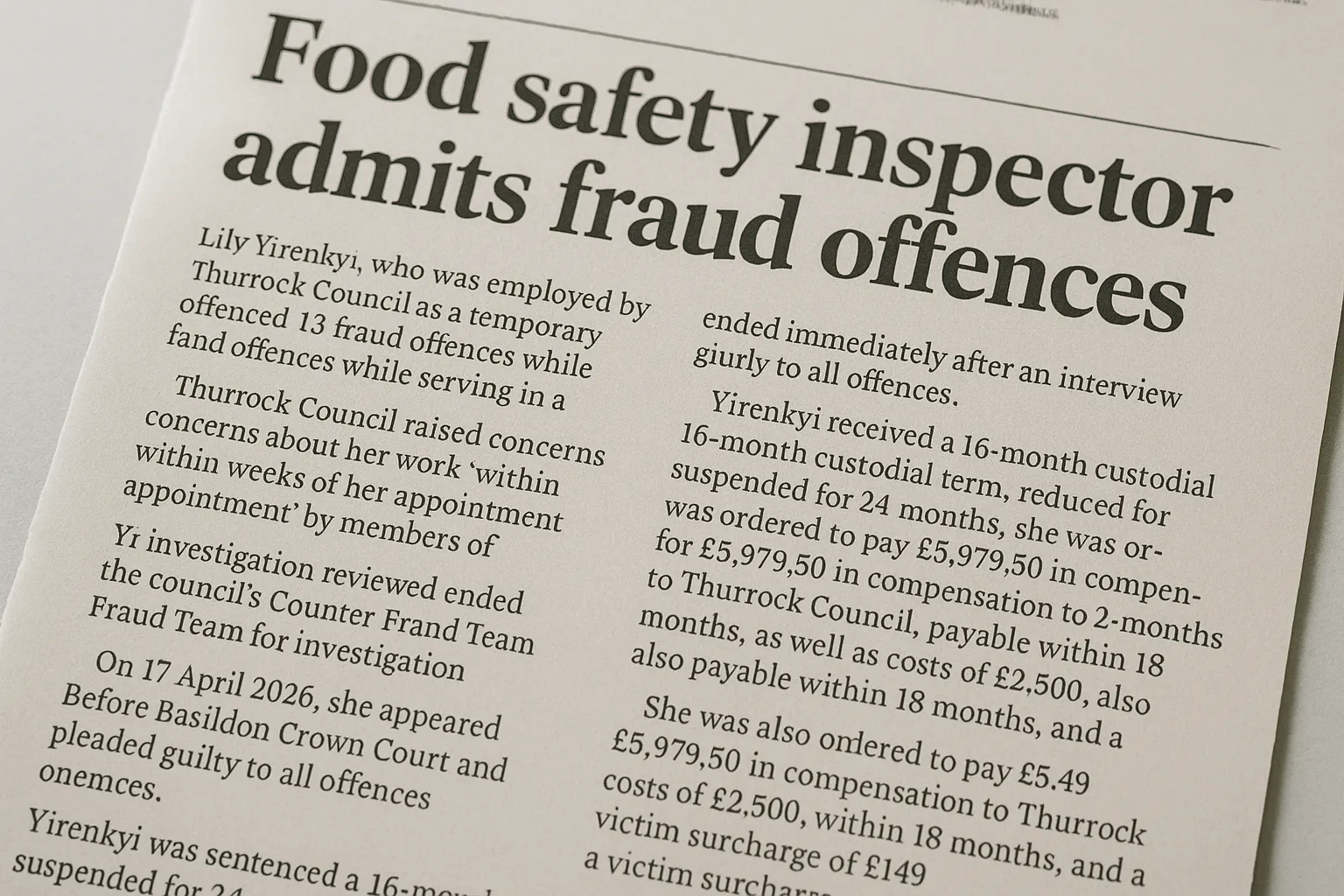
Thurrock Council stated that it received alerts from its environmental health team just weeks after Yirenkyi began working. This led to a swift referral to the council’s Counter Fraud Team for a detailed investigation. Evidence subsequently emerged indicating that Yirenkyi had falsely claimed to have conducted 13 food hygiene inspections across various food establishments in the Thurrock area. Alarmingly, these inspections had never actually taken place, and Yirenkyi produced fabricated inspection reports alongside fake rating assessments.
In addition to this deception, investigators found that Yirenkyi had submitted documents featuring forged signatures as proof of her inspections. She further compromised her integrity by misusing official headed paper from Southend Council to create a fraudulent reference during her application for the role at Thurrock Council. Once the council became aware of her misconduct, Yirenkyi’s employment was terminated immediately following a cautious interview process.
Court proceedings initially faced delays, attributed to Yirenkyi’s failure to attend a plea hearing in 2020, resulting in the issuance of a warrant for her arrest. However, on April 17, 2026, Yirenkyi appeared at Basildon Crown Court, where she pleaded guilty to all charges against her. The court heard that the offences included 13 counts of Using a False Instrument, in violation of the Forgery and Counterfeiting Act 1981, as well as one count of Misconduct in a Public Office.
Following her guilty pleas, Yirenkyi was sentenced to a custodial term of 16 months, which was reduced from 24 months in recognition of her admissions of guilt. This sentence was suspended for 24 months, allowing her to avoid immediate imprisonment. Additionally, the court ordered her to compensate Thurrock Council to the tune of £5,979.50 within an 18-month timeframe, with an added requirement to cover the council’s legal costs amounting to £2,500 and a victim surcharge of £149.
In light of the scandal, all 13 fraudulent inspection reports produced by Yirenkyi have since been reevaluated by Thurrock Council to ensure that proper food hygiene ratings were assigned. This process was deemed essential to restore public trust in the integrity of the food safety inspection system.
Councillor Richard Bingley, who leads Thurrock Council and oversees matters of public protection and community safety, emphasised the council’s commitment to food safety. He stated: “The council takes its responsibility to carry out food safety inspections extremely seriously, which is why Yirenkyi was stopped quickly and decisively by other members of staff.” He highlighted the thorough re-examination of all inspections linked to Yirenkyi’s fraudulent activities as a significant step in maintaining confidence in the inspection process.
Moreover, Bingley underlined the importance of safeguarding residents and supporting legitimate businesses. He reaffirmed the council’s determination to take strong action against any identified misconduct, stating: “We are committed to protecting residents and supporting legitimate businesses. We will continue to take robust action wherever wrongdoing is identified.” In response to the incident, he also revealed that the council has taken proactive measures to review and enhance its internal processes to prevent similar occurrences in the future.
The fallout from this incident underscores the significance of trust in public service roles, particularly those involved in health and safety oversight. The rigorous investigations undertaken by Thurrock Council and the subsequent legal proceedings highlight a serious commitment to accountability and transparency in local governance.
The case has drawn attention to the necessity for stringent oversight within public sector employment, particularly within positions that have a direct impact on public health and safety. Councils and municipal governments across the country may look to this incident as a cautionary tale, reinforcing the need for robust verification procedures to detect potential fraud in similar roles.
As the narrative unfolds, it serves not only as a reminder of the critical nature of ethical conduct within public service but also reinforces the imperative for councils to remain vigilant against fraudulent activities that may undermine public confidence. Changes to inspection protocols and enhanced scrutiny mechanisms will likely be among the steps taken by Thurrock Council and similar entities to safeguard against future abuses of trust in their ranks.
This incident serves as a stark reminder to all public sector employees of their responsibilities and the potential consequences of failing to uphold the integrity required of their positions. As local councils work to restore public confidence, the lessons learned from Yirenkyi’s case may influence policies and practices far beyond just Thurrock.
Our Thoughts
The case involving Lily Yirenkyi raises significant concerns regarding internal controls and oversight in public health roles. Key lessons learned include the necessity for thorough background checks and verification of credentials for employees in critical roles such as environmental health officers. Regular audits of inspection activities could have identified discrepancies early, preventing fraudulent activities.
Under UK health and safety legislation, particularly the Health and Safety at Work Act 1974, employers have a duty to ensure the competence of employees who perform duties that impact public safety. This incident highlights a breach of regulatory obligations regarding effective monitoring and supervision of staff carrying out food safety inspections.
To prevent similar incidents, councils should implement stronger vetting procedures, including checking references directly with previous employers. Additionally, fostering a culture of accountability and encouraging staff to report suspicious activities can help mitigate risks associated with fraudulent behaviours. Regular training and awareness programs about ethical standards and legal requirements in food safety could also enhance compliance and integrity within public health roles.