
















Story Highlight
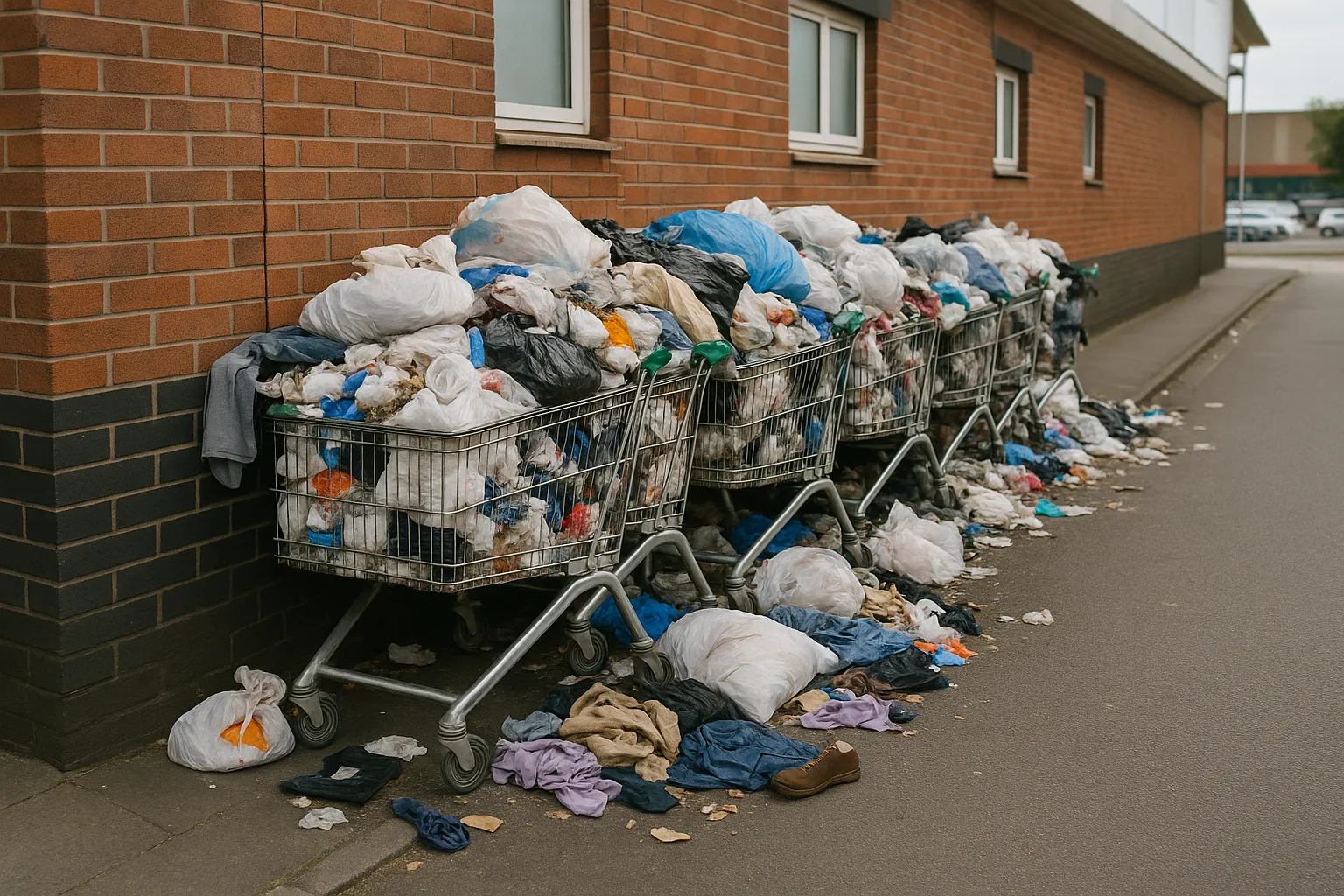
– Waste piled up at Morrisons Girlington car park.
– Five trolleys overflowing with debris on pavement.
– Contents include clothing, shoes, and household items.
– Local resident highlights sanitation concerns and health risks.
– Morrisons contacted for comment regarding the situation.
Full Story
In a troubling scene, large quantities of refuse have been discovered in a car park belonging to Morrisons in Girlington. The waste was found scattered across the pavement, spilling over from five supermarket trolleys and raising concerns among local residents and shoppers.
The debris consists of a mix of items including household goods, clothing, footwear, underwear, and a number of plastic bags. The sight of these discarded materials has not gone unnoticed, with residents expressing their distress over the condition and extent of the rubbish.
One local resident commented, “It is evident this has been accumulating over a considerable period of time.” This observation underscores the possibility that the waste might not have been a recent occurrence but rather a persistent issue that has worsened over time. The resident further emphasised that the presence of such litter is not merely a visual nuisance but also a serious public health concern.
The accumulation of waste in a shopping area poses various risks. The resident elaborated, stating, “This is not only an eyesore for shoppers and residents using the retail park, but it presents a genuine public health hazard.” Such circumstances can attract an array of pests and vermin, which can have detrimental effects on both wildlife and human health in the vicinity.
Another concerning aspect is the impact this litter may have on the attractiveness of the shopping centre, with many locals now reluctant to visit due to the unwelcoming environment. Cleanliness in public spaces is crucial for local businesses, especially in retail parks where customer footfall is vital for economic activity.
In response to the situation, various community members have called upon local authorities to take action, urging them to create a systematic approach to waste management in public areas. There are growing concerns that without intervention, similar issues could arise in other locations, potentially leading to broader environmental impacts.
The situation highlights the importance of effective waste disposal facilities and regular maintenance within communal spaces. Local environmental experts have pointed out that unattended waste can have far-reaching consequences, including increasing the risk of pollution and compromising the health of local ecosystems.
The presence of waste in public spaces has been cited as an increasing issue nationwide, prompting environmental officials to develop strategies that reinforce community cleanliness. Continued education on responsible waste disposal and community stewardship is seen as vital to preventing such occurrences.
On the matter of this specific incident, the local news outlet, the Telegraph & Argus, has sought commentary from Morrisons regarding the waste in their car park. The response from the supermarket chain will be critical in understanding their stance on waste management and community engagement.
Additionally, residents argue for the need for greater local involvement in maintaining public cleanliness. Initiatives encouraging community clean-up days have been suggested as potential solutions, promoting a sense of pride and responsibility among locals. Such activities could bolster community spirit while directly addressing the litter problems faced.
As the issue of waste management evolves, it is increasingly apparent that collaboration between local businesses, municipal authorities, and residents is essential. Effective communication paths must be established to ensure that concerns regarding waste are heard and acted upon in a timely manner.
The situation at Morrisons in Girlington serves as a pivotal reminder of the collective responsibility in fostering a cleaner and healthier community. Local authorities are being urged not only to address the current littering but also to implement strategies that will prevent future occurrences.
One proposed measure includes the introduction of additional waste bins strategically placed in high-traffic areas to encourage proper disposal by shoppers and visitors. Enhanced signage promoting responsible waste habits could also play a crucial role in altering behaviours.
As efforts continue to tackle waste issues, the spotlight will remain on how community engagement can drive long-term improvement. The sound of the trolleys filled with debris echoes the pressing need for a cultural shift towards responsible waste management, which must involve every layer of the community.
In conclusion, the situation at Morrisons in Girlington reveals deeper concerns about littering and waste management in public spaces. As local residents and stakeholders alike await further communication from the store, the need for collaborative efforts across various sectors remains paramount to ensure the community’s well-being is safeguarded for future generations.
Our Thoughts
To avoid the accumulation of waste observed at Morrisons Girlington, it is essential to implement and adhere to robust waste management practices in line with the UK Environment Protection Act 1990. Regular monitoring and timely removal of waste would prevent overflow and maintain public health standards. The presence of waste indicates potential breaches of the duty of care outlined in the Environmental Protection (Duty of Care) Regulations 1991, which mandates proper handling and disposal of waste.
Key safety lessons include the importance of proactive waste management to mitigate public health hazards and the need for adequate training of staff regarding waste disposal protocols. Additionally, ensuring that waste bins are accessible and regularly emptied would further minimize the risk of attracting pests, which poses health risks to customers.
To prevent similar incidents, businesses should conduct regular inspections of their waste disposal areas and engage in community awareness initiatives about proper waste disposal. Collaboration with local authorities for effective waste collection services could also enhance public safety and improve the overall environment of retail areas.