













Story Highlight
– Iman lost her mother while fleeing Gaza conflict.
– She raised money to help family escape danger.
– Difficult choices made about who to save financially.
– Family faced trauma and malnutrition after evacuation delays.
– Humanity Care Relief provided vital emotional and financial support.
Full Story
**Tragic Choices in Times of War: One Woman’s Fight for Family in Gaza**
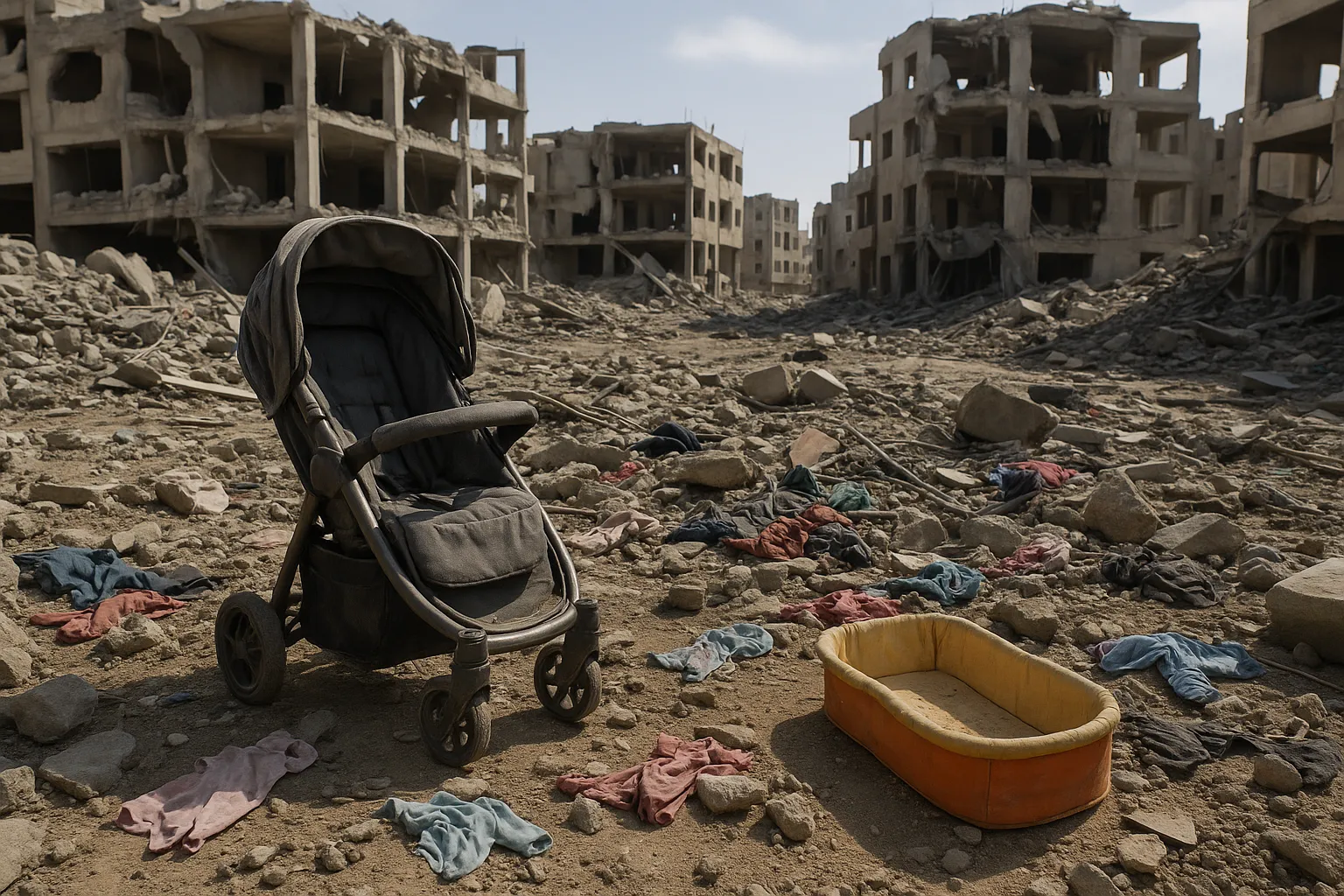
The ongoing conflict in Gaza has intensified since its outbreak in 2023, forcing families into unimaginable situations. Iman, a new mother living in the UK, experienced the horrors of this strife firsthand. Shortly after undergoing an emergency Caesarean section, she was confronted with the devastating news that her elderly mother, who relied on a wheelchair, had perished while trying to escape the escalating violence in Gaza.
Recovering from her surgery and juggling the demands of her newborn son, Iman launched a desperate effort to secure the safety of her surviving family members amid the chaos. “There are no words to describe it,” Iman recalled. “I had just become a mother myself while losing my own mum. I was recovering from an emergency Caesarean section, trying to look after my newborn, and trying to save the rest of my family. You don’t have time to fall apart. You have to keep going because nobody else is going to do it for you.”
Originally from Gaza, Iman relocated to the UK eight years ago after receiving a scholarship to pursue higher education. As the war in her home country escalated, the safety of her relatives became increasingly precarious. They initially sought refuge in Al Shifa Hospital after their neighbourhood endured heavy bombardment, but the situation deteriorated further, compelling them to flee again.
During this harrowing flight, Iman’s family endured numerous hardships. Her father, who suffers from Alzheimer’s disease, her younger brother, and her sister managed to escape, yet the tragic loss of her mother weighed heavily on Iman’s heart. From her hospital bed, while contending with her own recovery, Iman struggled to devise a plan to assist her family trapped in Gaza. Faced with limited financial resources, she was forced to make heart-wrenching decisions regarding who could be brought to safety.
“The hardest thing was having to choose who could live and who had to stay behind,” Iman expressed. “I didn’t have enough money to get everyone out. You have to make impossible decisions that no human being should ever have to make.” In a cruel twist, she remains unaware of the fate of two of her brothers and their families.
After significant effort, Iman succeeded in raising enough funds to facilitate the escape of her father, brother, and sister through Egypt. However, their journey was far from over. Faced with repeated refusals from the Home Office, they were stranded in Egypt for nearly two years, unable to reunite with Iman in the UK. When they finally reached Britain, the trauma of their experiences lingered.
The harrowing circumstances had taken a toll on their health: Iman’s father had suffered severe malnutrition, living on inadequate and unhealthy food, while her sister began to require specialised mental health support to navigate the psychological scars left by the conflict. “When I saw them again, I couldn’t stop crying,” Iman remembered. “I had held everything in for so long because I needed to survive.”
Currently, Iman dedicates her time to caring for her family full-time and has been unable to seek employment. She receives approximately £600 per month in Universal Credit for herself and her newborn, alongside her responsibilities as a caregiver to her father, brother, and sister.
The journey has been a long one, and organisations such as Humanity Care Relief have been instrumental in providing support during their transition to life in the UK. The charity extended not only financial assistance but also emotional and social support to help Iman and her family navigate their new reality. “They didn’t just help with money. They checked on me, supported me emotionally, and helped me survive while we tried to rebuild our lives,” she said, reflecting on the assistance she and her family received. “I’m very thankful because without them I couldn’t have managed.”
Usman Dar, a representative from Humanity Care Relief, highlighted the complexities faced by families like Iman’s, noting the multitude of challenges that do not cease upon reaching a place of safety. “No new mother should have to grieve, fundraise, and fight through immigration paperwork from a hospital bed,” he stated, underscoring the extraordinary burden on Iman during such a vulnerable time.
Dar emphasised that, while the physical journey towards safety might be complete, the emotional turmoil and practical challenges are just beginning. “They arrive with grief, trauma, medical needs, and enormous caring responsibilities, often without the money or support needed to cope,” he explained. “Our role was to ensure that Iman and her family did not have to face that next chapter alone.”
Iman has requested that her name be changed to protect her identity, indicating the sensitive nature of her situation and the ongoing fears surrounding her family’s safety.
Through resilience in the face of adversity, Iman’s story encapsulates the struggles of many caught in the throes of conflict. It highlights the harsh realities of war, the painful choices that must be made, and the importance of community support in helping families piece their lives back together amidst chaos. As they work towards recovery and rebuilding their lives, the journey remains a testament to the enduring human spirit in the face of tragedy.
Our Thoughts
The article highlights several key areas where safety and support could have been improved for Iman and her family, particularly regarding mental health support and trauma-informed care during crises. Under the Health and Safety at Work Act 1974, employers and service providers have a legal duty to ensure the welfare of individuals, especially vulnerable populations facing traumatic circumstances.
Measures could have included providing immediate psychological support and resources for individuals fleeing conflict zones. For example, emergency services and humanitarian organizations should have protocols to address not only the physical safety of individuals but also their mental well-being.
Moreover, there appears to be a lack of adequate support from immigration authorities, which could be in breach of the Immigration and Asylum Act 1999, as individuals should have access to fair treatment during asylum processes. Streamlined support and a more efficient refugee assistance system would help prevent prolonged separations and trauma.
In conclusion, there is a significant lesson regarding the need for comprehensive support systems that address both physical and mental health, ensuring that obligations under UK legislation are met in times of crisis.