












Story Highlight
- Increasing number of Britons using property guardianship for housing.
- Property guardianship offers cheaper living arrangements than traditional renting.
- Residents sign a 28-day rolling licence agreement instead of a lease.
- Guardians face fewer legal protections and can be evicted quickly.
- Some companies are improving living conditions and industry standards.
Full Story
A rising number of individuals in the UK are opting for property guardianship as a solution to high rental costs and the housing crisis. This arrangement allows them to occupy vacant buildings, such as former police stations, hospitals, and offices, at a significantly lower cost compared to traditional rentals. According to a management firm cited by Money, of the 754,000 vacant properties in the UK, approximately half could be repurposed for housing.
Property guardianship operates under a licence agreement rather than a standard tenancy. Residents typically sign a 28-day rolling licence and pay a licence fee, acting as security for property owners. This is a shift from ten years ago when the concept gained notoriety from the Channel 4 series Crashing, which focused on the potential downsides, including subpar living conditions that prompted legal actions against some management companies and led to stricter scrutiny and regulations in certain areas.
Though the situation for guardians has improved, with some companies adhering to standards set by the Property Guardian Providers Association, there remain limited regulatory requirements. Guardians experience fewer legal protections compared to tenants; they can be evicted with just 28 days’ notice, and they face greater scrutiny regarding property inspections. While they generally pay a deposit, there is no obligation for landlords to secure those funds in a protection scheme, and repair requests are limited to safety issues.
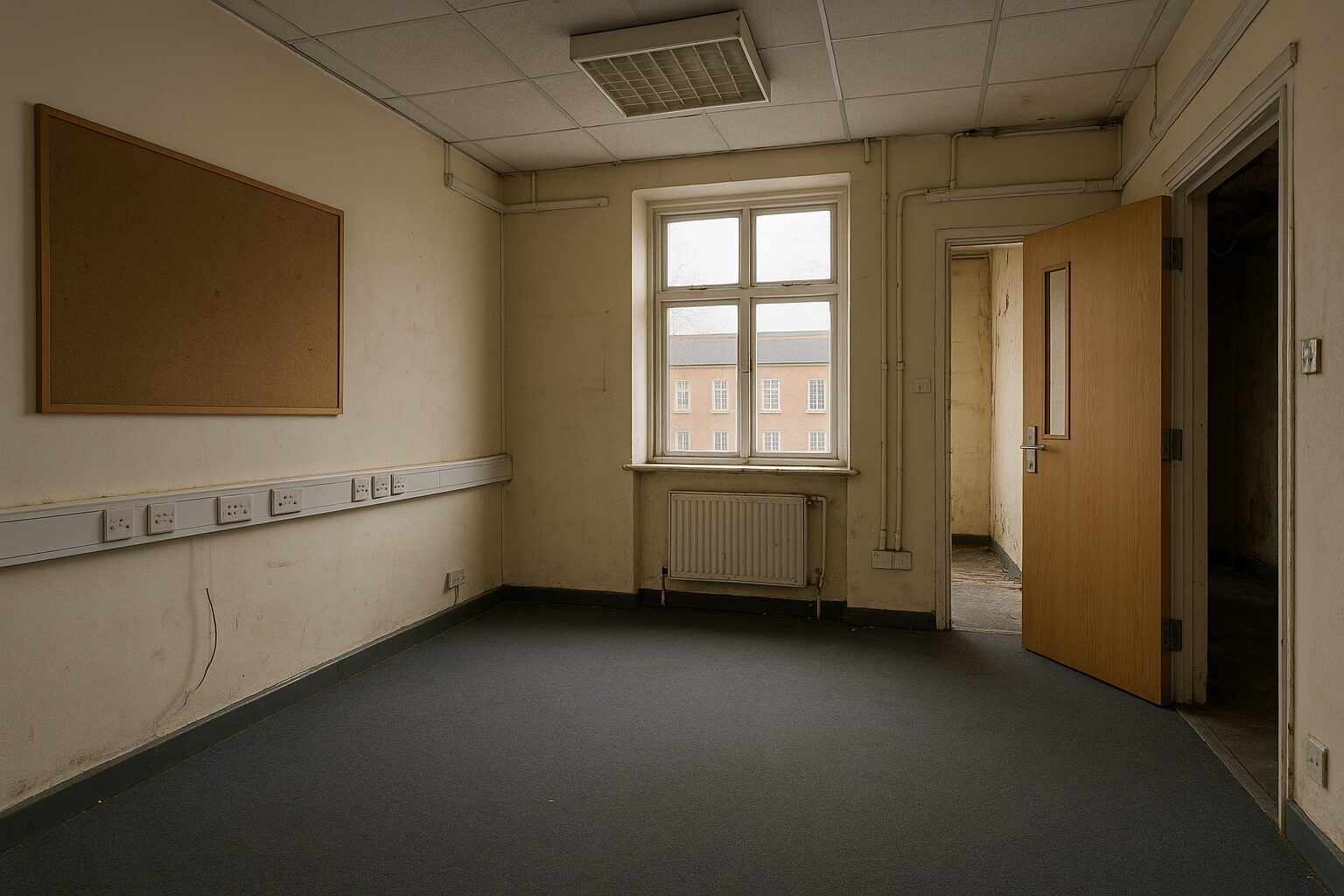
Cherise Woods is one individual who embraced property guardianship in 2024 after facing eviction due to a rat infestation. Seeking to save for a house deposit, she found a property in Somerset looking for a guardian. For security reasons, the specific use of the building was withheld. Woods described the building as a listed property with multiple floors and ample parking. Her room, about 20 square metres, retains features from its previous use as an office, including wiring and a dark blue carpet.
Source: read the original report.
What this means for your site
The issue of property guardianship raises significant health and safety concerns, particularly in terms of occupant welfare and building safety. Owners and companies facilitating guardianship should enhance their due diligence processes. The Health and Safety at Work etc. Act 1974 places a duty on employers and landlords to ensure, as far as is reasonably practicable, the health and safety of those who might be affected by their activities, which includes occupants of such properties. Furthermore, the Management of Health and Safety at Work Regulations 1999 require risk assessments to identify potential hazards and implement necessary control measures, which appear to be lacking in some cases of property guardianship.
To prevent scenarios where individuals live in potentially unsafe conditions, property owners and guardianship companies should conduct regular health and safety assessments and ensure compliance with basic living standards. Establishing a comprehensive induction process for guardians that outlines their rights and responsibilities, alongside ongoing training about health and safety protocols in these properties, would reduce potential risks. Additionally, developing a formal reporting mechanism for safety issues may enhance accountability and occupant protection.