













Story Highlight
- Peak Cluster aims to capture CO2 from cement and lime producers.
- Reform UK leaders oppose project fearing environmental damage and taxpayer costs.
- Project includes a 121-mile underground pipeline across multiple counties.
- Peak Cluster claims to reduce CO2 emissions and secure industry jobs.
- Construction application expected in 2027, pending government approval.
Full Story
Peak Cluster, a joint initiative involving cement and lime manufacturers in Derbyshire and Staffordshire, is working on a project intended to capture carbon dioxide from four production sites located in Buxton, the Hope Valley, and near Cauldon. The proposed project includes an underground pipeline that would transport captured CO2 to the Morecambe Net Zero carbon storage site beneath the Irish Sea.
Concerns have been raised regarding the project, as Reform UK Derbyshire County Council Leader Cllr Alan Graves, alongside Staffordshire County Council Leader Cllr Martin Murray and Reform UK Deputy Leader Richard Tice, issued a letter to potential private investors. They warned that a Reform UK government would not grant planning permission for the project due to fears it might harm the countryside, disrupt wildlife habitats, and incur a cost of around £30 million from taxpayers through the National Wealth Fund, a figure they suggest could rise significantly before the project’s completion. The letter asserts, “On the national and the local level Reform UK will do everything in our power to oppose this Net Zero scam.”
The pipeline route is in the pre-application phase, intended to connect the cement and lime plants to the Morecambe site after passing through Derbyshire, Staffordshire, Cheshire, and Merseyside. Included in the project are Buxton Lime’s Tunstead lime plant, Breedon’s Hope cement plant, Tarmac’s Tunstead cement plant, and Holcim’s Cauldon plant. Reform UK has vowed to block all planning applications related to the Peak Cluster scheme, claiming that if granted a Development Consent Order, local councils led by their party would lose the capacity to object.
The letter asserts that the project seeks to fulfil what they term “mad Net Zero targets” set by the current Government, and they criticise the financial responsibilities placed upon UK taxpayers. They contend, “Not a penny of public money will be permitted to go towards Peak Cluster.” Derbyshire County Council previously indicated its opposition to the project in March due to safety concerns, while also endorsing local quarries and cement operations to pursue government funding aimed at reducing emissions at their sources.
Peak Cluster contends that the initiative will not only secure the future of the UK cement and lime industries but is also expected to generate 13,000 jobs by 2050 with around 1,500 positions created during the construction phase across the East Midlands and North West. The group claims that cement production contributes 7.5 percent of global CO2 emissions and its plans will prevent more than three million tonnes of CO2 from being released annually, strengthening the industry’s resilience.
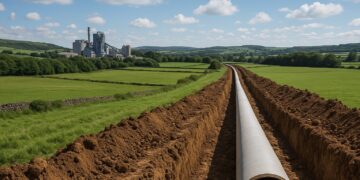
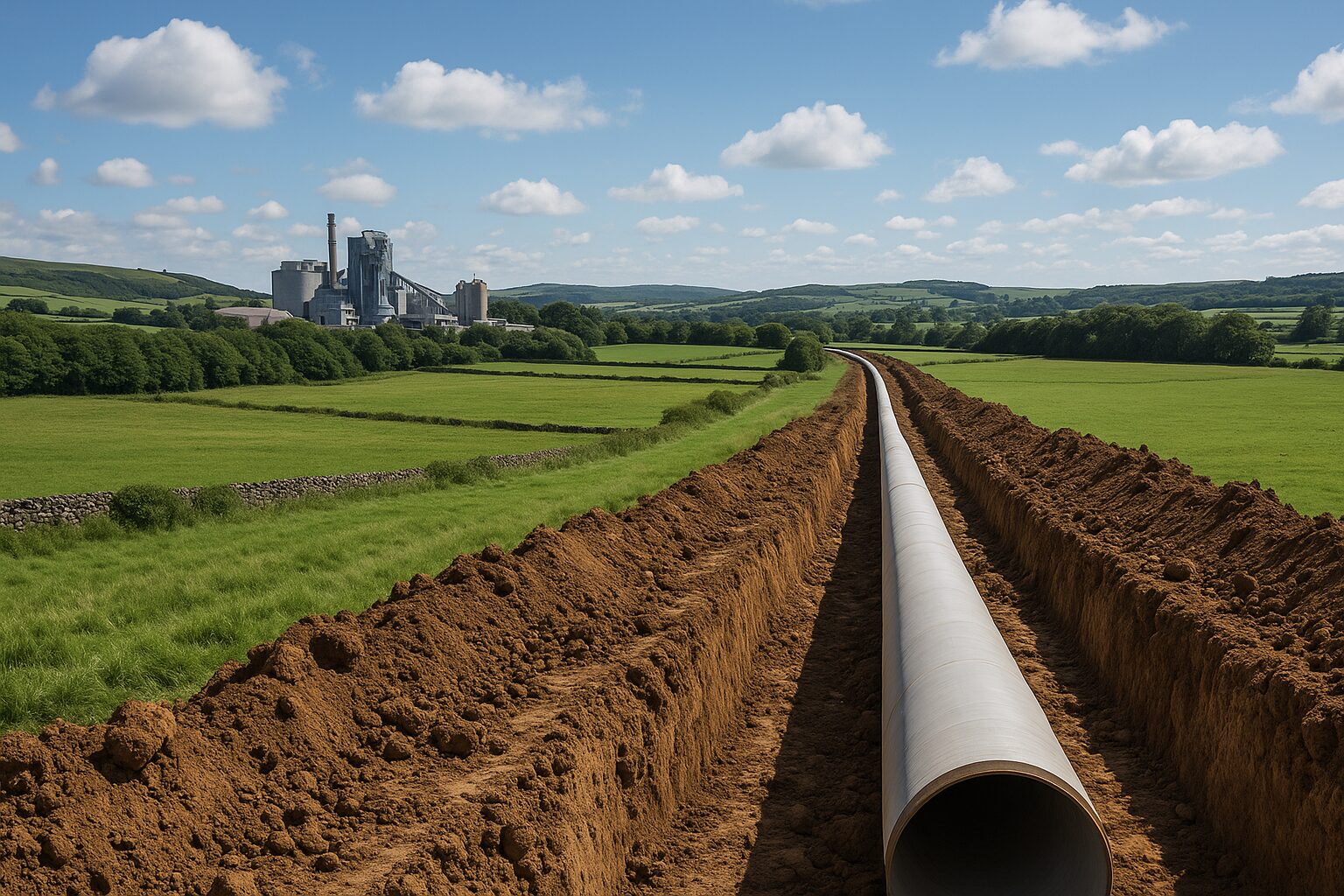
The proposed pipeline corridor, which will initially stretch 300 metres wide and 121 miles long, will be narrowed to 100 metres before installation, with pipes measuring about one metre across. David Parkin, Chairperson of Peak Cluster, stated that pipelines have been safely transporting gas and liquids in the UK for over a century and confirmed adherence to regulatory safety measures.
The project, which is estimated to take three years to complete, will undergo a national decision-making process with local councils providing input. Once finalised, Peak Cluster plans to apply for a Development Consent Order in 2027. The Labour Government has committed £28.6 million to the estimated £59.6 million project, with additional funding expected from private sector participants. A spokesperson from the Department for Energy Security and Net Zero reiterated the importance of carbon capture, usage, and storage for the UK’s clean energy future and the potential for job creation across the country.
Source: read the original report.
What this means for your site
During the planning and implementation stages of projects such as the Peak Cluster carbon capture scheme, a comprehensive risk assessment and stakeholder engagement ought to be prioritized to mitigate opposition and safeguard the environment. The Health and Safety at Work etc. Act 1974 applies here, mandating the need for proper risk management, including the environmental impacts of large-scale projects. Additionally, the Management of Health and Safety at Work Regulations 1999 requires businesses to conduct risk assessments and implement measures to eliminate hazards, not just for workers but also for the surrounding environment and communities.
To prevent similar conflicts, the site managers should engage local councils and communities at an early stage and provide transparent information about the project’s benefits and potential risks. Conducting an Environmental Impact Assessment (EIA) could identify potential ecological disruptions and offer strategies to mitigate damage to wildlife and Green Belt land. Furthermore, enhancing site safety plans with consultation from environmental specialists could address any safety concerns raised by stakeholders, ensuring the project aligns with both legal requirements and community expectations.