














Story Highlight
– Safety alerts in France and UK prompt sand toy recalls.
– Asbestos found in children’s sand-based toys.
– France suspends sales, initiates product safety checks.
– UK recalls specific craft kit over asbestos risk.
– Increased monitoring of sand toys across Europe initiated.
Full Story
Safety warnings in both France and the United Kingdom have led to significant action regarding the recall of sand-based toys, amid concerns that some products may contain asbestos fibres. These alerts specifically target children’s play items that incorporate sand, including various kits designed for creative and artistic play. Regulatory bodies have highlighted that the presence of asbestos in such toys is strictly prohibited under existing product safety regulations, resulting in a series of recalls, sales halts, and comprehensive safety checks throughout the toy supply chain.
In France, the national consumer protection authority, known as the Directorate-General for Competition, Consumer Affairs and Fraud Control (DGCCRF), has launched a nationwide alert. This action follows investigations that connected certain sand-based toys to potential asbestos contamination. The initial discovery was made by regulators in Australia, where traces of asbestos were found in a total of 32 products across five different brands. Following the Australian findings, information was disseminated to international authorities, prompting safety checks throughout Europe.
French officials have clarified that the specific sand toys identified in the Australian investigation were not initially available in France. Nonetheless, subsequent tests conducted by various companies did reveal traces of asbestos in certain sand products sold on the French market. As a precautionary measure, authorities have mandated that manufacturers, importers, and retailers suspend sales of all sand-containing toys until they can verify the absence of asbestos in these items. Several products have already been recalled through France’s dedicated product safety system, RappelConso.
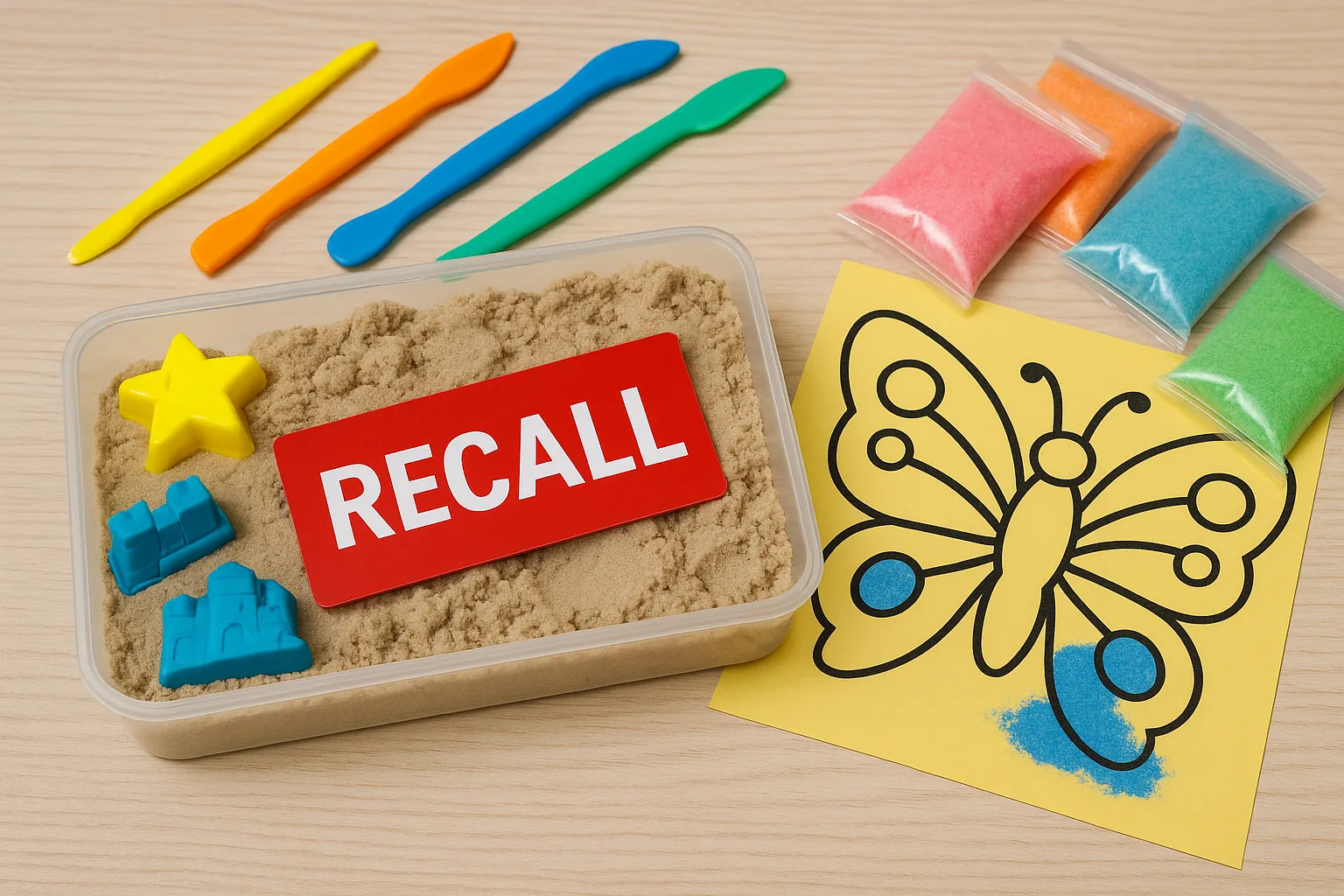
In the United Kingdom, the attention of regulators has also turned to a particular product. A recall has been issued for the “Out To Impress Sand Art Creations” craft kit, manufactured by Addo Play Limited. The official safety notice underscores that the sand included in the kit may be contaminated with asbestos, rendering the product non-compliant with the UK’s Toys (Safety) Regulations 2011. This specific craft kit was on sale from August 2023 until February 2026 through multiple retailers, including the Entertainer, Early Learning Centre, Tesco, Matalan, and Marks & Spencer. In light of the recall, consumers have been urged to stop using the craft kit and return it to the retailer to obtain a full refund.
The ongoing safety alerts have sparked concerns regarding the sourcing of raw materials used in the production of sand toys. Because sand can be derived from geological deposits that may naturally contain asbestos, regulators are taking these findings very seriously. It is important to note that exposure to asbestos fibres can lead to severe health issues when inhaled, which is why the use of this substance has been banned in consumer products intended for children for many years.
Health officials in France have suggested that the potential risk posed by previously available toys is probably limited, as many types of play sand are processed to retain moisture, which diminishes the likelihood of fibres becoming airborne. In light of recent events, regulatory bodies throughout Europe are ramping up their monitoring of sand-based toys and related products as part of broader safety initiatives in the retail market. This situation has underscored the crucial responsibility of manufacturers and retailers to ensure the safety of the natural materials incorporated into children’s products.
Local perspectives reveal a growing concern among parents about the materials used in children’s toys. Many are increasingly attentive to safety warnings and product recalls, often turning to social media for real-time updates about the safety of items their children frequently use. Community forums and Facebook groups specific to parenting have become hotbeds for parents sharing information and experiences regarding toy safety.
Experts in toy safety have expressed the necessity for greater transparency from manufacturers regarding the materials used in their products. In the wake of these recalls, there is a call for stricter regulations and more thorough testing protocols to prevent similar occurrences in the future. Analysts suggest that this incident could lead to a shift in consumer behaviour, with families prioritising brands that are more transparent about their sourcing and quality assurance practices.
The alerts and resulting recalls represent not only a cautionary tale for the toy industry but also a reminder of the vital role that oversight bodies play in consumer safety. As authorities continue to investigate potential hazards related to products that utilise natural resources, it becomes increasingly clear that a collaborative effort between regulators, manufacturers, and consumers is essential in safeguarding the health and safety of children.
This situation serves as a critical lesson for both manufacturers and consumers alike about the importance of diligent quality control practices in the toy industry. Following the notifications regarding asbestos-related hazards, both French and UK regulators are committed to ensuring that the toys available on the market remain safe for young users. With heightened vigilance across the toy supply chain expected in the coming months, families can anticipate a more stringent focus on product safety and transparency.
Our Thoughts
To avoid the contamination of sand toys with asbestos, manufacturers and suppliers must implement stricter quality control measures and thorough testing of raw materials, particularly regarding natural sands that may contain asbestos fibers. Compliance with the UK’s Toys (Safety) Regulations 2011 is crucial to ensure that all toys are free from hazardous substances, as asbestos is banned in consumer products.
This incident underscores the importance of robust supply chain management and due diligence in sourcing materials. Regular safety inspections and risk assessments should be conducted at all stages, from production to retail, to identify potential hazards early. Furthermore, effective communication and immediate response protocols should be established to facilitate prompt recalls and ensure consumer safety.
The failure to identify and mitigate the risks associated with raw materials represents a breach of the General Product Safety Regulations 2005, which require manufacturers to place only safe products on the market. Future incidents could be prevented by adopting more rigorous testing standards and enhancing regulations governing the safety of materials used in children’s products.