















Story Highlight
– Worker critically injured by collapsing blockwork wall.
– Construction firm fined £100,000 for safety violations.
– No temporary works design or management in place.
– Collapse caused by premature back-filling of wall.
– HSE emphasizes importance of proper risk planning.
Full Story
A construction firm has faced significant penalties following a serious incident that saw a worker suffer life-altering injuries due to a wall collapse at a site in Poole.
Matrod Frampton Limited has been fined £100,000 after pleading guilty at Bristol Magistrates’ Court on 5 December 2025. The case revolved around the injury of 69-year-old steel-fixer Patrick Grant, who sustained critical injuries when a newly constructed blockwork wall fell during his work shift.
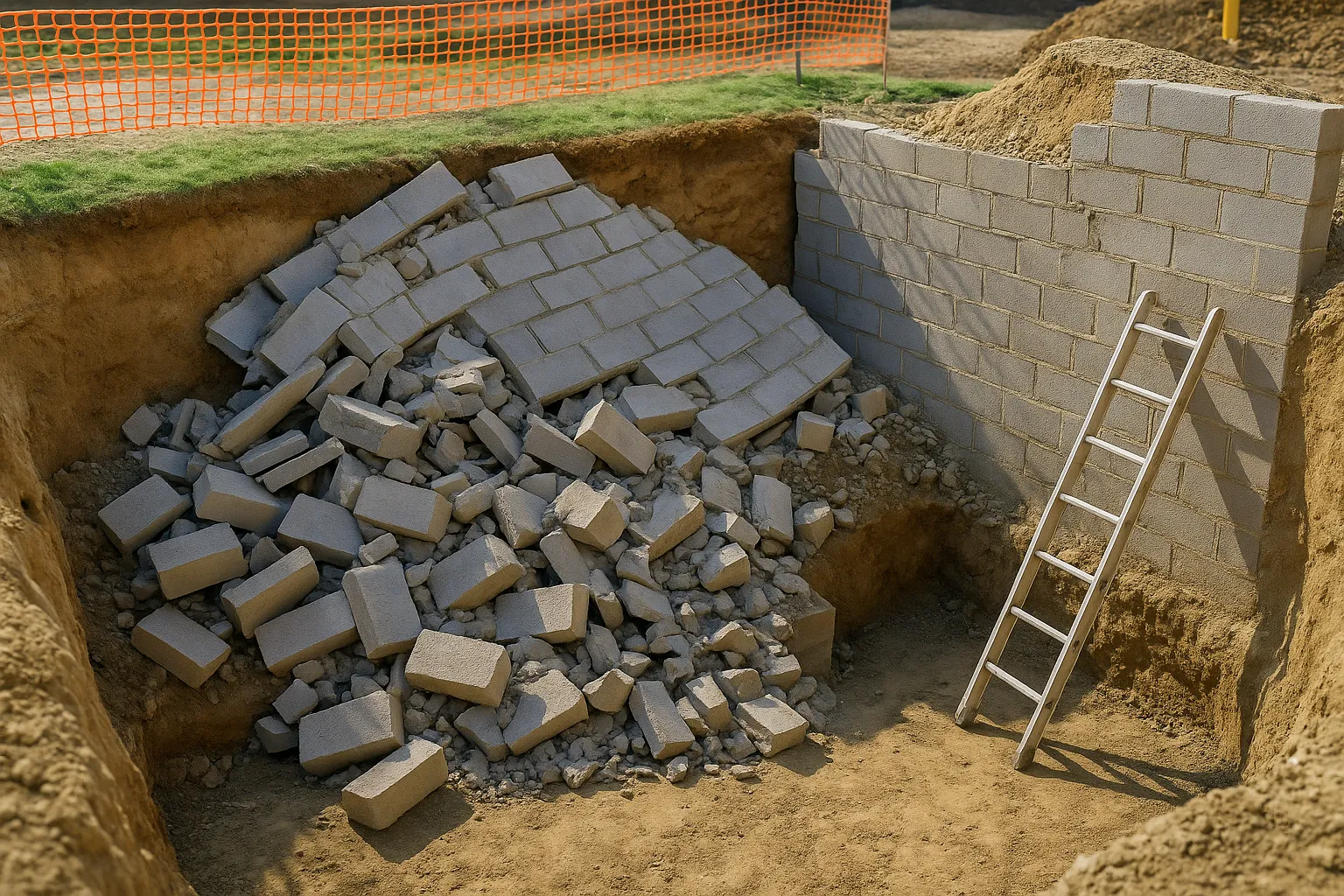
Details presented to the court indicated that the wall in question had been back-filled prematurely, prior to the mortar setting properly. The collapse occurred on the morning of 19 August 2022, while Mr Grant was performing his duties in proximity to the wall. As a result of the incident, he was crushed against the excavation’s concrete floor.
The scene of the incident was located on Old Coast Guard’s Road, where Mr Grant and two colleagues were engaged in ongoing work at a lower depth of the excavation. The wall at the northern end of the site gave way unexpectedly at approximately 8.30 am. Emergency services arrived at the scene; however, a lack of an emergency rescue protocol complicated their response. Efforts to retrieve Mr Grant from the deep excavation were hindered by an unstable ladder that had been employed for access, necessitating a rescue operation that involved the fire and rescue service to hoist him out before he was airlifted to medical treatment.
A subsequent investigation conducted by the Health and Safety Executive (HSE) uncovered that Matrod Frampton Limited had not effectively assessed potential risks related to temporary work arrangements at the construction site. Crucially, there was an absence of any design for temporary works associated with the blockwork wall and other temporary structures within the site. Despite previous warnings highlighted in a safety report issued just eight days before the incident, the company neglected to appoint a temporary works coordinator or a supervisor to oversee this critical aspect of site safety.
Temporary works within construction can encompass a variety of structures, including but not limited to, excavations, trenches, scaffolding, shoring, and edge protection. The premature back-filling of the wall, without a confirmed procedure in place, directly contributed to the incident and Mr Grant’s subsequent injuries.
Matrod Frampton Limited, based in Riverside Park, Wimborne, Dorset, was found in violation of Regulations 13(1) and 19(1) under the Construction (Design and Management) Regulations 2015. In addition to the substantial fine, the court ordered the company to pay £8,242 in costs and a victim surcharge of £2,000 on the same date.
Following the court proceedings, HSE inspector Alexander Ashen remarked, “The correct design and execution of temporary works is an essential element of risk prevention in construction. This incident illustrates what can happen when temporary works are not properly organised. Matrod Frampton Limited is an established construction company, and a temporary works procedure should have been implemented as a matter of course. The fact that the company’s own health and safety consultants raised this issue eight days before the incident makes this wholly avoidable event all the more tragic. HSE will not hesitate to take action against companies that fail to properly plan and manage serious risks on construction sites.”
The case serves as a stark reminder of the importance of adhering to safety protocols and regulations in the construction industry. The HSE provides extensive guidance regarding temporary works, emphasising the need for robust planning and assessment to mitigate risks associated with construction activities.
This prosecution was spearheaded by HSE enforcement attorneys Iain Jordan and Rowena Goodwin, with paralegal officer Hannah Snelling assisting in the legal process.
The HSE operates as the primary regulator for workplace health and safety in the UK, dedicated to safeguarding workers and the public alike. Their ongoing efforts focus on promoting safe work environments, and they provide extensive resources for both workers and employers to better understand their responsibilities under health and safety legislation.
For further information about the legislation relevant to construction safety, and guidance on temporary works, the HSE has numerous resources available on its website. It is imperative for all construction companies to recognise and address the risks associated with temporary structures, ensuring both worker safety and compliance with legal requirements.
In light of this incident and the resulting court action, it is clear that the construction industry must remain vigilant in its commitment to safety standards, not only to protect workers but to prevent further tragedies from occurring on site.
Our Thoughts
The incident involving Matrod Frampton Limited highlights several key failures in health and safety practices related to temporary works under UK legislation. The lack of a temporary works design and the failure to appoint a temporary works coordinator or supervisor, which are critical under the Construction (Design and Management) Regulations 2015 (CDM Regulations), directly contributed to the collapse of the wall.
To prevent similar incidents, companies should ensure that all temporary works are designed, planned, and managed in compliance with HSE guidance. This includes conducting thorough risk assessments and adhering to a strict timeline for backfilling activities, ensuring that mortar has adequately set before any excavation work occurs.
Moreover, having an emergency rescue plan in place is essential to facilitate quicker response times in case of accidents. The use of stable and appropriate equipment for accessing deep excavations must also be a priority to prevent delays in rescues.
Ultimately, consistent adherence to health and safety guidelines, proper training of staff, and proactive risk management are crucial in preventing such incidents in the future.