













Story Highlight
– Councillors condemn council’s U-turn on glyphosate use.
– Demand pause on weed-killing program for consultation.
– Complaints about weeds prompted the new treatment initiative.
– Cornwall Wildlife Trust calls for delayed glyphosate plans.
– Public demonstration planned against glyphosate reintroduction.
Full Story
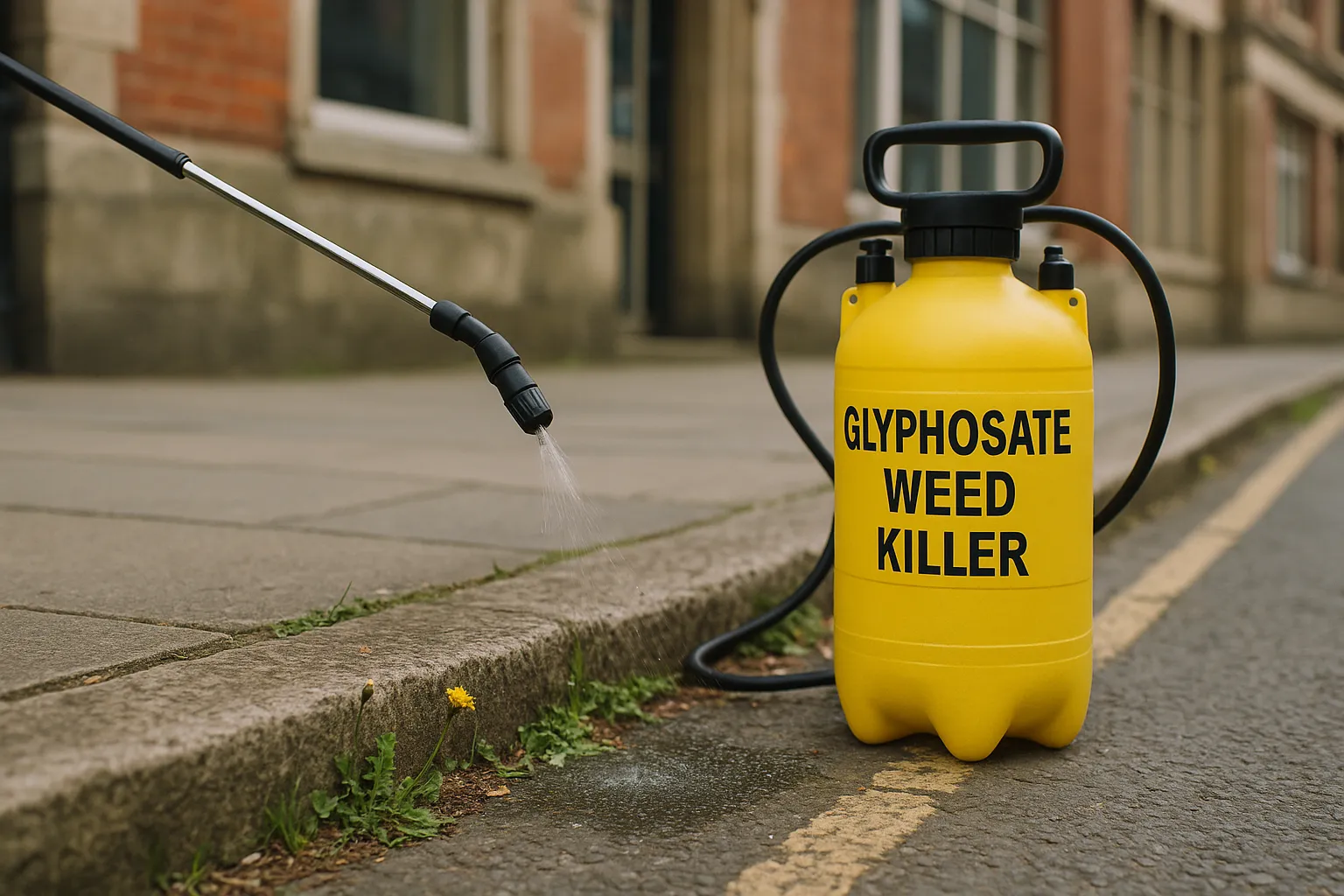
Several councillors in Cornwall have expressed strong objections to the recent decision by the local authority to reinstate the use of glyphosate for weed control. This move has been labelled by critics as “a complete U-turn” from a commitment made a decade ago to eliminate the herbicide’s application within the region.
Local representatives are now calling for the council to halt the impending chemical weed treatment programme until after a substantial public consultation process has taken place.
In a letter dispatched at the end of March, Cornwall Council informed town and parish councils that its Liberal Democrat and Independent cabinet had mandated the beginning of a new weed management initiative aimed at enhancing public spaces across Cornwall. The letter outlined that this policy change was prompted by evidence indicating a decline in standards since the cessation of routine weed management in 2013. This decline has led to an uptick in complaints regarding narrow footpaths, deteriorating surfaces, and a perceived decrease in community pride.
The correspondence further indicated that the standard practice would involve the use of a diluted glyphosate mix in all urban areas maintained by the council. However, it also provided an opt-out option for any town or parish council wishing to eschew chemical treatment, contingent on their ability to meet certain standards and ensure asset integrity.
The deadline for councils to inform Cornwall Council of their decision to opt-out was set for Monday, April 20, a timeline many argue is insufficient for proper consideration. Numerous councils have raised concerns regarding the haste of the decision-making process.
The Redruth Town Council has taken a proactive stance by calling on all town and parish councils in Cornwall to support a petition opposing the unitary authority’s plans to reintroduce glyphosate use across the county’s parishes.
In response to the controversial plans, the Cornwall Wildlife Trust—a local charity focused on environmental protection—formally requested that Cornwall Council postpone the implementation of the weed treatment programme. They advocated for an extension of the opt-out deadline while seeking a more suitable timetable that allows for thorough local consultation and due diligence.
Councillor James Mustoe, who represents Mevagissey and St Austell Bay for the Conservative Party, expressed his concern regarding the council’s shift in policy. Mustoe was part of a successful initiative in 2016 that aimed to make Cornwall a “bee-friendly local authority” under the guidance of the late Liberal Democrat councillor Edwina Hannford. The commitment made during that campaign included a pledge to stop using neonicotinoids and glyphosate on all public access lands managed by the council, except in specific cases concerning invasive species or threats to asset integrity.
Reflecting on the new proposal, Cllr Mustoe stated, “What the council is now proposing is an absolute reversal of everything it said it was going to do. I don’t have a problem with the ambition to tidy public spaces, but there are methods to achieve this without introducing harmful chemicals into our environment. It is a complete U-turn, and I believe it is a decision rushed without fully considering the implications.”
A public demonstration against the decision is scheduled for outside County Hall in Truro ahead of a full council meeting on April 21, which will include discussions on a motion contesting the cabinet’s recent resolution.
This motion, introduced by Green Party councillors Drew Creek and Karen La Borde, seeks to secure recognition from the cabinet that the reintroduction of glyphosate in weed management represents a significant shift in policy. It highlights the ecological, public health, and democratic ramifications this decision poses for communities throughout Cornwall.
Broad support for the motion has been garnered from Conservative, Green, Mebyon Kernow, and Cornish Independent Non-aligned councillors. The motion advocates for a pause on the planned chemical treatments until a meaningful public consultation process has concluded. Additionally, it criticises the three-week opt-out period allotted to town and parish councils as “wholly inadequate,” particularly given that it included the Easter holiday, and calls for an extension to 30 days after the results of the public consultation are made available.
Furthermore, an accompanying report emphasizes the global concern surrounding glyphosate, citing it as a significant risk to both human health and the environment, particularly in light of recent studies indicating a definitive link between glyphosate exposure and the development of non-Hodgkin lymphoma. Legal action against the manufacturers Bayer and Monsanto has resulted in numerous lawsuits claiming that their glyphosate products are carcinogenic, with substantial settlements awarded in the US.
The report also noted that glyphosate has been banned in several countries, including France, Germany, and Italy, as well as in various regions across the United States and Canada. In the UK, the government has granted a temporary licence for glyphosate until December 2026, pending ongoing research by the Health and Safety Executive.
Councillors have highlighted that the decision to reintroduce glyphosate undermines Cornwall Council’s long-standing environmental commitments, which have taken shape over more than ten years. Many towns, such as Wadebridge, have already taken measures to become glyphosate-free, with Newquay, Bude, and Perranporth following suit.
In response to the growing number of complaints regarding weeds, Cornwall Council stated that it has received nearly 2,000 grievances over the last three years concerning weed management in pavements and public highways. The council reiterated its commitment to enhance biodiversity, improve community spaces, and ensure safety. As part of this initiative, the council has allocated £5 million for the next three years to improve kerbsides and verges while implementing targeted weed management on surfaces such as pavements. They assured the public that methods used would comply with best practices from other UK areas, stating that this approach is deemed the most effective for addressing root issues in hard surfaces.
Our Thoughts
Cornwall Council’s recent decision to reintroduce glyphosate use for weed management has raised significant concerns regarding public health and environmental safety, reflecting a potential breach of the Health and Safety at Work Act 1974, which mandates the protection of public health in the workplace and public areas.
To avoid this situation, the council could have implemented a more comprehensive consultation process, ensuring all stakeholders had adequate time to assess the implications of glyphosate use. An extended consultation period could align with Regulation 13 of the Management of Health and Safety at Work Regulations 1999, emphasizing the need for risk assessment prior to introducing harmful substances.
Key safety lessons include the importance of community engagement and awareness of alternatives to chemical weed control, which can help mitigate public health risks. The council’s failure to consider alternative methods undermines its previous commitment to ecological safety, suggesting a need for stricter adherence to environmental safety regulations under the Environmental Protection Act 1990.
In summary, a more transparent, informed, and participatory approach could have prevented backlash and ensured alignment with existing health and safety regulations, ultimately protecting both public health and the environment.