















Story Highlight
– Red warning for extreme heat set in Wales.
– Temperatures could reach near 40C this week.
– Some schools announced early closures for safety.
– Welsh Government provides heat safety guidelines to schools.
– Local councils assessing conditions for potential school measures.
Full Story
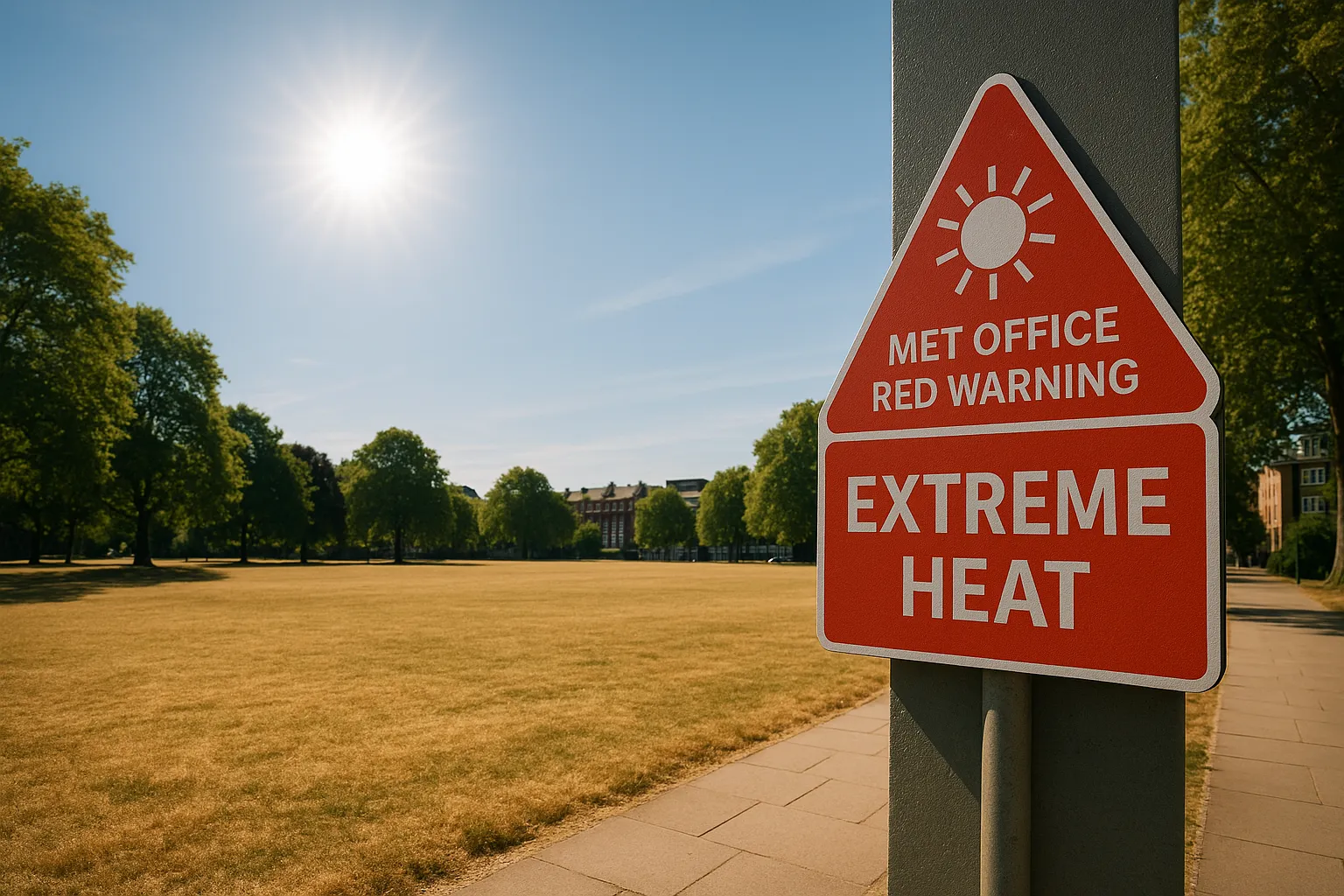
A red warning for extreme heat has been issued by the Met Office for Wales, set to take effect on Wednesday. As scorching temperatures approach 30 degrees Celsius, predictions indicate that they could surge to nearly 40 degrees Celsius in the following days. Specifically, Hawarden in Flintshire is expected to experience the highest temperature in North Wales, potentially reaching 38 degrees Celsius on Thursday.
In conjunction with the red warning, an amber heat alert is applicable across the whole of Wales. There are concerns that the extreme heat will also affect North East Wales, leading to a potential expansion of the red warning in that region.
In response to the impending heatwave, the Welsh Government has reached out to every council in the country, providing guidance on managing the situation effectively. While each local authority has the autonomy to implement its own strategies, overarching recommendations have been issued to ensure schools remain open and safe for students during the heat.
Bridgend was the first area to announce school closures due to the extreme weather, with Corneli Primary and Afon-y-Felin Primary planning to end their school days at 1pm on Wednesday and Thursday. This decision comes as Bridgend anticipates mid-30-degree temperatures, with several regions in North Wales likely to experience even warmer conditions.
Further school closures have been confirmed in Swansea, Neath Port Talbot, and Cardiff. North Wales Live has sought information from eight local authorities in North and Mid Wales to ascertain their plans to safeguard students during this heatwave.
Schools are implementing various mitigation strategies, such as cancelling sports days or easing uniform regulations; however, some institutions have opted to close entirely to protect the health of staff and pupils. The Welsh Government reiterated its guidance in a letter to education directors across all Welsh councils, which states: “As you will be aware, we are receiving warnings of extremely hot weather for the rest of this week. We know that children can be especially vulnerable to extreme heat. We would therefore be grateful for your assistance in highlighting this to education and childcare providers to ensure they take the necessary steps to keep children and young people safe, indoors and outdoors.”
The government’s advice includes recommendations for schools and childcare centres to minimise vigorous physical activity while prioritising shade, ventilation, and hydration. Students are encouraged to wear lightweight, light-coloured clothing and to use hats and sunscreen when outdoors.
Schools are advised to be vigilant regarding the signs of heat exhaustion and heat stroke, following guidelines from the NHS on appropriate actions to take should symptoms appear. It is emphasised that heat stroke must always be treated as a medical emergency. Additionally, authorities are reminded to stay updated on Met Office warnings and air quality forecasts.
Responses from local authorities reveal varying approaches. A spokesperson from Cyngor Gwynedd stated, “Any decision to close a specific school would be made by the headteacher and governing body. With warnings of hot weather issued by the Met Office for parts of Gwynedd this week, the Education Department has shared guidance and useful resources with all head teachers, as received from the Welsh Government.”
Claire Homard, Chief Officer for Education and Youth in Flintshire, confirmed, “We have shared the latest Welsh Government and Health and Safety Executive guidance on managing education settings during extreme weather with all schools in Flintshire. Decisions on how best to implement this guidance are made by individual headteachers and governing bodies, who are responsible for managing their own settings and ensuring appropriate measures are in place during the hot weather.”
In Denbighshire, authorities reported that there are currently no widespread plans for school closures, with institutions remaining operational and implementing necessary measures for staff and student wellbeing. The council has distributed up-to-date national guidance on safely managing hot weather.
Anglesey Council has indicated that there are no plans for county-wide school closures either. However, individual headteachers will make operational decisions based on unique local conditions. Locally, several schools are encouraged to promote hydration, utilise shaded areas, and limit strenuous activities, while also considering flexibility regarding uniforms.
Powys County Council announced that there are no immediate plans to close schools, although institutions have been advised to follow guidance prioritising the health and safety of learners during this heatwave. Measures suggested include reduced outdoor activities, increased ventilation, and heightened focus on hydration.
Wrexham Council also emphasized the importance of adhering to Welsh Government guidelines, allowing headteachers to make decisions tailored to their particular schools. Approaches may vary, with some schools possibly relaxing uniform requirements and frequently assessing the suitability of facilities in the heat.
As the situation continues to evolve, Ceredigion council has stated that schools will stay open as long as it is safe and feasible. Should changes such as partial or total school closures be considered, they would be based on detailed risk assessments, promptly communicated to relevant stakeholders.
Collectively, councils are committed to ensuring the safety and wellbeing of their students and staff during this spell of extreme heat, actively implementing advice from the Welsh Government, Public Health Wales, and other health authorities. The focus remains on maintaining an environment conducive to learning while prioritising the health and safety of all involved.
Our Thoughts
The recent Met Office red warning for extreme temperatures in Wales highlights significant concerns regarding health and safety in educational settings. To mitigate risks, several measures should have been implemented proactively. Schools should have conducted thorough risk assessments in advance of the heatwave, as encouraged by the Health and Safety at Work Act 1974 and related guidance, ensuring adequate safety provisions and contingency plans were in place before the extreme weather forecast.
Key safety lessons include the necessity for robust heat management protocols in schools, emphasizing hydration, limiting outdoor activities, and enhancing indoor ventilation and shading—all outlined in the UK government’s guidance on managing risks associated with high temperatures. Some institutions focused on adapting uniform policies, which could be standardized across all schools during extreme weather events to minimize risks.
Relevant regulations potentially breached include the Management of Health and Safety at Work Regulations 1999, which mandates risk assessments, and the Reporting of Injuries, Diseases and Dangerous Occurrences Regulations (RIDDOR) concerning reporting incidents of heat-related illnesses if they occur. To prevent future occurrences, a unified response plan across all educational settings, with emphasis on preemptive action and rapid communication, would enhance safety during extreme temperatures.