













Story Highlight
– Farmer warns runners about dangers on private land.
– Runners trespassing on farmland during calving season.
– Strava states users must obey property laws.
– Incidents of abuse reported by farmers against trespassers.
– 26 deaths linked to animal incidents from 2020-2025.
Full Story
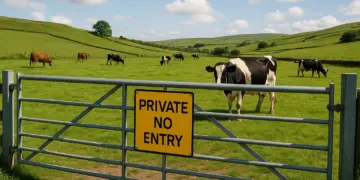
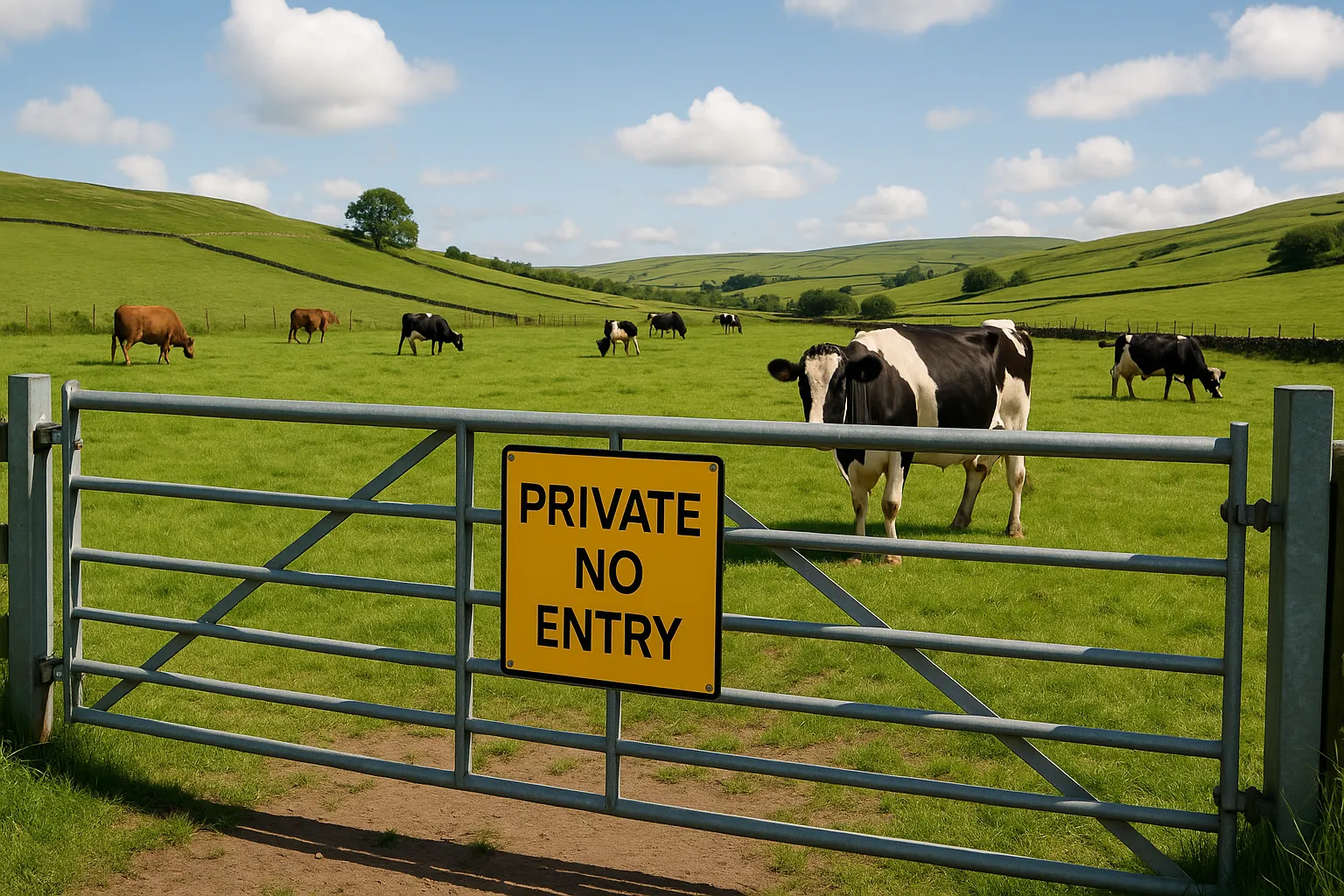
A livestock farmer from Derbyshire has issued a stark warning regarding the dangers posed to both runners and cattle due to instances of trespassing on agricultural land. Nicola Naylor, who operates Blackshaw Farm near Glossop, highlighted the risks as runners frequently ignore property boundaries while jogging through her farm, where cows are currently calving and thus particularly protective.
Naylor expressed her concerns over the unpredictable behaviour of cows in the presence of strangers, particularly those engaging in sudden movements as they run. She stated, “It’s very, very difficult to expect cows to behave in a reasonable and predictable way around people who are behaving in an unpredictable way.” The conflict between agricultural activities and recreational pursuits has become pronounced, as it poses a safety risk to both parties involved.
Despite having access to vast public areas surrounding her property, Naylor noted that many runners chose to cut through her farm instead. “They’ve got thousands and thousands of acres to run on; it’s just about their preference to find where they’ve set a personal best and want to beat it,” she commented, underlining the issue of trespass in an area where boundaries are clearly marked.
Michael White, who represents the Association of Running Clubs, also weighed in on the issue, advising runners to adhere to designated pathways and seek permission from landowners before venturing through private fields, particularly those containing livestock. He stressed, “If the field contains cows with calves, the farmer should move the cows or refuse permission to use the field.”
The issue of runner safety has been further compounded by incidents of aggressive behaviour from some trespassers. Naylor recounted several alarming encounters where she and her husband, David, faced hostility when attempting to enforce property boundaries. “We’ve both been assaulted. I’ve had my car keys stolen out of my vehicle. The stories go on and on and on,” she said, reflecting on the challenges posed by persistent offenders. She indicated that the area had previously been issued with a public nuisance order, similar to an anti-social behaviour order as applied in urban situations.
The risks involved for runners and farmers alike are glaring. The Health and Safety Executive (HSE) reported that from 2020 to 2025, incidents involving animals resulted in 26 fatalities across Great Britain, with a significant proportion likely involving cattle. “In those statistics, half of those people that are killed every year or seriously injured are farmers—professionals,” Naylor noted, emphasising the grave nature of the situation.
Research indicates that around 24% of livestock producers experience injuries caused by their animals annually, as per findings shared by the HSE. Naylor commented on the potential confusion generated by runners’ attire and behaviour, describing how cows may react unpredictably to brightly coloured clothing or rapid movements. “When a stranger comes through, not only are they a stranger, they’re usually doing strange things. They’re moving at a different pace, they’re dressed in fluorescent colours, they’ve got a bike with them—cows can’t process that,” she explained.
Naylor has observed that many of the trespassers use smartwatches and running apps to track their runs, leading to a greater influx of runners on her property. “We’ll have one do it, set a time, share it and then more of them come, so I think there needs to be more responsibility from running apps because some of their customers are going to get hurt,” she stated, pressing for enhanced accountability from technology platforms like Strava and others that facilitate running routes.
Routes through her farm have been uploaded to Strava, yet these paths do not officially represent public footpaths, as they remain behind locked gates and appropriate signage. A spokesperson for Strava reaffirmed that users are expected to uphold local laws and should never trespass on private property. They advised landowners to coordinate with local law enforcement to mitigate unauthorised access.
In an effort to gain more insight and expert commentary, BBC News reached out to other running app operators including MapMyRun, Runkeeper, Runna, and Komoot; however, responses regarding their respective policies on trespassing were not publicly available by press time.
This discussion highlights the intersection of recreational running and agriculture, challenging both parties to navigate increasingly complex issues relating to access and safety. In the wake of heightened tensions over land use, it is clear that the responsibility lies not only with runners to respect property boundaries but also with app developers to promote safe and lawful practices among their user base.
As this issue continues to evolve, the importance of communication between landowners and recreational users becomes paramount. Highlighting the need for respect and understanding can ensure a safer environment for all, balancing the rights of farmers with those of leisure seekers.
Our Thoughts
To prevent the incidents described in the article, several key actions could have been taken. Firstly, better communication and collaboration between running app operators like Strava and landowners could help discourage trespassing on private lands. The apps should ensure users are made aware of local laws regarding right of access and encourage compliance with rules pertaining to private property.
Secondly, more prominent signage at access points and along farm boundaries would clarify the dangers of entering private land, particularly in areas with livestock. This aligns with the Health and Safety at Work Act 1974, which requires employers to ensure the safety of visitors on their property.
Additionally, farmers should have the right to relocate livestock during calving seasons to reduce the risk to anyone trespassing.
The trespassing and subsequent confrontations could suggest breaches of the Agricultural Industry’s Code of Practice, which underscores the importance of reducing risk to farm workers and the public.
Overall, implementing clear access routes, enhancing public awareness, and improving coordination with technology suppliers would significantly reduce risks associated with such incidents.