








Story Highlight
– Iceland and Tesco warn of contaminated food products.
– Tesco recalls Mozzarella Pearls and Pesto Orzo Salad.
– Snacksters Chicken Fajita Wraps recalled for E. coli risk.
– Simple face wash withdrawn due to potential bacterial contamination.
– Consumers advised to stop using and dispose of products.
Full Story
Iceland and Tesco have issued urgent warnings this week regarding certain products that may pose substantial health risks to consumers. Items sold at both supermarket chains have been identified as potentially contaminated with E. coli, which is linked to food poisoning. In light of this discovery, recall notices have been distributed, urging customers to refrain from consuming the implicated products. A similar recall alert has also been issued for a popular skincare item suspected of harbouring harmful bacteria.
In a comprehensive response to these health concerns, shoppers have been advised to cease using the affected face wash immediately, according to reports from various news outlets.
**Recall Details from Tesco**
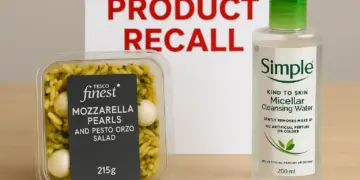
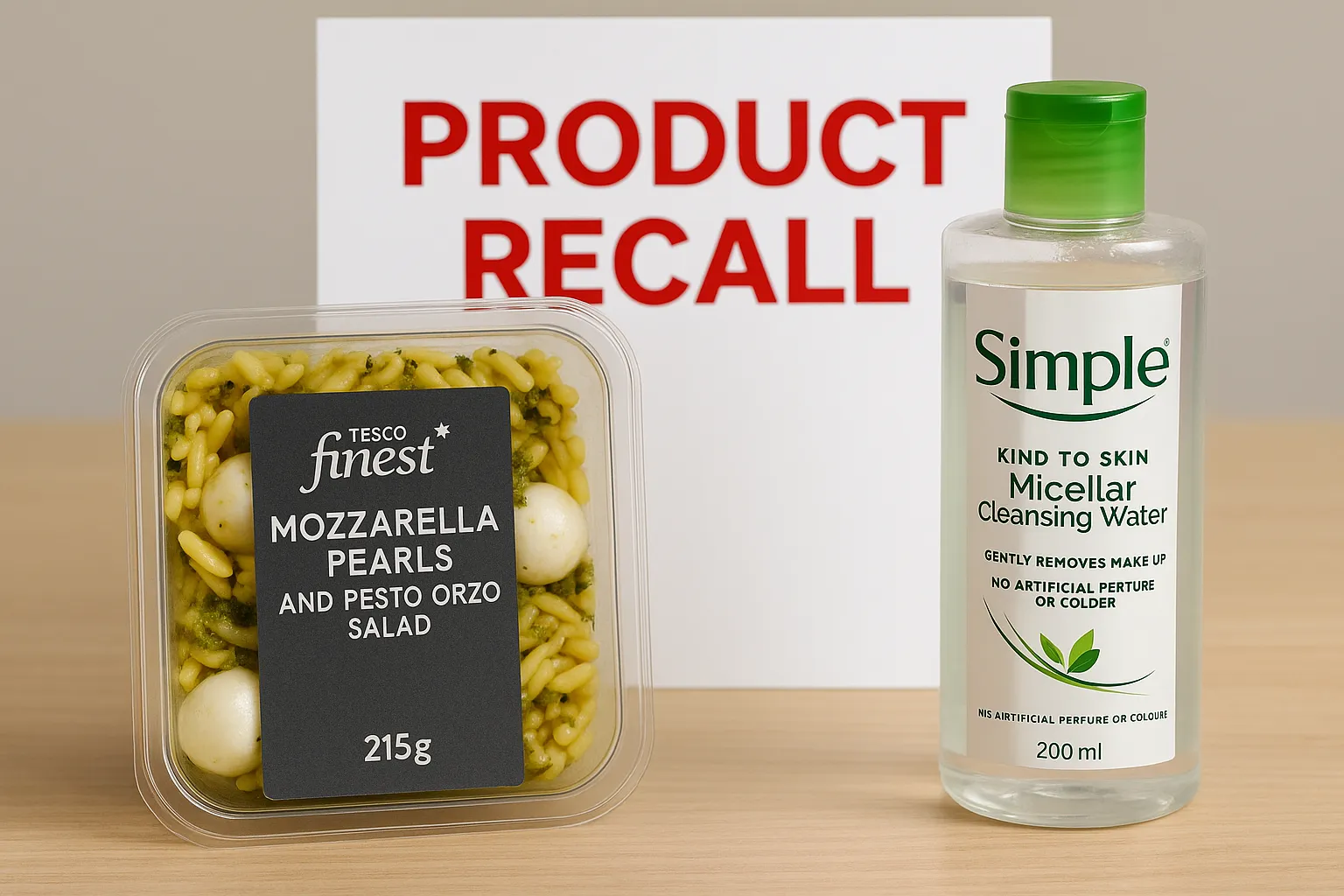
The supermarket giant Tesco has taken steps to recall its Tesco Finest Mozzarella Pearls and Pesto Orzo Salad. The affected 215g packets, which may still be in circulation despite their best-before dates having lapsed—August 25, 26, and 27, 2026—are part of the recall. The Food Standards Agency (FSA) has released an advisory warning against consuming these items. The statement highlights the “possible presence of Shiga toxin-producing E. coli (STEC)” in the products.
Individuals affected by STEC can experience serious health issues, including severe diarrhoea (which may be bloody), abdominal discomfort, nausea, and dehydration. In extreme cases, infection with this bacterium may lead to haemolytic uremic syndrome (HUS), a grave condition potentially resulting in kidney failure and, in severe circumstances, death. The FSA has cautioned anyone experiencing related symptoms to stay away from work, school, or childcare facilities for at least 48 hours after symptoms have abated to prevent further spread.
A spokesperson from Tesco stated: “We’re recalling three date codes of Tesco Finest Mozzarella Pearls and Pesto Orzo Salad 215g. This is due to the possible presence of Shiga toxin-producing E. coli (STEC), which can cause illness if eaten. No other products sold at Tesco are affected by this recall.”
**Concerns Over Chicken Wraps**
In a related development, Summit Foods has recalled several chicken wrap products from their Snacksters line, including the Chicken Fajita Wrap and Hoi Sin Wrap among others, due to the same potential contamination with STEC. This recall affects all use-by dates up to and including September 5, 2026. The FSA has also alerted consumers to dispose of these wraps and avoid consuming them.
Those who have purchased any of the affected products are encouraged to contact Summit Foods to arrange a refund, providing proof of purchase by emailing sales@summitfoods.co.uk with details of when and where the items were bought. Iceland has echoed this advice, particularly for the Snacksters Chicken Fajita Wrap, reminding consumers: “If you have purchased, please dispose of immediately and DO NOT CONSUME.”
**Skin Care Product Recall**
Meanwhile, well-known skincare brand Simple has initiated a recall of its Kind to Skin Micellar Cleansing Water due to potential microbiological contamination that could lead to eye inflammation. Consumers in possession of this product, available in 200ml, 400ml, and 730ml sizes, have been instructed to halt use immediately as affected products have been withdrawn from retail shelves nationwide.
Initially, the recall was issued for just one bottle size, but this notice has now expanded to encompass all listed variants. The incident affects both the United Kingdom and the Republic of Ireland. A spokesperson from Simple remarked: “We are recalling these products because the safety of the people who buy and use our products is our top priority. Other Simple products are not affected by this issue. We understand that product recalls can be concerning, and we are sorry for any concern or inconvenience this may have caused.”
Batch codes can be found on the underside of the bottles, assisting customers in identifying whether they possess one of the affected products. For further assistance or to obtain a refund, consumers can reach out to Simple’s Consumer Careline either via email at ukicare@unilever.com or by telephone at 0800 146 252 (UK) and 1800 604 060 (ROI).
**Public Health Implications**
The series of recalls serve as a pertinent reminder of the importance of food safety and consumer vigilance regarding health risks associated with contaminated products. It underscores a broader issue of potential bacterial contamination in both food and cosmetic items, elevating the need for rigorous quality assurance measures across the industry.
Consumers are encouraged to stay informed about health alerts and recalls, not only to safeguard their own well-being but also to protect others by following established guidelines provided by health authorities. As products continue to be tested and monitored, more updates may follow to ensure public health remains a priority.
Our Thoughts
The recent product recalls by Iceland and Tesco due to E. coli contamination and microbiological risks highlight significant lapses in food safety and product quality control. Key safety lessons include the need for rigorous monitoring of food production processes and strict adherence to hygiene standards as outlined in the Food Safety Act 1990 and the Hygiene of Foodstuffs Regulations 2006.
Preventative measures could involve more thorough screening of suppliers, enhanced testing protocols, and improved traceability systems to quickly identify and address potential contamination risks before products reach consumers. Additionally, compliance with the General Food Law (Regulation (EC) No 178/2002) mandates that food businesses ensure their products are safe for consumption.
For the skincare product, the failure to maintain necessary microbiological standards contravenes the Cosmetic Products Regulation (EC) No 1223/2009, which requires safety assessments for cosmetics. Regular audits and better quality assurance practices could have mitigated this risk.
In summary, to prevent similar incidents, retailers must implement more stringent quality control measures, supplier audits, and adhere closely to existing food and cosmetic safety regulations.