














Story Highlight
– Demolition halted after asbestos discovered at Cannock site.
– Unlicensed company managed asbestos clear-up operations improperly.
– HSE investigation revealed poor planning and management practices.
– Three parties fined and sentenced for safety violations.
– Asbestos exposure poses serious health risks to workers.
Full Story
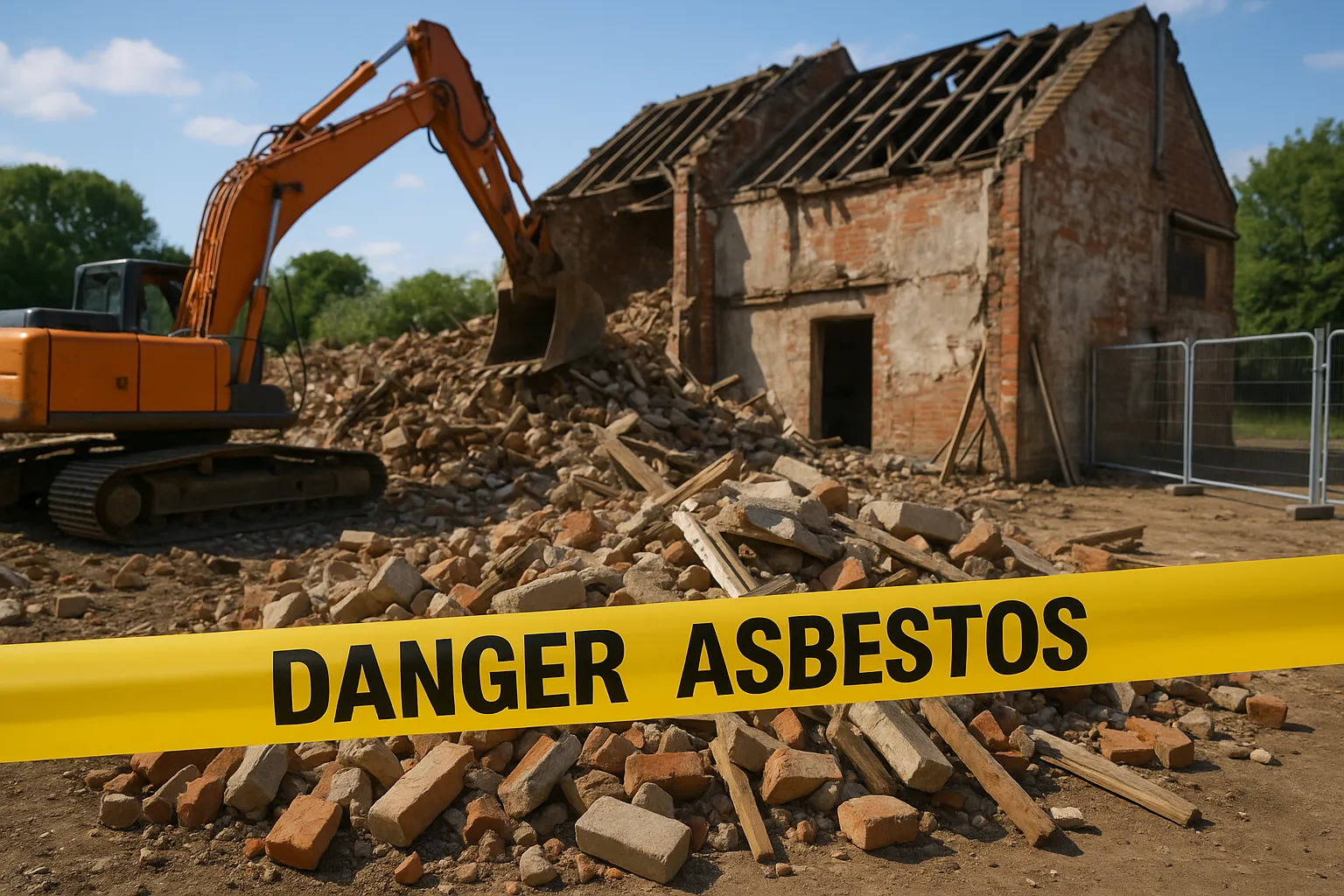
Demolition operations at a site in Cannock, Staffordshire, were abruptly stopped when asbestos was discovered, leading to significant legal repercussions for the companies involved. Two firms, along with an individual site manager, faced sentencing due to serious breaches of health and safety regulations, which jeopardised the wellbeing of both workers and the public.
An investigation by the Health and Safety Executive (HSE) uncovered the illegal handling of asbestos during the demolition process at Greenheath Road. A visit on 7 September 2023, prompted by concerns regarding safety practices on-site, revealed that work had ceased following the discovery of asbestos materials. A thorough assessment conducted after the halt revealed that approximately 218 square metres of asbestos-containing materials had been present at the site.
The HSE’s inquiry determined that the Sohan Group Limited, which served as the client for the demolition project, had previously commissioned an asbestos management survey before the commencement of work. This assessment revealed the presence of asbestos within the building, information that was subsequently relayed to the demolition contractor Maize Metals Limited. However, despite this knowledge, Maize Metals proceeded with the demolition activities.
It emerged during the investigation that Sohan Group Limited failed to comply with the Construction (Design and Management) Regulations 2015, which mandate the appointment of a principal contractor for such projects. Although a proposal for the removal of the asbestos by a licensed contractor was obtained, the company inexplicably chose to engage Disa Properties Limited instead, represented by Ali Raza Baig. Notably, neither Disa Properties nor Mr Baig possessed the required licensing or competence to handle asbestos properly. Mr Baig’s failure to involve a licensed contractor meant that there were no adequate measures in place to contain the asbestos and prevent potential exposure.
The legal guidelines around asbestos management in construction stipulate that prior to any demolition or refurbishment that risks disturbing a building’s fabric — particularly if the structure was erected before the year 2000 — an asbestos survey must be conducted. Any materials identified must either remain undisturbed or be removed in controlled conditions by qualified, HSE-licensed professionals.
On 6 March 2026, the Birmingham Magistrates’ Court delivered sentences to the companies and Mr Baig for their roles in the operation. Sohan Group Limited was found guilty of violating Regulation 5(4) of the Construction (Design and Management) Regulations 2015, resulting in a fine of £74,900, alongside costs amounting to £3,658.14 and an additional statutory surcharge of £2,000.
Maize Metals Limited, also found in breach of the same legislation under Regulation 15(2), was fined £13,400 and required to pay £1,359.51 in costs with a statutory surcharge of £2,000. Meanwhile, Ali Raza Baig pleaded guilty to breaching Regulation 15(2) as per the Health and Safety at Work etc. Act 1974. He received a suspended prison sentence of 26 weeks, a curfew monitored electronically between 19:00 and 07:00 for three months, and was subjected to a five-year disqualification order under the Company Directors Disqualification Act 1986. Mr Baig was cautioned that violations of this order would be treated as a criminal offence, potentially leading to a maximum penalty of two years’ imprisonment. The court also ordered him to cover costs of £5,899 and a statutory surcharge of £154.
In light of these events, HSE Inspector Rob Gidman expressed grave concern regarding the safety implications of the situation, stating, “Asbestos is a Class 1 carcinogen which is known to kill around 20 tradespeople each week due to past exposure. By failing to ensure the demolition was properly planned and managed, considering the presence of asbestos on site, these companies and Mr Baig put workers and members of the public at risk of being exposed to a substance known to cause fatal lung disease.”
Gidman also urged those in the demolition and refurbishment sectors to acknowledge their responsibilities in managing asbestos risks, underscoring the importance of stringent adherence to safety guidelines.
The HSE has launched campaigns such as “Asbestos and You” to educate workers about the dangers of asbestos and to advocate for safe practices when dealing with such hazardous materials. A Quick Guide is available for those in the trades, detailing where asbestos may be found and what steps to take if encountered.
This prosecution demonstrates the HSE’s commitment to enforcing compliance and ensuring the safety of both workers and the public. It serves as a critical reminder of the imperative nature of safety regulations concerning asbestos, promoting the necessity for appropriate training and licensing in construction activities.
For further guidance on asbestos management, the HSE has published comprehensive resources and information on current regulations, which are accessible to all relevant parties in the construction industry.
Our Thoughts
The incident at the Cannock demolition site highlights several critical failures in health and safety management regarding asbestos handling. Key lessons include the importance of appointing a competent and licensed contractor for asbestos removal, as mandated by the Control of Asbestos Regulations 2012. The failure of Sohan Group Limited to appoint a principal contractor under the Construction (Design and Management) Regulations 2015 led to inadequate management of health risks. Proper planning and risk assessment should have been conducted prior to commencement, and contractors must adhere to survey findings regarding asbestos presence.
The breaches of Regulations 5(4) and 15(2) of the Construction (Design and Management) Regulations demonstrate a disregard for established safety protocols, putting workers and the public at risk. To prevent similar incidents, a robust enforcement of licensing requirements for asbestos work and more stringent oversight of demolition projects are necessary. Regular training and awareness campaigns focusing on asbestos safety for all stakeholders in the construction sector would reinforce the importance of compliance with health and safety legislation.