
















Story Highlight
– Government considers scrapping toxic fire-safety standards.
– Review prompted by European Chemicals Agency report.
– Ikea supports reducing chemical flame retardants in furniture.
– Irish regulations mimic outdated UK standards from 1980s.
– Industry groups urge adoption of safer EU furniture rules.
Full Story
The Irish government is currently evaluating the possibility of abolishing fire safety standards for domestic furniture that necessitate the use of toxic flame-retardant chemicals. This initiative was sparked by a recent report from the European Chemicals Agency that delves into the latest scientific findings on brominated flame retardants. The report raises serious concerns regarding various health risks, including carcinogenic effects, neurotoxicity, disruption of endocrine functions, and issues related to reproductive health. These compounds are known to accumulate in both human and wildlife tissues, posing long-term environmental challenges due to their persistence.
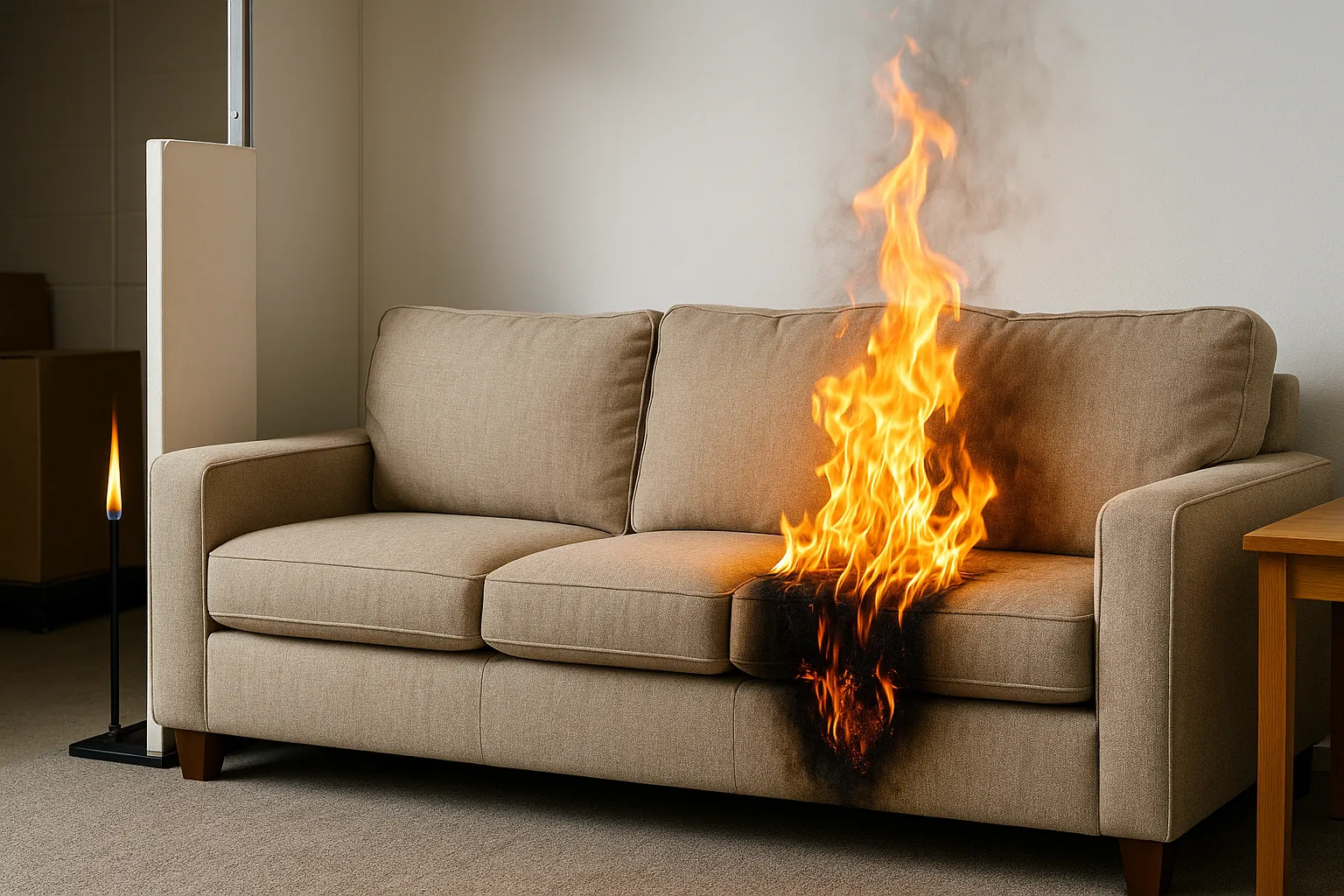
In a disturbing revelation, brominated flame retardants have also been found in the breast milk of women in Ireland. Such substances are typically mandated for compliance with the country’s fire safety regulations for upholstered furniture, including items such as sofas and armchairs, along with mattress fillings. The testing process for these products involves exposure to an open flame, leading to a reliance on these hazardous chemicals to meet safety requirements.
Ikea, the large Swedish furniture retailer, has stated its support for the Irish government’s review, expressing a desire to reduce reliance on chemical flame retardants. In a statement to The Journal, the company asserted that such chemicals pose growing health risks while questioning their effectiveness in enhancing fire safety. Ikea advocates for an updated regulatory framework that ensures a better balance between chemical safety and environmental considerations.
This review marks the second examination of these regulations in the past six years, reflecting ongoing health and environmental concerns. The existing regulations, established during the late 20th century, were created at a time when smoking was more prevalent and smoke detectors were not as common as they are today.
Ireland’s current stance concerning fire safety is somewhat anomalous within the EU context, as its regulations necessitate the use of chemicals that other European nations do not. The ongoing government review aims to assess whether these standards should be replaced with those in accordance with EU guidelines. The Department of Enterprise regards the EU framework as a viable alternative for regulating furniture safety, considering factors like product design and material usage based on the intended environment of the products.
According to the department, the thorough review process is at an advanced stage and a report is expected to be released shortly. Ireland’s fire safety regulations echo those previously employed by the UK. However, the UK has recently amended its regulations by excluding certain baby products, citing that fire safety benefits do not outweigh the potential risks from chemical exposure to young children.
In a further note, the UK government is also evaluating a comprehensive revision of its regulations concerning furniture fire safety, a move that could influence Ireland due to the interconnected nature of the furniture markets between the two nations. Terry Edge, a former civil servant in the UK and an activist against the use of flame retardants, highlighted that consumer awareness is significantly limited by the lack of transparency on fire safety labels, which do not disclose chemical information present in furniture products. Although shifting to EU standards would be a step forward for public health, Edge cautioned that millions of furniture items containing harmful chemicals would remain in circulation for years.
The Department of Enterprise acknowledged that alterations in UK regulations could impact the Irish furniture supply chain, leading to a potential divergence from EU standards. However, should Ireland decide to adopt EU regulations, furniture manufactured for the UK market would still be marketable within Ireland.
The European Furniture Industries Confederation, an advocacy group for the furniture industry, has encouraged the Irish government to align with EU norms to mitigate the ongoing use of hazardous flame retardants. The confederation pointed out that UK authorities have already acknowledged that the existing legislation offers no substantial advantages in terms of safety when compared to non-UK EU regulations, hinting at a need for legislative reform in Ireland.
Additionally, the 2016 admission by the UK government concerning the lack of comparative data justifying the efficacy of flame retardants points to an urgent need for a rethink. A viewpoint shared by the European furniture industry lobby states that in real-life fire scenarios, once the upholstery ignites, flame retardants fail to contribute meaningfully to safety as flames grow uncontrollably.
Scottish charity Fidra, which focuses on tackling chemical pollution, informed Irish officials that while flame retardants may not be a mandatory requirement in Ireland, they remain the most cost-effective way to comply with outdated regulations. Fidra presented evidence indicating that fire-related fatalities have been decreasing uniformly across various European nations that do not implement such stringent open flame testing for furniture. The charity also warned of the high levels of toxic chemicals found in children’s bedrooms and the multiple exposure routes, including indoor air and dust.
The presence of these substances complicates the safe recycling of furniture, contributing to the release of toxic smoke during fires, which can include dangerous compounds like carbon monoxide and hydrogen cyanide.
The Irish government has recognized the threats posed by the prevalent use of brominated flame retardants, having previously reviewed the furniture fire safety regulations in 2020 without implementing significant changes. Furthermore, a 2019 inquiry by a UK parliamentary committee flagged an increasing body of evidence that suggests several flame retardants can adversely affect human health and the environment.
Concurrently, the European brominated chemicals sector lobby, represented by Hume Brophy, has persistently engaged with Irish lawmakers regarding the importance of maintaining high fire safety levels in any proposed changes to furniture regulations. Requests for comments from BSEF, which advocates for the brominated chemicals industry, remain outstanding. Flame retardants continue to be prevalent not only in furniture but also across a range of electrical equipment, suggesting a wider issue surrounding chemical safety and consumer protection that necessitates attention.
Our Thoughts
The situation outlined in the article underscores significant breaches of UK health and safety legislation concerning the use of toxic flame retardants in furniture. Key preventative measures could have included adopting safer, non-toxic alternatives to meet fire safety standards, as well as stricter regulations on the use of harmful substances.
A crucial lesson from this incident is the need for a comprehensive review of existing fire safety regulations to align them with contemporary health research and environmental safety standards. The UK Furniture and Furnishings (Fire) (Safety) Regulations 1988 could be updated to eliminate the reliance on chemical flame retardants, which have been shown to pose serious health risks, including carcinogenicity and neurotoxicity.
Additionally, improving consumer awareness through transparent labeling of chemicals in furniture would empower consumers to make informed choices, contrasting with the current lack of clear information. Prevention of similar incidents could further be achieved by implementing a phased approach to transition to EU standards that focus on product design and material safety rather than chemical treatments.
Ultimately, the failure to act on known risks indicates a disregard for the Health and Safety at Work etc. Act 1974, emphasizing the importance of integrating health considerations into safety regulations to protect both public health and the environment.