














Choose an AI chat
Glasgow employers urged to strengthen workplace safety measures
UK Health and Safety Latest

Glasgow employers urged to strengthen workplace safety measures

by Tara Rowden
July 29, 2026
0

Employers in Glasgow face urgent calls to reassess workplace safety protocols, following a Health and Safety Executive report revealing that...

Read moreDetails
Milton recalls baby bottle cleaner after insect contamination

Milton recalls baby bottle cleaner after insect contamination

July 29, 2026
Warning issued over plush toy posing suffocation risk to infants

Warning issued over plush toy posing suffocation risk to infants

July 29, 2026
New targeted therapy shows promise against antibiotic-resistant gonorrhoea

New targeted therapy shows promise against antibiotic-resistant gonorrhoea

July 28, 2026
Engineer dies after being crushed while working on Boeing 787 at Heathrow

Engineer dies after being crushed while working on Boeing 787 at Heathrow

July 28, 2026

Archives

  • July 2026
  • June 2026
  • May 2026
  • April 2026
  • March 2026
  • February 2026
  • January 2026
  • December 2025
  • November 2025
  • October 2025
  • September 2025
  • July 2025
  • August 2009

Categories

  • Health and Safety Help
  • News
  • Policies
  • UK Health and Safety Latest
  • About
  • Advertise
  • Policies
    • Privacy Policy
    • Editorial Policy
    • Corrections & Complaints policy
  • Useful Documents
    • Understanding RIDDOR
    • 10 Workplace Safety Failures
    • A Complete Guide to Reporting Safety Incidents in the UK
    • Fire Risk Assessment: Meeting the Regulatory Reform (Fire Safety) Order
    • COSHH Basics: A Practical Guide to Control of Substances Hazardous to Health
    • Working at Height in the UK: The Essentials (WAH Regulations 2005)
    • Asbestos in the Workplace: Control of Asbestos Regulations 2012 (CAR) Essentials
    • Managing Contractors Under CDM 2015: Roles, Duties & Controls
    • DSE & Ergonomics: Healthy Workstations for Office & Hybrid Teams
    • Lock out Tag out LOTO
    • Workplace Transport Safety: Forklifts, Pedestrians & Traffic Management
    • Noise & Vibration at Work: Practical Controls (2005 Regulations)
    • Confined Spaces in the UK: Safe Entry under the Confined Spaces Regulations 1997
  • Contact
  • Agent
Tuesday, August 4, 2026
25 °c
London
25 ° Wed
22 ° Thu
21 ° Fri
  • Login
UK Safety News
  • Home
  • News
    • All
    • UK Health and Safety Latest
    Glasgow employers urged to strengthen workplace safety measures

    Glasgow employers urged to strengthen workplace safety measures

    Milton recalls baby bottle cleaner after insect contamination

    Milton recalls baby bottle cleaner after insect contamination

    Warning issued over plush toy posing suffocation risk to infants

    Warning issued over plush toy posing suffocation risk to infants

    New targeted therapy shows promise against antibiotic-resistant gonorrhoea

    New targeted therapy shows promise against antibiotic-resistant gonorrhoea

    Engineer dies after being crushed while working on Boeing 787 at Heathrow

    Engineer dies after being crushed while working on Boeing 787 at Heathrow

    Train drivers demand improved toilet facilities and breaks after regulatory failures

    Train drivers demand improved toilet facilities and breaks after regulatory failures

    Outbreak of cyclosporiasis reveals gaps in US food safety system

    Outbreak of cyclosporiasis reveals gaps in US food safety system

    Construction safety under scrutiny as fatalities rise in high-risk industry

    Construction safety under scrutiny as fatalities rise in high-risk industry

    Talcum powder safety concerns escalate amid legal battles for Johnson & Johnson

    Talcum powder safety concerns escalate amid legal battles for Johnson & Johnson

    Train drivers face strike over lack of toilet facilities

    Train drivers face strike over lack of toilet facilities

    Trending Tags

No Result
View All Result
UK Safety News
No Result
View All Result
Home News UK Health and Safety Latest

Gas hobs linked to health risks as households warned to ventilate kitchens

Jade Anderson by Jade Anderson
May 4, 2026
in UK Health and Safety Latest
Reading Time: 4 mins read
0
Gas hobs linked to health risks as households warned to ventilate kitchens

Story Highlight

– Gas hobs linked to reduced life expectancy, health risks.
– Indoor air pollution exceeds WHO guidelines with gas cooking.
– Nitrogen dioxide exposure linked to asthma and lung issues.
– Gas cooking impacts memory development, ADHD risk in children.
– Ventilation and electric appliances recommended for safer cooking.

Full Story

Households are being cautioned about the potential health risks associated with gas hobs, particularly during warmer months when ventilation may be inadequate. As the weather fluctuates following last weekend’s Bank Holiday, many families may find themselves weighing the decision to keep windows shut during days of intense heat and sunlight.

For numerous households relying on gas for their cooking needs, insufficient kitchen ventilation can elevate the risk of developing various health issues in the coming spring and summer months. Clean Air Hub UK, an initiative managed by the environmental charity Global Action Plan, highlights that using gas stoves releases harmful air pollutants, adversely affecting both public health and the environment.

The organisation emphasises that “gas cookers are a major source of indoor air pollution and the main source of nitrogen dioxide pollution in the home.” Alarmingly, it notes that gas appliances in an average kitchen can generate indoor nitrogen dioxide (NO2) levels that surpass not only the World Health Organisation’s air quality recommendations but also the limits set by the UK Health and Safety Executive and UK outdoor air pollution regulations.

Health implications linked to gas cooking are particularly concerning. There is a growing body of research that associates gas cooking with several respiratory issues, including asthma in both children and adults, as well as chronic pulmonary conditions. Furthermore, evidence suggests that exposure to pollutants from gas cooking links to dementia and cognitive decline in adults. The harmful emissions from gas hobs, which comprise carbon monoxide, carbon dioxide, and nitrogen dioxide, may linger within homes, creating a persistent health hazard. The potential for gas appliances to leak pollutants even when not in use is another serious concern, as they can emit methane—a powerful greenhouse gas—and benzene, a well-known carcinogen.

Exploring the direct impact of nitrogen dioxide, the primary pollutant originating from gas cooking, reveals a wide range of damaging effects on the respiratory system. These include the inflammation of airways, diminished lung functionality, and an increase in asthma episodes and symptoms such as coughing and wheezing, notably in children. Furthermore, studies indicate that pollutants from gas cooking may also adversely affect adults, particularly regarding the brain and respiratory systems.

Notably, research contends that the extent of gas cooking’s contribution to childhood asthma diagnoses is comparable to the effects of second-hand tobacco smoke. The association between nitrogen dioxide levels from gas appliances and developmental impairments in infants has also been noted, with studies linking these pollutants to hindered memory and verbal skills, as well as a greater propensity for ADHD symptoms among toddlers.

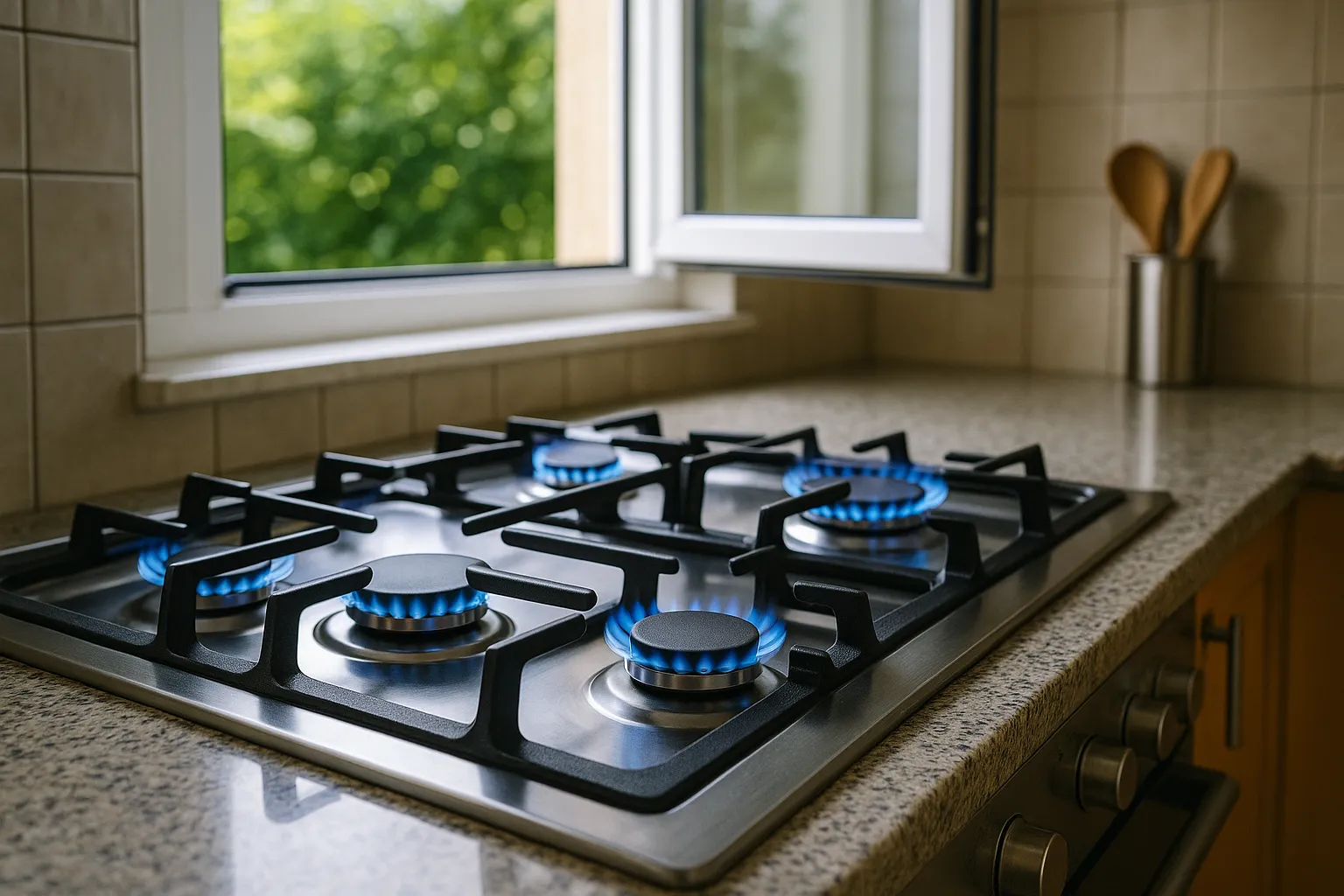
For those who continue to rely on gas cooking, there are recommended safety measures that can be adopted to mitigate the associated risks. Effective strategies include ensuring proper ventilation in kitchens when cooking. Experts suggest utilising range hoods that vent outside or maintaining mechanical ventilation systems. Additionally, opening windows while cooking can greatly improve air circulation.

The importance of regular maintenance cannot be overstated; households are advised to service their gas appliances at least once a year. Installing carbon monoxide detectors in the kitchen and adjoining areas is crucial for ensuring safety, especially since these devices can alert occupants to even low levels of this colourless, odourless gas that can be lethal.

It is further advised to maximise ventilation during and for at least ten minutes following the use of gas cooking appliances. Creating a through-draught by opening windows can help disperse harmful emissions effectively. If a gas appliance features a fan, it is vital to ensure that it is clean and properly maintained and that it vents outdoors to reduce indoor pollution levels.

To decrease exposure to harmful emissions generated by gas cooking, households may consider alternative methods of food preparation. Plug-in electric devices, including kettles, microwaves, rice cookers, or air fryers, may provide safer options that lessen the reliance on gas.

The implications of these findings underscore the urgent need for households to assess their cooking methods and take proactive measures to mitigate health risks associated with indoor air pollution. As more families opt for gas as their primary cooking fuel, it is essential to understand the potential consequences of these choices and to implement appropriate safety precautions. Doing so not only benefits individual households but also contributes to broader health and environmental goals aimed at reducing indoor air pollutants.

Our Thoughts

To avoid the health risks associated with gas hobs, several preventive measures could have been implemented. Proper kitchen ventilation must be prioritized, especially during cooking, by opening windows or using mechanical ventilation systems, in accordance with the Health and Safety at Work Act 1974, which mandates maintaining a safe environment. Additionally, regular servicing of gas appliances is essential to prevent pollutant leakage, in line with the Gas Safety (Installation and Use) Regulations 1998, which require gas appliances to be maintained in safe working order.

Key lessons include the importance of awareness regarding indoor air quality and the potential risks of gas cooking. Installation of carbon monoxide detectors is critical for early detection of harmful emissions, reflecting compliance with the Housing Act 2004 regarding the safety of residential properties.

To prevent similar incidents, public education campaigns should be strengthened to inform households about the dangers of gas hobs and the importance of ventilation. Encouraging the transition to electric cooking appliances could also contribute to long-term health benefits, aligning with environmental health standards. Compliance with air quality guidelines and regulations will further enhance household safety.


SummarizeShare35Share199SendSend
ADVERTISEMENT
Jade Anderson

Jade Anderson

Jade Anderson is a safety and compliance reporter specialising in UK regulatory affairs, HSE prosecutions, and workplace injury news. With experience covering health and safety law and enforcement, Jade brings in-depth analysis of court cases, fines, and lessons learned from workplace incidents across the UK.

Related Posts

Concerns raised over proposed rules limiting rooftop solar panel installations

Concerns raised over proposed rules limiting rooftop solar panel installations

by Ellie Cartwright
July 1, 2026
0

Proposed regulations that could significantly restrict rooftop solar panel installations are raising concerns among industry figures, particularly for residents of...

Asbestos concerns prompt sand toy recalls in France and UK

Asbestos concerns prompt sand toy recalls in France and UK

by Tara Rowden
March 5, 2026
0

Safety alerts in France and the UK have triggered the recall of sand-based toys amid concerning discoveries of asbestos contamination....

Useful Documents

  • Understanding RIDDOR
  • 10 Workplace Safety Failures
  • A Complete Guide to Reporting Safety Incidents in the UK
  • Understanding RIDDOR
  • Fire Risk Assessment: Meeting the Regulatory Reform (Fire Safety) Order
  • COSHH Basics: A Practical Guide to Control of Substances Hazardous to Health
  • Working at Height in the UK: The Essentials (WAH Regulations 2005)
  • Lock out Tag out LOTO

Recent Posts

  • Glasgow employers urged to strengthen workplace safety measures
  • Milton recalls baby bottle cleaner after insect contamination
  • Warning issued over plush toy posing suffocation risk to infants
  • New targeted therapy shows promise against antibiotic-resistant gonorrhoea
  • Engineer dies after being crushed while working on Boeing 787 at Heathrow

Recent Comments

  1. Piper Douglas on Worker dies due to inadequate machinery safety measures
  2. Natalie Coleman on New housing laws aim to tackle damp and mould crisis in England
  3. Simon Barrett on Honeymoon ruined by illness as newlywed suffers severe infection in Cape Verde
  4. Nolan Barrett on Work-related ill health in Great Britain remains a concern after pandemic peak
  5. Dylan Reeves on Sickness rates among Scottish police officers soar to troubling levels
UK Safety News

Copyright © 2026
UK Safety News

Navigate Site

  • About
  • Advertise
  • Policies
  • Useful Documents
  • Contact
  • Agent

Follow Us

Welcome Back!

Login to your account below

Forgotten Password?

Retrieve your password

Please enter your username or email address to reset your password.

Log In
No Result
View All Result
  • Home
  • News

Copyright © 2026
UK Safety News

This website uses cookies. By continuing to use this website you are giving consent to cookies being used. Visit our Privacy and Cookie Policy.