
















Story Highlight
– Cheboygan Lock and Dam faced neglect before crisis.
– Federal regulators issued multiple warnings over safety issues.
– Private owners failed to repair critical hydro plant equipment.
– Local officials claim limited authority over privately owned property.
– Community fears dam failure; evacuation preparations underway.
Full Story
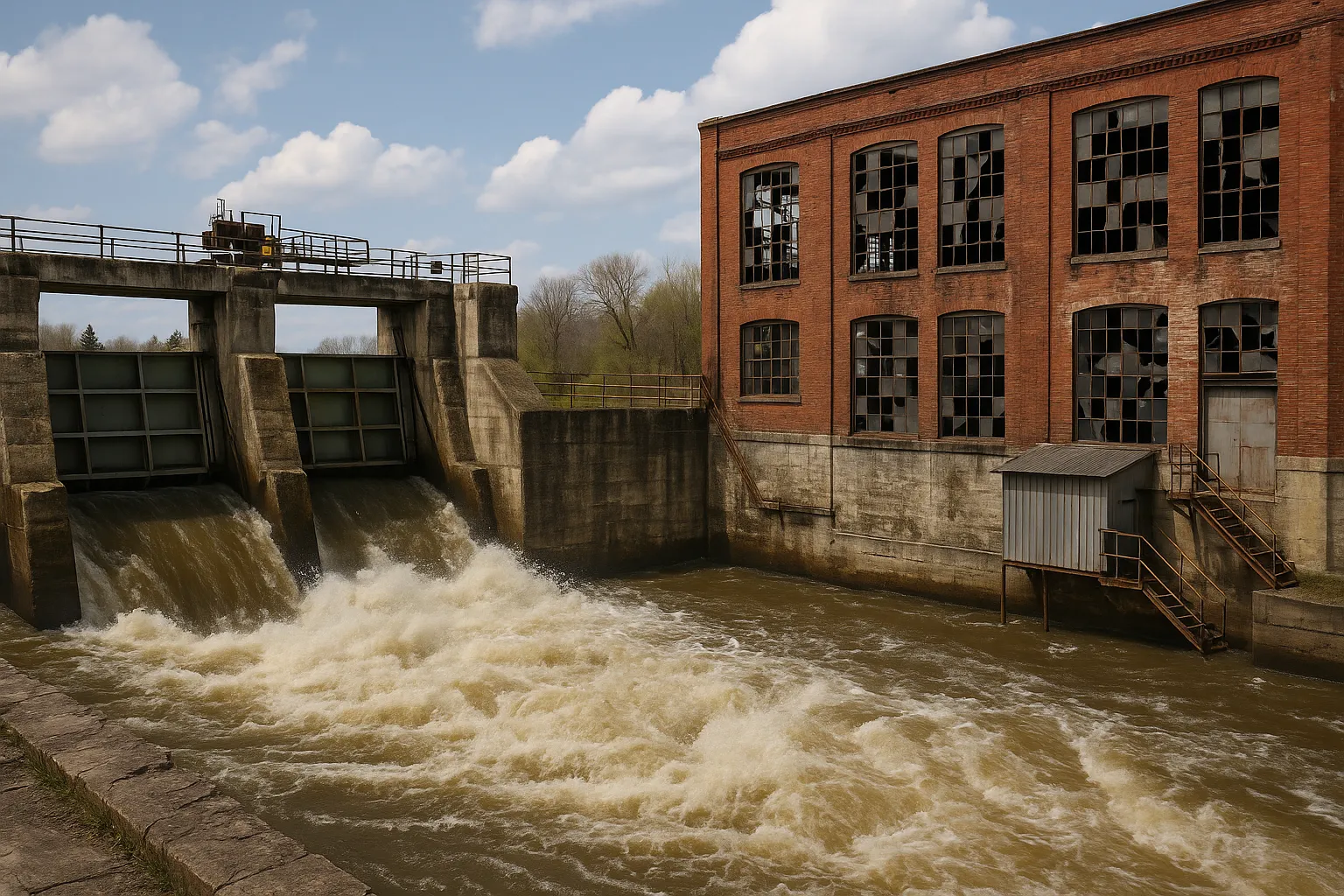
Local, state, and federal authorities had been conscious of the potential risks associated with the Cheboygan Lock and Dam for several years prior to the recent escalation of flooding that nearly led to its failure. Documentation indicates that despite these known hazards, officials did not enforce repairs on the privately managed hydroelectric facility linked to the dam, which is crucial for proper water flow management during flooding events. This hydro plant, once part of a Charmin toilet paper manufacturing site, has endured a protracted decline as it changed ownership multiple times.
At present, the property is controlled by Hom Paper XI, LLC, an entity overseen by former NFL player Thomas Homco. Attempts to contact him for comment were unsuccessful. Cheboygan County Sheriff Todd Ross remarked that state and local officials had taken proactive measures. “We didn’t wait until the last minute,” said Ross, emphasising the limitations of their authority over a privately owned asset.
Current estimates suggest that taxpayer funds are supporting urgent repair efforts, although a comprehensive total of public expenses was not available. Estimates from previous years imply that repairs to the hydro plant could exceed $1 million. Concerns about safety have been repeatedly voiced over the years, signalling significant issues within the structure.
Records reveal that the Federal Energy Regulatory Commission (FERC), the main regulatory body for hydropower dams, had been issuing warnings to various owners since as early as 2019. They identified critical issues such as the absence of inspection records and malfunctioning equipment vital for flood management. In addition, inspections revealed cracked concrete, damaged retaining walls, and malfunctioning gates necessary for controlling water levels.
In 2021, FERC warned the owners that various safety items were overdue for remediation, and the facility received numerous citations for violations over the following months. Concerns escalated dramatically when a fire resulted in the plant being shut down completely in September 2023, further heightening the urgency for repairs.
Richard Sangster, a commissioner for Cheboygan County and former mayor, expressed his frustration, citing “total neglect” regarding oversight by FERC and emphasising the dire potential consequences of a dam failure. He insisted that the ramifications would be catastrophic and should have warranted immediate action.
In response to the ongoing crisis, Celeste Miller, a spokesperson for FERC, refrained from delving into specific inquiries about the agency’s supervisory role but stated that their primary concern lies in coordinating a response to safeguard local communities and the environment.
This unfolding situation parallels the aftermath of a failure of similar privately owned dams in Midland, Michigan six years prior. Following the Midland incidents, state legislators had vowed to enhance regulations surrounding dam safety but ultimately failed to implement substantial reforms. As Sen. John Damoose observed, the issue “keeps getting kicked down the road,” indicating a broader systemic failure that places communities at risk.
Governor Gretchen Whitmer acknowledged the complexity of the situation, attributing the challenges to “a complicated web of privately and publicly owned dams.” She noted the necessity for long-term investments in Michigan’s infrastructure while indicating that previous amendments have been overdue.
The history of the Cheboygan Lock and Dam reflects a series of transitions from public utility ownership to private management, ultimately leading to current practices that compromise safety. Originally owned by power utilities until 1967, the dam became a public asset when sold to the state, although it ceased hydroelectric production when Procter & Gamble acquired it in 1983. After a considerable investment in upgrades, the Cheboygan operations were eventually shuttered in 1990, leading to a decline for the historic mill and further complicating future repairs.
Great Lakes Tissue took ownership of the property before selling it prior to a regulatory deadline in 2022. However, ambiguity remained over whether the promised repairs were completed, as FERC continued to list Great Lakes Tissue as the recognized owner well into 2025.
As the hydro plant remained inactive, the state’s Department of Natural Resources (DNR) warned that the facility’s closure would hinder effective water level management in the Cheboygan River, which has faced increased fluctuations as a result. An agency representative mentioned ongoing discussions with federal authorities related to the issues at the dam but clarified that the DNR lacked regulatory power in this context.
Amid ongoing discussions regarding future management, current ownership of the facility has reached a critical juncture. Following the aftermath of the fire, ongoing communication between federal entities and the most recent ownership continued. Hom Paper’s lawyer indicated an interest in transferring the facility to HydroMine Cheboygan LLC, a corporation led by Roy Davis, who has a history of revitalising outdated dams.
In the face of the current emergency, some residents have been advised to prepare for evacuation in the event of catastrophic dam failure. As repairs progressed, approximately 75 workers from Consumers Energy were dispatched to assist in restoring the hydro power plant, with indications that resolution was nearing.
As the crisis unfolds, the greater issue of dam management across northern Michigan looms large. Local business owner Sharen Lange reflects the sentiment among residents regarding the importance of dam integrity and the potential for future crises stemming from the ownership structure. Discussions intensify about whether public entities should assume responsibility for such critical infrastructure to avoid the pitfalls associated with private management.
Our Thoughts
The situation at the Cheboygan Lock and Dam highlights significant regulatory failures and lack of enforcement, which could have been avoided through stricter adherence to the relevant UK health and safety legislation, specifically the Health and Safety at Work Act 1974. Key lessons include the necessity for robust maintenance schedules and regular inspections mandated by law, which could ensure that critical infrastructure is kept in safe and operational condition.
The repeated warnings issued by regulators, similar to the Environment Agency in the UK, were ignored by various private owners, indicating a breach of the Management of Health and Safety at Work Regulations 1999, which require employers to assess risks and take preventive measures. Enhanced accountability measures could prevent neglect and mismanagement, particularly for privately owned infrastructure with public safety implications.
To prevent similar incidents, a more coordinated response from regulatory bodies would be crucial, drawing lessons from past failures. Clear ownership and responsibility in maintenance contracts, combined with stringent penalties for non-compliance, could ensure that infrastructure, especially critical ones like dams, are maintained to avoid jeopardising public safety.