
















Story Highlight
– Food fortification enhances nutrition by adding essential nutrients.
– Mandatory fortification combats deficiencies; voluntary is manufacturer-driven.
– Fortified foods improve health during pregnancy and special diets.
– Safety is ensured through regulatory guidelines on fortification.
– Not all fortified foods are healthy; check nutrition labels.
Full Story
Food fortification has become an integral part of public health initiatives aimed at enhancing nutritional intake across various populations. This process involves the deliberate addition of vital vitamins and minerals to everyday foods, substantially improving their nutritional quality and helping to mitigate deficiencies. The practice has evolved considerably since its inception in the early 20th century, when it was primarily used as a strategy to combat nutritional insufficiencies in vulnerable communities.
Historically, several key advancements marked the beginning of food fortification. In the 1920s, the addition of iodine to salt was introduced to prevent thyroid-related health issues, while the fortification of milk with vitamin D in the 1930s sought to reduce the incidence of rickets among children. This era set the stage for further innovations, including the introduction of fluoride in drinking water for dental health, and more recently, the incorporation of folic acid into white flour and grain products, aimed at diminishing the risk of neural tube defects during pregnancy.
Today, food fortification is prevalent across a wide range of products, reflecting a two-tier system: mandatory and voluntary fortification. Mandatory fortification is usually implemented by governments to ensure specific nutrients are integrated into staple foods to prevent widespread deficiencies. For example, numerous European nations have instituted mandates for iodised salt, with a particular emphasis on its use in mass catering or household products, as seen in Portugal and Denmark.
On the other hand, voluntary fortification is undertaken by food manufacturers for various reasons, such as compensating for nutrient losses incurred during processing or enhancing the nutritional profile of products aimed at meeting the dietary needs of specific groups, such as vegans and vegetarians.
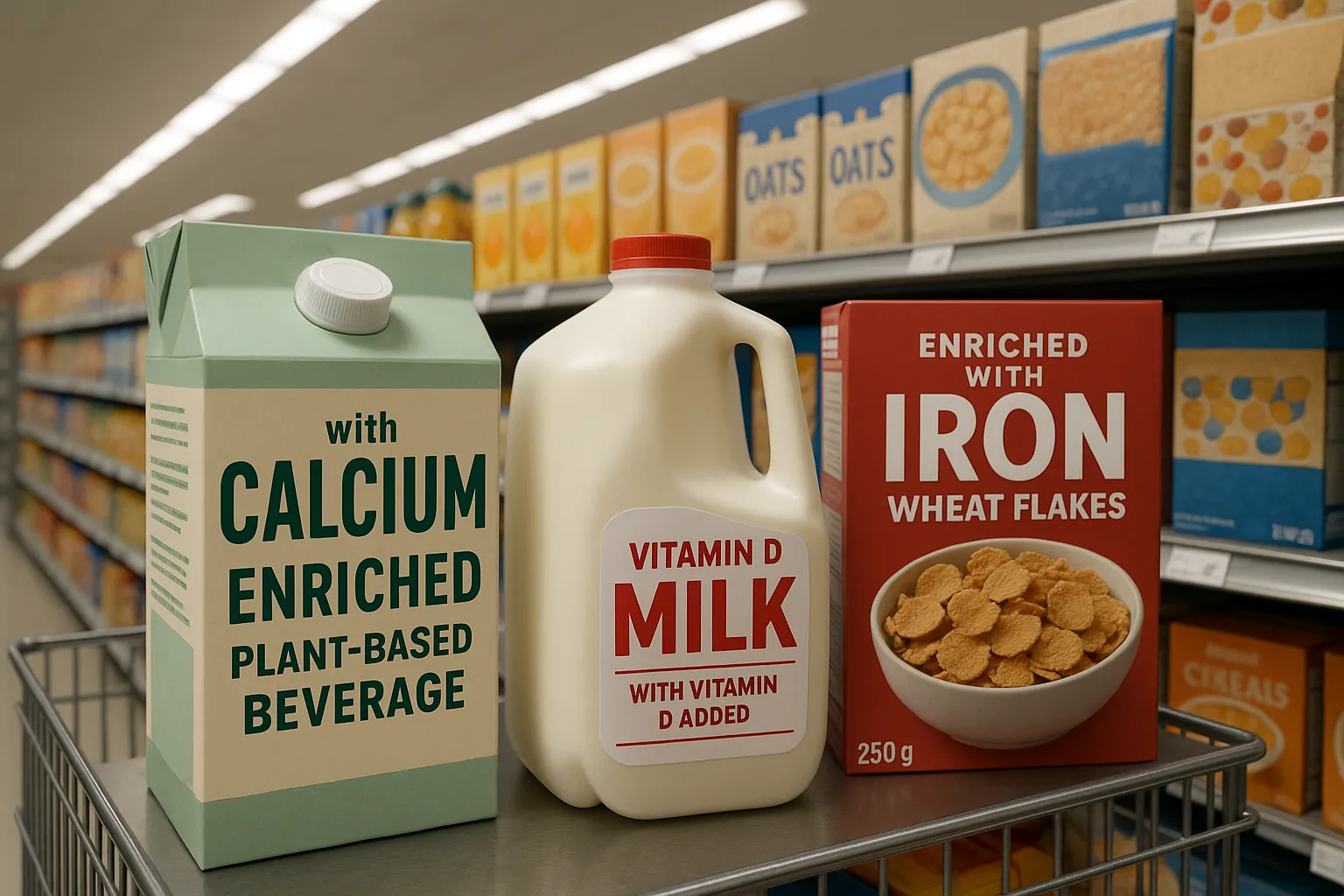
Understanding the distinction between “fortified” and “enriched” is crucial as the terms are often misused interchangeably. Enriched foods restore nutrients that were lost during the processing stages, such as adding back B vitamins and iron to refined flour. Conversely, fortified foods are those that have additional nutrients that were not originally present, like adding vitamin D or calcium to oat milk.
Several methods of food fortification have emerged to enhance nutrient levels in populations. Industrial fortification is the most widespread approach, where nutrients are added during the manufacturing process. Biofortification, another innovative technique, involves enhancing the nutrient content of crops during their growth phase through agricultural practices or nutrient-rich fertilisers—examples include developing iron-fortified rice or zinc-enriched beans.
Point-of-use fortification is another strategy allowing nutrients to be added just before consumption. A prime example of this is offering micronutrient powders that can be sprinkled onto food without altering taste. Although common in specific regions, especially in humanitarian contexts, its use in Europe remains limited.
Food-to-food fortification is an emerging trend leveraging naturally nutrient-rich foods to enhance staple products. This method uses whole ingredients rather than isolated nutrients, promoting a more holistic approach to nutrition that may involve combining spirulina powder with common cereals like maize or wheat.
The benefits of food fortification are profound. Firstly, it can significantly reduce nutrient deficiencies that affect cognitive function and immune health. Such deficiencies are often referred to as “hidden hunger,” where individuals consume sufficient calories but lack essential vitamins and minerals required for overall health. Studies indicate that fortification can be instrumental in preventing chronic diseases and enhancing public health outcomes. For instance, modelling suggests that increasing vitamin D levels through fortification could potentially avert around 27,000 cancer-related deaths in Europe annually.
Moreover, food fortification supports the nutritional requirements of individuals at distinct stages of life. For pregnant women, for example, fortified foods can play a critical role in fetal development, potentially reducing risks such as low birth weight or premature birth. For older adults, consuming calcium and vitamin D fortified foods can help maintain bone health, thus reducing the risk of fractures.
Nevertheless, the question of safety arises concerning consuming fortified foods. Generally, fortified foods are recognised as safe and provide substantial health benefits if properly regulated. However, excessive consumption of fortified products over prolonged periods could lead to excessive intake of certain vitamins and minerals. This scenario, while rare, can produce adverse effects. Various health organisations are working to establish guidelines and regulations to ensure that fortification practices adhere to safe intake levels across Europe.
While fortified foods can enhance dietary intake, it is essential to note that not all fortified products are inherently healthy. Many less nutritious items, such as sugary cereals, can also be fortified. Therefore, regardless of additional nutrients, consumers should examine the overall nutritional profile of products rather than focusing solely on the presence of fortification claims on packaging.
To identify fortified foods effectively, one should closely examine the ingredient list where added nutrients must be explicitly mentioned, revealing any vitamins or minerals included during processing. Claims on the front of packaging, such as “source of calcium,” may be misleading if the nutrients are naturally occurring rather than added.
Commonly fortified items include staple foods like salt, flour, and dairy products, with widespread practices finding their basis in everyday diets. For instance, in various countries, dairy products, breakfast cereals, and plant-based milk alternatives often undergo fortification processes.
The values and regulations surrounding food fortification continue to evolve, with the aim of improving public health outcomes while safeguarding consumer welfare. As such, it remains critical for consumers to stay informed about nutritional practices and the implications of food fortification, enabling them to make better dietary choices for themselves and their families. Fortification has proven to be a powerful tool in the ongoing battle against dietary deficiencies, providing a means to enhance public health over nearly a century.
Our Thoughts
The article discusses the benefits and challenges of food fortification, particularly in improving public health through enhanced nutrient intake. To avoid potential risks associated with fortification, several measures could be implemented:
1. **Regulatory Compliance**: Manufacturers must adhere to Health and Safety regulations, such as the Food Safety Act 1990, ensuring that fortification processes do not compromise food safety. Proper regulatory oversight could prevent excessive nutrient levels that might lead to adverse health outcomes.
2. **Transparency in Labeling**: Clear labeling is crucial. The retained regulations outlined in the Food Information Regulations 2014 require that added nutrients be listed in the ingredients. Enhanced transparency would enable consumers to make informed dietary choices, particularly concerning products high in sugar yet fortified.
3. **Consumer Education**: There should be an emphasis on educating consumers about distinguishing fortified from naturally nutrient-rich foods, minimizing potential health misconceptions regarding nutritional claims.
4. **Monitoring and Surveillance**: Regular monitoring of fortified food products can help ensure compliance with established guidelines by the Food Standards Agency and the European Food Safety Authority.
In essence, appropriate regulations, transparent labeling, consumer awareness, and continual monitoring are pivotal strategies to mitigate risks and maximize public health benefits from food fortification.