














Story Highlight
– Cancer nurses exposed to hazardous drugs without adequate PPE.
– Recurrent miscarriages and health issues among affected nurses.
– UK PPE standards insufficient compared to US regulations.
– Calls for improved safety measures from health authorities.
– NHS trusts urged to better protect healthcare staff.
Full Story
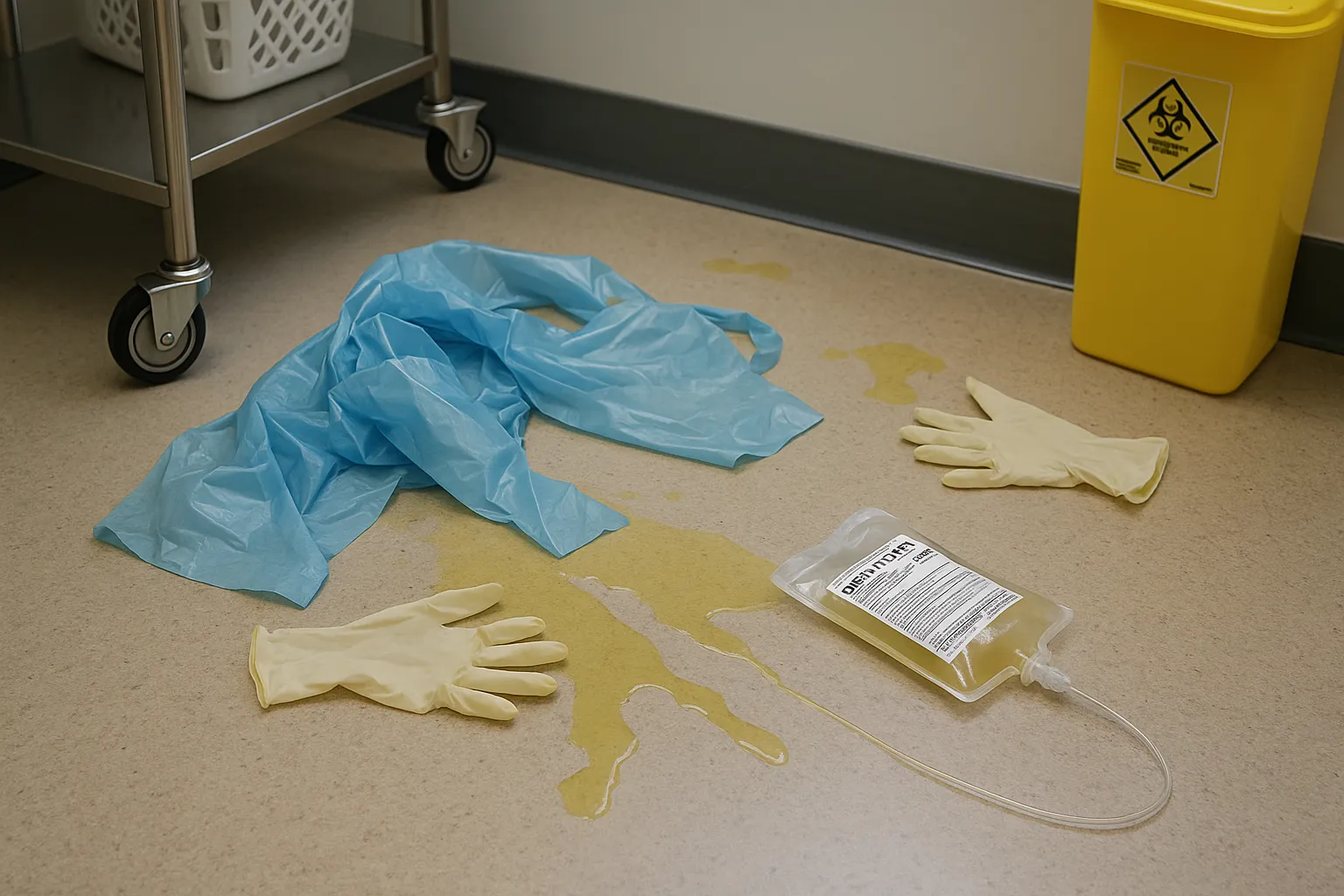
Healthcare professionals working with cancer treatments are facing serious health risks due to inadequate protective measures, particularly concerning the exposure to hazardous medications linked to miscarriage and infertility, an investigation has disclosed. Reports indicate that many nurses and other staff members, who regularly administer potent drugs including chemotherapy, are often provided with minimal safety equipment, primarily just plastic aprons and basic gloves.
In the United Kingdom, numerous healthcare workers are administering potentially dangerous drugs for conditions ranging from cancer and rheumatoid arthritis to HIV and multiple sclerosis. It has come to light that these workers report a range of troubling health issues such as hair loss, nausea, dizziness, fatigue, and notably, recurrent miscarriages. Concerns have been raised about the lack of adequate personal protective equipment (PPE), which can lead to exposure through inhalation, contact with contaminated surfaces, spillage, or absorption through the skin.
A report published by the NHS West Midlands Cancer Alliance last September raised alarms about the “inadequate control measures” associated with hazardous substances. This guidance highlighted the potential health consequences of exposure, which can include miscarriage, birth defects, liver damage, abnormal cell growth, and a variety of gastrointestinal issues. Research from multiple studies corroborates the increasing evidence that healthcare workers face infertility risks when frequently coming into contact with these medications.
While health regulations in the United States have prompted agencies like the Centres for Disease Control and Prevention to issue alerts about these dangers, UK guidelines appear to lag, allowing institutions to offer only the “bare minimum” of protection for their staff. As a result, there are growing calls for the Health and Safety Executive (HSE) in the UK to reassess and take prompt action regarding these potential health hazards faced by NHS workers.
Alison Simons, a nurse with over 20 years of experience in cancer care, has voiced her fears regarding the connection between her own miscarriages and the lack of protective measures in her working environment. “When I began administering chemotherapy, our protection consisted only of plastic aprons and wrist-length gloves. I had three miscarriages, and initially, I did not associate them with my work. It was only when my GP inquired, ‘You handle chemotherapy, don’t you?’ that I started to connect the dots,” she explained. Further conversations with colleagues revealed that many were experiencing similar reproductive health issues.
Simons, who is currently a senior lecturer at Birmingham City University and pursuing her doctorate, expressed her frustration with the ongoing neglect regarding the implementation of necessary safety protocols. “It’s disheartening because we know there are adequate measures that could be in place for our protection, yet they simply aren’t applied.”
Samantha Toland, a nurse consultant with extensive experience in cancer care, echoed similar concerns. “I experienced a miscarriage during my career as well,” she stated. “At the time, I dismissed it, but as I began to educate others, it became apparent that there was a broader issue.” While she acknowledged that her current trust has made significant strides in providing the requisite protections, she detailed past workplaces where protocols were alarmingly deficient. “Many colleagues have suffered multiple miscarriages, some experiencing as many as six or seven, requiring extended leave during their pregnancies,” she noted, highlighting the urgent need for improvement.
Professor Karen Campbell, a leading figure in oncology nursing and a former president of the UK Oncology Nurse Society (UKONS), pointed out that awareness of the dangers posed by these toxic medications has existed for decades. However, the impact has become more pronounced as the number of individuals undergoing cancer treatment continues to rise. In her recent study, which surveyed 747 nurses, it was revealed that a staggering 97 per cent were equipped with only plastic aprons when handling cancer drugs. The findings also indicated that a mere 62 per cent had access to appropriate chemotherapy-specific gloves, while more than half were given general-purpose gloves.
Campbell commented on the inadequacy of the current protection levels, stating that the UK is significantly behind countries like the US, where medical personnel are routinely provided with comprehensive protective gear, including full surgical gowns and double-gloving protocols. In her study, 161 participants reported adverse health effects associated with drug exposure, including headaches, hair loss, fatigue, skin irritation, and miscarriages.
To mitigate exposure risks, healthcare institutions are advised to employ “closed system transfer devices,” which are designed to be leak-proof and secure for the handling of chemotherapy drugs. Nevertheless, only 44 per cent of respondents indicated that they consistently used these essential safety devices. Campbell expressed concern that the lack of urgency in addressing these issues is disconcerting, particularly as many staff are younger women who may not have a strong voice in advocating for safer working environments.
Labour MP Luke Akehurst, who has personal experience with chemotherapy treatment, has raised these health and safety concerns with government officials, stressing the importance of safeguarding NHS staff. “These healthcare professionals are integral to the fight against life-threatening illnesses and should not have to risk their health in the process,” Akehurst asserted. He articulated that it is the government’s responsibility to ensure the safety of frontline workers, particularly those involved in crucial roles like administering cancer treatments.
The Royal College of Nursing (RCN) has called upon the HSE and the government to establish minimum standards to control the handling of hazardous medications. Current regulations mandate that employers reduce exposure to hazardous substances “as low as reasonably practicable,” which the RCN argues is too subjective, leading to inconsistent safety practices across hospitals. They advocate for a shift to requiring safety measures to achieve the “lowest possible level” of exposure, putting stronger controls in place for workers.
Louise Church, a senior official for health, safety, and wellbeing at the RCN, underscored the dual importance of patient care and staff safety, stating, “Nurses and healthcare staff must be adequately protected while delivering essential treatments to their patients.”
An NHS spokesperson reassured that ensuring the safety of healthcare staff remains a priority, stating that NHS trusts are legally obligated to protect employees from exposure to hazardous drugs. The HSE, alongside relevant government departments, has been approached for further comment on these significant health and safety concerns.
Our Thoughts
The situation described in the article highlights significant failings in compliance with UK health and safety legislation, specifically the Management of Health and Safety at Work Regulations 1999 and the Control of Substances Hazardous to Health (COSHH) Regulations 2002. NHS trusts have failed to provide adequate personal protective equipment (PPE) for cancer nurses, exposing them to hazardous medicines linked to severe health risks such as miscarriage and infertility.
To avoid these incidents, NHS trusts should ensure a robust risk assessment process is in place for handling hazardous substances and implement comprehensive protective measures consistent with the latest health and safety guidelines. This includes providing appropriate PPE, such as surgical gowns, double-gloving, and closed system transfer devices.
Key safety lessons include the need for regular training and updates on handling hazardous substances, as well as an open communication channel for staff to report health concerns related to their work environment without fear of retribution. Regulatory compliance must be a priority to mitigate risks and safeguard healthcare workers’ health, emphasizing the moral duty of employers to protect their workforce. Strengthened enforcement of regulations and clearer guidelines could help prevent similar incidents in the future.